
Introduction
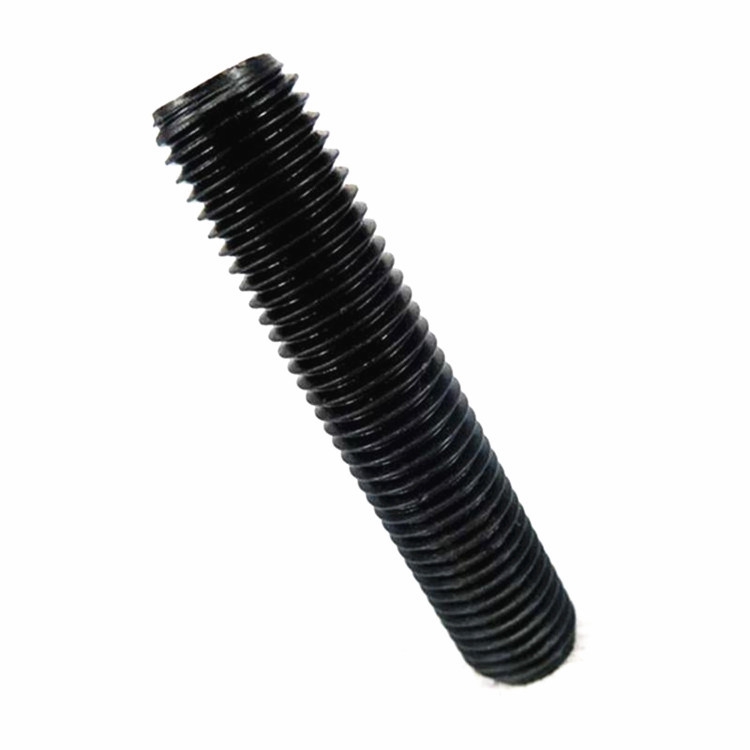
Black oxidation Allen key bolts are fasteners utilizing a chemical conversion coating process to impart a black finish to steel components. Primarily employed in applications demanding moderate corrosion resistance and aesthetic appeal, these bolts represent a cost-effective alternative to more elaborate coatings like zinc plating or hot-dip galvanization. Their prevalence stems from their ability to provide a darkened appearance without significantly altering dimensional tolerances, crucial for precision assemblies. Within the industrial supply chain, they sit between standard carbon steel fasteners and higher-specification alloy/coated options. Core performance characteristics include torque capability, shear strength, and resistance to white corrosion (rust). A primary industry pain point is ensuring consistent coating thickness and adherence, directly impacting longevity and performance, especially in humid or corrosive environments.
Material Science & Manufacturing
The base material for black oxidation Allen key bolts is typically medium carbon steel (e.g., AISI 1045, SAE 4140) offering a balance of strength and machinability. The black oxide coating itself is formed through a controlled oxidation process. The steel is immersed in an alkaline aqueous solution, often containing sodium hydroxide, potassium hydroxide, and oxidizing agents such as sodium nitrate. This solution reacts with the surface iron, creating a magnetite (Fe3O4) layer, which is the black oxide. The thickness of this layer is extremely thin, typically between 0.5 to 2.5 micrometers. Critical manufacturing parameters include solution temperature (80-140°C), immersion time (10-60 minutes, dependent on desired coating thickness and steel grade), and pH control (typically 11-13). Post-oxidation, a light oil impregnation is standard practice to enhance corrosion resistance and prevent red rust formation. The oil selection impacts performance, with mineral oils being common but synthetic oils offering improved protection. Precise control over steel composition is vital; impurities like silicon or phosphorus can affect the coating’s adherence and uniformity. Hydrogen embrittlement is a potential concern during the oxidation process, necessitating post-treatment heat cycles for high-strength bolts.
Performance & Engineering
Performance evaluation of black oxidation Allen key bolts hinges on several factors. Tensile strength is dictated by the underlying steel grade, typically ranging from 800 to 1200 MPa for commonly used alloys. Shear strength is similarly dependent on the base material. The black oxide coating itself contributes negligibly to mechanical strength but is critical for corrosion resistance. The coating offers limited protection in aggressive environments (e.g., saltwater) compared to galvanization. Torque-tension relationships must be carefully considered; the thin coating doesn’t significantly alter tightening characteristics, but the oil impregnation can influence friction coefficients. Environmental resistance is a key engineering concern. Black oxide provides moderate protection against humidity and mild corrosive agents, but it is susceptible to white rust formation if the oil film is compromised. Compliance requirements are often dictated by industry standards and customer specifications. For automotive applications, standards like IATF 16949 may apply, demanding stringent quality control and traceability. Failure analysis frequently reveals coating defects (e.g., porosity, uneven thickness) as root causes of premature corrosion. Finite element analysis (FEA) can be used to model stress distribution under load and predict potential failure points.
Technical Specifications
| Material Grade | Coating Thickness (µm) | Hardness (HV) | Salt Spray Resistance (hours) |
|---|---|---|---|
| AISI 1045 | 0.5 - 1.5 | 200-300 | 24-72 (5% NaCl) |
| SAE 4140 | 1.0 - 2.5 | 250-400 | 48-96 (5% NaCl) |
| AISI 8.8 | 0.8 - 1.8 | 220-350 | 36-120 (5% NaCl) |
| AISI 12.9 | 1.2 – 2.0 | 280-420 | 60-144 (5% NaCl) |
| ASTM A574 | 0.7 - 2.2 | 210-380 | 24-72 (5% NaCl) |
| DIN 8.8 | 0.6 - 1.6 | 230-360 | 48-96 (5% NaCl) |
Failure Mode & Maintenance
Black oxidation Allen key bolts are susceptible to several failure modes. The most common is corrosion, specifically white rust formation, resulting from the breakdown of the oil film and oxidation of the underlying steel. This is exacerbated by scratches, abrasion, or damage to the coating. Another failure mode is fatigue cracking, particularly under cyclic loading. This is dependent on the steel grade and bolt preload. Hydrogen embrittlement, as mentioned previously, can contribute to brittle fracture, especially in high-strength bolts. Stripping of the internal Allen key drive is also frequent, often due to improper tool selection or over-tightening. Preventative maintenance involves regular inspection for corrosion, particularly in harsh environments. Re-oiling is crucial to maintain the protective film. If corrosion is detected, the bolts should be replaced. For critical applications, periodic torque checks are recommended to ensure proper preload. Avoid using abrasive cleaning agents that can damage the coating. In the event of fatigue cracking, a complete system analysis is required to identify and address the root cause of the cyclic loading. Detailed failure analysis utilizing microscopy and metallurgical testing can pinpoint the exact failure mechanism.
Industry FAQ
Q: What is the primary difference between black oxide and zinc plating in terms of corrosion resistance?
A: Zinc plating provides significantly superior corrosion resistance compared to black oxide. Zinc acts as a sacrificial anode, protecting the underlying steel from corrosion. Black oxide offers only limited protection and relies heavily on the oil impregnation for corrosion prevention. Zinc plating is generally preferred for outdoor or highly corrosive environments.
Q: How does the oil impregnation affect the performance of black oxide coated bolts?
A: The oil impregnation is critical. It displaces water and creates a barrier against moisture and corrosive agents. The type of oil used influences the level of protection; synthetic oils generally perform better than mineral oils. The oil film is susceptible to abrasion and requires periodic reapplication.
Q: Can black oxide coating be applied to stainless steel?
A: While technically possible, black oxidation is not typically applied to stainless steel. Stainless steel already possesses excellent corrosion resistance. The black oxide process doesn’t significantly improve its properties and can potentially compromise the inherent corrosion resistance of the stainless steel.
Q: What is the typical lifespan of a black oxide coated bolt in a mildly corrosive environment?
A: The lifespan is highly variable depending on the environment and maintenance. In a mildly corrosive indoor environment with occasional re-oiling, a black oxide coated bolt can last several years. However, in a humid or outdoor environment, corrosion can begin to appear within a few months.
Q: Is black oxide coating suitable for high-stress applications?
A: The coating itself does not contribute to the strength of the bolt. The suitability for high-stress applications depends entirely on the grade of steel used. Black oxide is merely a surface finish and does not affect the mechanical properties. Ensure the base material meets the required strength specifications.
Conclusion
Black oxidation Allen key bolts represent a balance between cost, aesthetic appeal, and moderate corrosion resistance. Their manufacturing process, rooted in controlled chemical reactions, demands precise parameter control to ensure coating uniformity and adherence. While offering less robust protection than alternatives like zinc plating, their suitability for a broad range of indoor and mildly corrosive applications remains significant. Understanding the inherent limitations – particularly regarding corrosion and the importance of oil impregnation – is paramount for ensuring long-term performance.
Ultimately, the selection of black oxidation coated fasteners should be based on a thorough assessment of the operating environment, stress levels, and required lifespan. Regular inspection and maintenance, including re-oiling, are crucial for maximizing their service life. Further research into advanced coating technologies and alternative corrosion protection methods may be warranted for applications demanding superior durability.