
Introduction
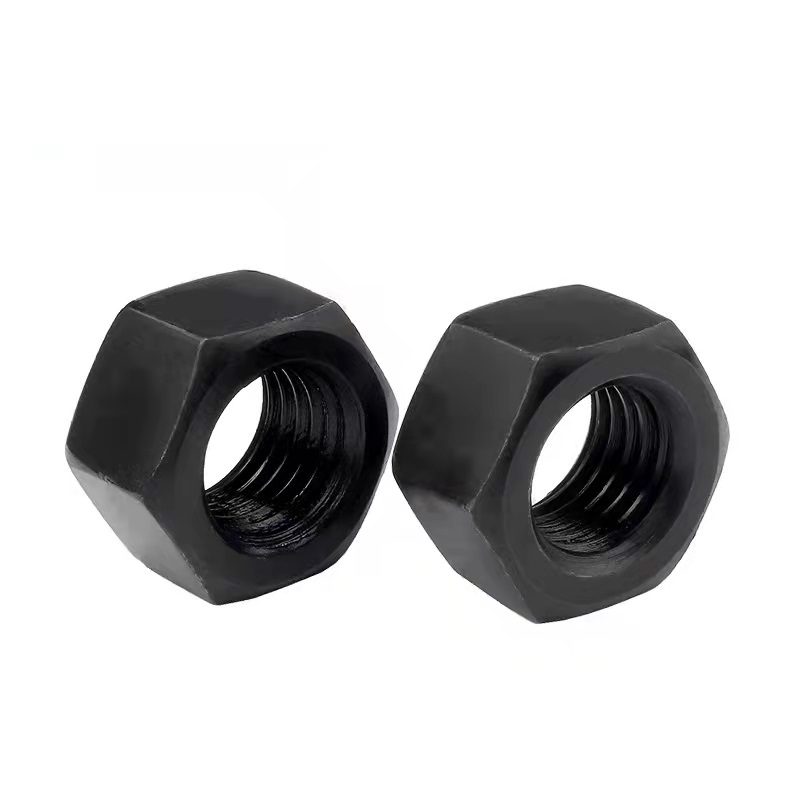
Square U-bolts are a type of fastener, specifically a U-shaped bolt with square cross-section legs, commonly used to secure pipes, tubes, or other round or square-shaped objects to a surface. They function by wrapping around the object and are secured with nuts and washers. Positioned within the broader fastening industry, square U-bolts represent a critical component in plumbing, automotive, construction, and various industrial applications. Their core performance characteristics revolve around load-bearing capacity, resistance to vibration loosening, and adaptability to varying object diameters. The prevalence of square U-bolts stems from their robust design, ease of installation, and cost-effectiveness compared to more complex fastening solutions. A significant industry pain point centers on material selection for corrosive environments and ensuring consistent dimensional accuracy to prevent premature failure and maintain structural integrity.
Material Science & Manufacturing
The manufacturing of square U-bolts typically begins with raw material selection. Common materials include carbon steel (ASTM A576), alloy steel (4140, 8640), and stainless steel (304, 316). Carbon steel offers high tensile strength and is cost-effective, but is susceptible to corrosion. Alloy steels provide enhanced strength and toughness, suitable for high-stress applications. Stainless steels deliver superior corrosion resistance, critical in harsh environments. The material's chemical composition directly influences its mechanical properties – yield strength, tensile strength, elongation, and hardness. Manufacturing processes involve cold forming or hot forging. Cold forming is preferred for smaller diameters and higher production volumes, resulting in improved surface finish and strength due to work hardening. Hot forging is employed for larger diameters and complex shapes, requiring subsequent heat treatment (quenching and tempering) to achieve desired mechanical properties. Thread rolling, rather than cutting, is standard practice to improve thread strength and fatigue resistance. Key parameter control includes precise bending radius to avoid stress concentrations, accurate thread pitch and diameter, and consistent material heat treatment to meet specified mechanical properties. Surface treatments like zinc plating or powder coating are frequently applied to enhance corrosion resistance.
Performance & Engineering
The performance of square U-bolts is fundamentally governed by force analysis under load. The bending moment experienced by the U-bolt legs is a critical design parameter, calculated based on the applied force and the diameter of the secured object. Finite Element Analysis (FEA) is often utilized to optimize U-bolt geometry and minimize stress concentrations, particularly at the bend radius. Environmental resistance is paramount, especially in outdoor applications. Corrosion resistance is evaluated through salt spray testing (ASTM B117) and cyclic corrosion testing. Material selection directly impacts long-term durability. Galvanic corrosion can occur when dissimilar metals are in contact, necessitating careful consideration of material compatibility. Furthermore, vibration resistance is crucial in dynamic applications. Locking nuts or thread-locking compounds (e.g., Loctite) are commonly employed to prevent loosening due to vibration. Compliance requirements vary by industry; for example, automotive applications demand adherence to IATF 16949 standards, while construction projects must meet building codes related to structural integrity and safety factors. Shear stress and tensile stress calculations are vital in determining appropriate safety factors. U-bolt leg separation and overall U-bolt deformation under load are also considered in engineering calculations.
Technical Specifications
| Diameter (in) | Leg Length (in) | Width (in) | Material Grade |
|---|---|---|---|
| 1/2 | 2 | 1 | SAE Grade 5 |
| 5/8 | 3 | 1 1/4 | SAE Grade 8 |
| 3/4 | 4 | 1 1/2 | ASTM A576 Grade 60 |
| 1 | 5 | 2 | 4140 Alloy Steel |
| 1 1/4 | 6 | 2 1/2 | 304 Stainless Steel |
| 1 1/2 | 8 | 3 | 316 Stainless Steel |
Failure Mode & Maintenance
Square U-bolts are susceptible to several failure modes. Fatigue cracking is common in applications involving cyclic loading, initiating at stress concentration points such as the bend radius or thread roots. Corrosion is a significant concern, especially with carbon steel U-bolts in exposed environments, leading to pitting corrosion and eventual loss of cross-sectional area. Hydrogen embrittlement can occur in high-strength steel U-bolts exposed to hydrogen-containing environments, causing brittle failure. Thread stripping is another potential failure mode, resulting from over-tightening or repeated assembly/disassembly. Delamination can occur in coated U-bolts due to poor adhesion or coating defects. Oxidation at elevated temperatures can also degrade material properties. Maintenance involves regular inspection for signs of corrosion, cracks, or thread damage. Torque verification during installation is crucial to prevent over-tightening. Lubrication of threads with anti-seize compound can facilitate disassembly and prevent galling. Replacement is recommended for U-bolts exhibiting any signs of significant corrosion or damage. Preventative maintenance programs incorporating periodic inspection and torque checks can significantly extend U-bolt service life. Ultrasonic testing or magnetic particle inspection can detect subsurface cracks not visible to the naked eye.
Industry FAQ
Q: What is the impact of thread quality on the overall performance of a square U-bolt?
A: Thread quality is paramount. Poorly formed threads, whether through cutting rather than rolling, or insufficient pitch diameter, significantly reduce tensile strength and fatigue resistance. The threads are often the weakest point of the fastener. Improperly formed threads introduce stress risers, increasing susceptibility to fatigue cracking and stripping under load. Thread rolling creates a cold-worked, smoother surface that enhances strength compared to cut threads.
Q: How does material selection affect the lifespan of a U-bolt in a saltwater environment?
A: Saltwater is highly corrosive. Carbon steel U-bolts will corrode rapidly in such environments, leading to premature failure. Stainless steel (316 specifically) offers superior corrosion resistance due to its molybdenum content. However, even 316 can experience pitting corrosion over extended periods. Protective coatings, like hot-dip galvanizing or specialized marine coatings, can further enhance corrosion resistance, but require periodic inspection and reapplication.
Q: What torque values are typically recommended for square U-bolts, and how are they determined?
A: Torque values depend on the U-bolt diameter, material, and lubrication. Manufacturer’s specifications should always be consulted. Generally, torque values are calculated based on the U-bolt’s proof load and a safety factor. For example, a 1/2" Grade 5 U-bolt might have a recommended torque of 75-90 ft-lbs. Using a torque wrench is essential to avoid over-tightening, which can lead to thread stripping or bolt failure, or under-tightening which can cause loosening.
Q: What are the advantages and disadvantages of using cold-formed versus hot-forged U-bolts?
A: Cold forming offers higher dimensional accuracy, a smoother surface finish, and improved strength due to work hardening, making it ideal for high-volume production of smaller U-bolts. However, it is limited to simpler geometries. Hot forging allows for more complex shapes and larger diameters but requires subsequent heat treatment and may result in a rougher surface finish. Hot forging is preferred for applications requiring high ductility and toughness.
Q: How can you mitigate the risk of galvanic corrosion when using a square U-bolt with a dissimilar metal pipe?
A: Galvanic corrosion occurs when two dissimilar metals are in contact in the presence of an electrolyte (like saltwater). To mitigate this, use compatible materials – ideally, both U-bolt and pipe should be of the same metal family. If dissimilar metals are unavoidable, use a dielectric barrier (e.g., a plastic sleeve or washer) to isolate them. Applying a protective coating to both components also helps. Sacrificial anodes can provide additional protection by corroding preferentially to the U-bolt and pipe.
Conclusion
Square U-bolts, despite their seemingly simple design, are crucial fastening components demanding careful consideration of material science, manufacturing processes, and engineering principles. Optimal performance hinges on appropriate material selection based on the operating environment, precise dimensional control during manufacturing, and accurate application of torque specifications. Understanding potential failure modes – including fatigue, corrosion, and thread stripping – is vital for implementing effective preventative maintenance strategies and ensuring long-term structural integrity.
Future advancements in U-bolt technology may focus on the development of novel coatings for enhanced corrosion resistance, the implementation of advanced FEA modeling for optimized geometry, and the use of smart fasteners incorporating sensors to monitor load and detect early signs of failure. A continued emphasis on standardization and adherence to rigorous quality control procedures will be essential to maintain the reliability and safety of these critical fastening elements across diverse industrial applications.