
Introduction
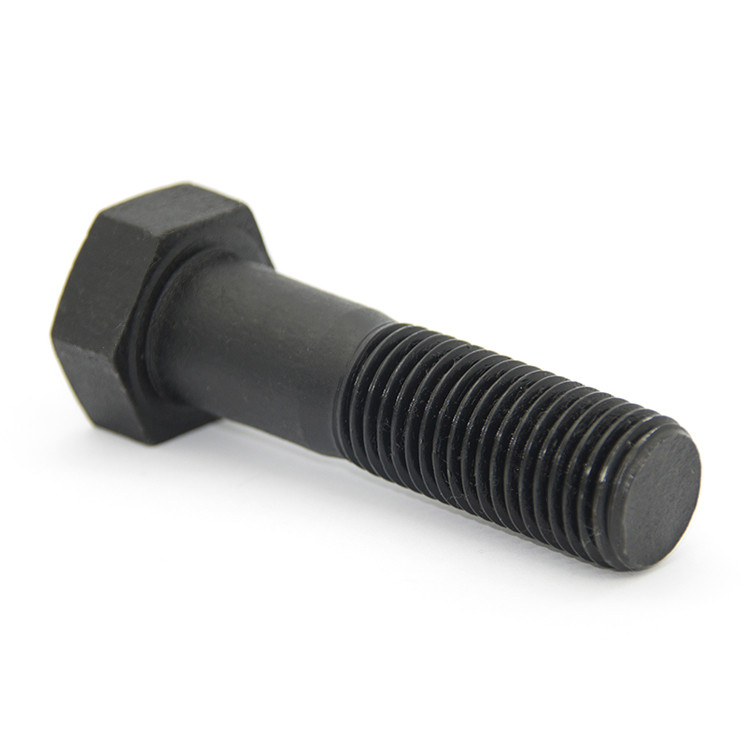
Crib bolts are a specialized class of high-strength fasteners primarily utilized in the heavy construction, mining, and tunneling industries. Their primary function is to securely connect timber cribbing structures – temporary support systems designed to prevent ground collapse during excavation or construction. Unlike conventional bolts, crib bolts are engineered for repeated loading and unloading cycles, as the cribbing is often adjusted or dismantled during the process. The technical position of crib bolts within the broader fastener industry is as a niche, highly-engineered product demanding specific material properties and manufacturing tolerances. Core performance characteristics include shear strength, tensile strength, ductility, and resistance to fatigue failure. The selection of appropriate crib bolts is critical for ensuring worker safety and preventing costly structural failures.
Material Science & Manufacturing
Crib bolts are predominantly manufactured from medium carbon steel alloys (typically AISI 1045 or 1050) due to their balance of strength, ductility, and cost-effectiveness. The raw material undergoes stringent quality control, including chemical composition analysis to ensure compliance with material specifications. Manufacturing commences with hot forging, shaping the bolt blank to near-net dimensions. This process imparts a favorable grain flow, enhancing the bolt's strength. Critical parameters during forging include die temperature, forging pressure, and cooling rate. Following forging, the bolts are heat-treated – typically quenched and tempered – to achieve the desired mechanical properties. Quenching involves rapid cooling, increasing hardness, while tempering reduces brittleness and improves toughness. Precise temperature control during both stages is paramount. Threading is typically performed via cold forming, a process that work-hardens the material, further increasing its tensile strength. Finally, bolts receive a protective coating, commonly zinc plating or hot-dip galvanization, to enhance corrosion resistance. Manufacturing tolerances are tightly controlled, adhering to standards such as ISO 898-1. Variations in material composition, heat treatment parameters, or threading processes can significantly impact the bolt's performance and lifespan.
Performance & Engineering
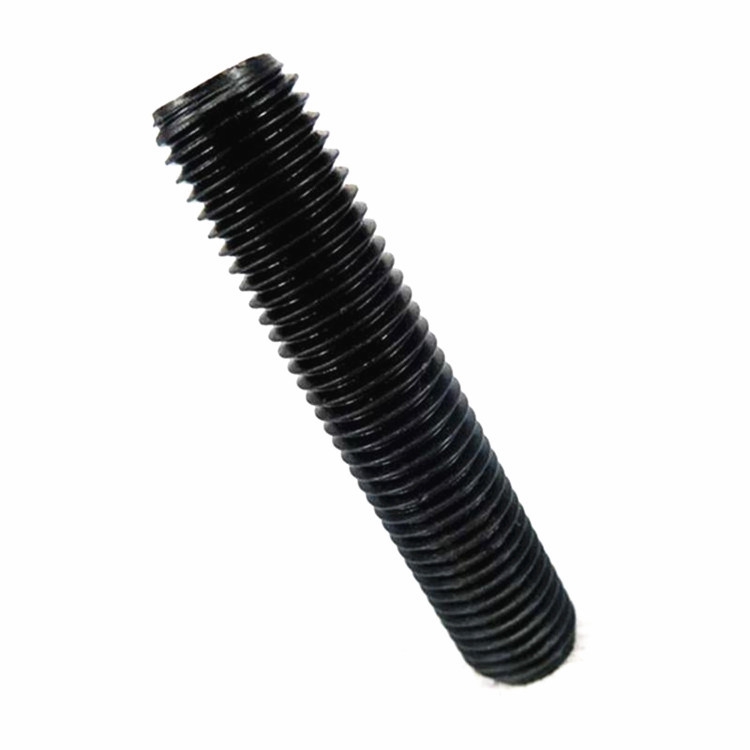
The engineering performance of crib bolts is governed by several key factors, including shear force, tensile force, bending moment, and fatigue resistance. Cribbing structures are subjected to dynamic loading conditions, involving repeated cycles of loading and unloading as excavation progresses. Therefore, fatigue analysis is crucial. The shear strength of the bolt must exceed the maximum shear force anticipated in the cribbing joint, calculated based on the weight of the supported ground and the angle of repose. Tensile strength ensures the bolt can withstand the clamping force required to maintain joint integrity. Bending moments arise from eccentric loading or misalignment of the cribbing timbers. Finite Element Analysis (FEA) is frequently employed to model the stress distribution within the bolt and cribbing joint, identifying potential failure points. Environmental resistance is also a significant concern. Exposure to moisture, corrosive chemicals, and temperature fluctuations can accelerate degradation. Compliance requirements are dictated by local and national safety regulations, such as OSHA (Occupational Safety and Health Administration) standards in the United States, which mandate the use of appropriately rated fasteners in ground support systems. The design must account for the potential for impact loads during installation or accidental contact with heavy equipment. Regular inspections are crucial to identify signs of fatigue or corrosion.
Technical Specifications
| Diameter (mm) | Tensile Strength (MPa) | Yield Strength (MPa) | Shear Strength (kN) |
|---|---|---|---|
| 16 | 800 | 600 | 80 |
| 20 | 850 | 650 | 110 |
| 24 | 900 | 700 | 140 |
| 27 | 950 | 750 | 160 |
| 30 | 1000 | 800 | 190 |
| 36 | 1050 | 850 | 230 |
Failure Mode & Maintenance
Crib bolt failure typically manifests in several modes. Fatigue cracking, initiated by repeated loading cycles, is a common failure mechanism, particularly at the thread root or under the bolt head. Stress corrosion cracking, accelerated by exposure to corrosive environments, can also lead to premature failure. Hydrogen embrittlement, a phenomenon where hydrogen atoms diffuse into the metal lattice, reducing ductility, can occur during electroplating processes if not properly controlled. Thread stripping, resulting from excessive tightening or impact loads, is another frequent cause of failure. Overloading, exceeding the bolt's shear or tensile capacity, can lead to immediate fracture. Maintenance involves regular visual inspections to identify signs of corrosion, cracking, or thread damage. Torque checks should be performed periodically to ensure proper clamping force. Lubrication of the threads can reduce friction and prevent galling. Damaged or corroded bolts must be replaced immediately. Proper storage of crib bolts is also crucial; they should be protected from moisture and corrosive environments. A robust record-keeping system, documenting inspection dates and maintenance performed, is recommended to track bolt performance and identify potential issues proactively.
Industry FAQ
Q: What is the impact of bolt preload on cribbing stability?
A: Bolt preload, or the initial tension applied to the bolt during tightening, is critical for cribbing stability. Adequate preload creates a clamping force that resists shear forces and prevents joint slippage. Insufficient preload can lead to loosening and eventual failure. Excessive preload, however, can stretch the bolt beyond its elastic limit, reducing its fatigue life. Therefore, proper torque control is essential, utilizing calibrated torque wrenches and following the manufacturer’s specifications.
Q: How does the coating type affect the long-term performance of crib bolts?
A: The coating type significantly impacts the bolt’s corrosion resistance and, consequently, its long-term performance. Zinc plating provides moderate corrosion protection, suitable for less aggressive environments. Hot-dip galvanization offers superior corrosion resistance, ideal for harsh environments with high humidity or exposure to corrosive chemicals. The coating thickness and quality control during application are critical factors. Regular inspection of the coating for damage is recommended.
Q: What considerations should be made when selecting crib bolts for different timber species?
A: Different timber species exhibit varying densities and strengths. Harder timber species require bolts with higher tensile strength to achieve adequate clamping force. The timber’s moisture content also affects bolt performance, as shrinkage or swelling can alter the preload. Selecting bolts with appropriate diameters and lengths, based on the timber’s dimensions and the anticipated loads, is crucial.
Q: How do temperature fluctuations impact the performance of crib bolts?
A: Temperature fluctuations can induce thermal expansion and contraction in both the bolt and the timber, altering the preload. Extreme temperature variations can also affect the material properties of the bolt, potentially reducing its strength and ductility. In applications with significant temperature swings, it’s important to select bolts with a low coefficient of thermal expansion and to consider using temperature-compensated tightening procedures.
Q: What are the acceptable levels of thread damage on a crib bolt?
A: Any visible thread damage, such as stripped threads, bent threads, or significant corrosion, renders a crib bolt unacceptable for reuse. Damaged threads reduce the effective load-bearing area, increasing the stress concentration and the risk of failure. Bolts with minor surface imperfections may be acceptable if they do not compromise the thread’s integrity, but they should be carefully inspected and monitored.
Conclusion
Crib bolts represent a crucial component in temporary ground support systems, demanding a robust understanding of material science, manufacturing processes, and engineering principles. Their reliable performance is paramount to worker safety and the structural integrity of construction and mining operations. The selection process must prioritize high tensile and shear strength, fatigue resistance, and corrosion protection, aligning with the specific environmental conditions and loading requirements of the application.
Moving forward, advancements in materials science may lead to the development of even higher-strength crib bolts with improved fatigue life and corrosion resistance. Furthermore, the integration of smart fastener technology, incorporating sensors to monitor preload and detect corrosion, could enable proactive maintenance and enhance safety. Continued adherence to stringent quality control standards and rigorous testing protocols is essential for ensuring the ongoing reliability of crib bolts.