
Introduction
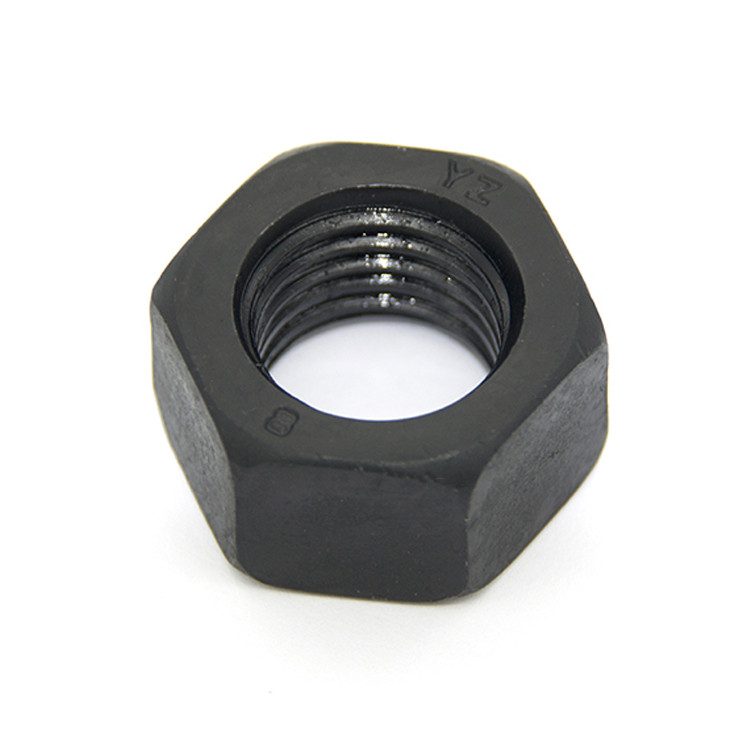
Bolts, nuts, and washers represent a foundational fastening system integral to nearly all mechanical engineering applications. Their seemingly simple function belies a complex interplay of material science, manufacturing precision, and engineering design. This guide details the critical considerations for selecting, applying, and maintaining these components, focusing on B2B industrial use cases. Positioned at the lowest level of the bill of materials in many assemblies, fastener failure can lead to catastrophic consequences, ranging from equipment downtime and safety hazards to product recall. Core performance metrics include tensile strength, yield strength, proof load, prevailing torque (for locking nuts), and corrosion resistance. This document aims to provide a comprehensive overview for engineers, procurement professionals, and maintenance personnel involved in critical fastening applications.
Material Science & Manufacturing
The materials utilized in bolt, nut, and washer production dictate their mechanical properties and environmental suitability. Carbon steels (SAE grades 1008, 1018, 4140) are common due to their cost-effectiveness and good strength. Alloy steels (e.g., 4340, 8640) offer improved tensile strength, toughness, and hardenability, essential for high-stress applications. Stainless steels (304, 316, A4) provide superior corrosion resistance, particularly in harsh environments. High-strength alloys like Inconel and Hastelloy are reserved for extreme temperature and corrosive applications. Manufacturing processes vary depending on the component and desired properties. Bolts and screws are typically manufactured via cold heading, machining, or hot forging. Cold heading imparts increased strength due to work hardening but is limited by head size. Machining allows for precise dimensions and complex geometries. Hot forging is used for large-diameter fasteners. Nuts are commonly formed through cold extrusion or machining. Washers are produced through stamping or machining. Heat treatment (quenching and tempering) is crucial for achieving desired hardness and tensile strength. Surface treatments like zinc plating, hot-dip galvanizing, and PTFE coating enhance corrosion resistance and reduce friction. Parameter control during manufacturing – particularly during heat treatment and surface finishing – is paramount to prevent material defects like hydrogen embrittlement and residual stresses that can initiate premature failure.
Performance & Engineering
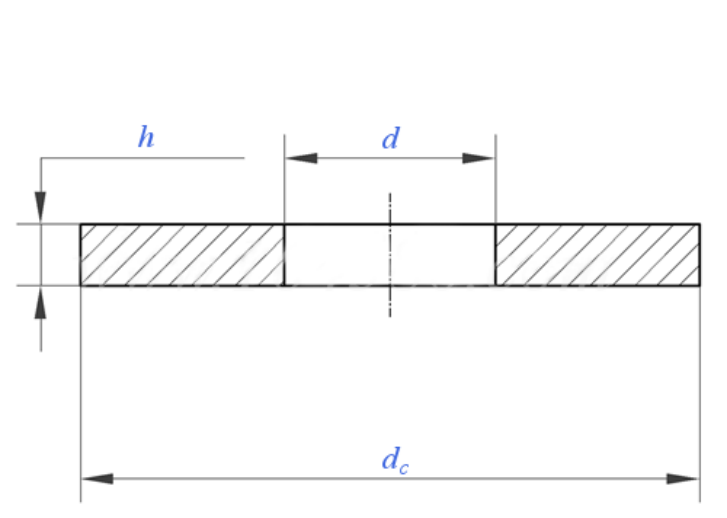
Fastener performance is governed by a complex interplay of forces and environmental factors. Tensile loading is the most common, and fastener strength must exceed the anticipated load with an adequate safety factor. Shear loading, bending moments, and torsional stresses also need consideration. Preload, the initial tension applied to the bolt, is critical. Proper preload ensures clamp load, preventing joint separation and fatigue failure. Calculating clamp load requires knowing the bolt’s yield strength, friction coefficients, and tightening torque. Environmental resistance is another crucial factor. Corrosion, particularly galvanic corrosion when dissimilar metals are in contact, can significantly reduce fastener strength. Temperature fluctuations cause thermal expansion and contraction, inducing stresses in the joint. Vibration and dynamic loads lead to fatigue failure. Compliance requirements, such as RoHS and REACH, dictate material composition and restricted substances. Furthermore, Finite Element Analysis (FEA) is commonly employed to simulate stress distribution and optimize fastener design for specific applications. Locking mechanisms, like nylon insert lock nuts or prevailing torque nuts, are essential for preventing loosening due to vibration. The selection of appropriate washers (flat, lock, conical spring) is also crucial for load distribution and maintaining joint integrity.
Technical Specifications
| Fastener Grade | Tensile Strength (MPa) | Yield Strength (MPa) | Hardness (Rockwell C) |
|---|---|---|---|
| SAE Grade 2 | 400-570 | 240-345 | 30-35 |
| SAE Grade 5 | 690-830 | 415-550 | 35-45 |
| SAE Grade 8 | 950-1050 | 690-830 | 45-55 |
| A2 Stainless Steel | 500-700 | 210-310 | 20-25 |
| A4 Stainless Steel | 800-1000 | 310-450 | 25-32 |
| Class 10.9 | 1000 | 900 | 33-39 |
Failure Mode & Maintenance
Fastener failures typically fall into several categories: tensile overload leading to fracture, fatigue failure from cyclic loading, corrosion-induced degradation, stripping of threads, and loosening due to vibration. Fatigue cracking often initiates at stress concentration points, such as thread roots or under bolt heads. Corrosion can cause pitting, crevice corrosion, and hydrogen embrittlement, reducing load-carrying capacity. Stripped threads result from exceeding the shear strength of the threads or improper installation. Loosening can occur due to vibration, creep, or insufficient preload. Preventive maintenance is crucial. Regular visual inspections should identify signs of corrosion, damage, or loosening. Torque checks ensure adequate preload is maintained. Lubrication reduces friction and prevents galling. In critical applications, Non-Destructive Testing (NDT) methods like ultrasonic testing or magnetic particle inspection can detect internal cracks or flaws. When replacing fasteners, always use the correct grade and material, and ensure proper installation procedures are followed. Consider using corrosion inhibitors and applying protective coatings to extend fastener lifespan. For highly stressed joints, implement a fastener tightening schedule and record tightening torques for traceability.
Industry FAQ
Q: What is the impact of thread form on fastener performance?
A: Thread form significantly affects fastener performance. Unified National Coarse (UNC) threads provide higher strength due to larger thread engagement but are more susceptible to damage. Unified National Fine (UNF) threads offer increased shear strength and resistance to loosening but are more prone to stripping if cross-threaded. Metric threads (ISO) are increasingly common due to globalization and often offer superior mechanical properties. The correct thread form must be selected based on the application's load requirements and environmental conditions.
Q: How does hydrogen embrittlement affect high-strength fasteners?
A: Hydrogen embrittlement is a critical concern for high-strength steel fasteners. During processes like electroplating or pickling, atomic hydrogen can diffuse into the steel, reducing its ductility and causing premature brittle failure under tensile stress. Baking (heat treatment) after plating can drive out the hydrogen, mitigating the risk. Selecting fasteners with appropriate coatings and ensuring proper process control during surface treatment are essential.
Q: What are the benefits of using Belleville washers in high-vibration applications?
A: Belleville washers, also known as conical spring washers, provide a resilient load-bearing surface that maintains preload even under vibration and thermal cycling. Their spring action compensates for thermal expansion and contraction, preventing joint loosening. They are particularly effective in applications where traditional lock washers fail to maintain adequate clamp load.
Q: What is the role of proof load versus tensile strength in fastener selection?
A: Tensile strength is the maximum stress a fastener can withstand before fracture. Proof load, also known as yield strength, is the maximum stress a fastener can withstand without permanent deformation. Fastener selection should be based on proof load, ensuring the fastener remains elastic under the applied load. Using tensile strength as the sole criterion can lead to plastic deformation and eventual failure.
Q: What are the considerations when using dissimilar metals in a bolted joint to avoid galvanic corrosion?
A: Galvanic corrosion occurs when dissimilar metals are in contact in the presence of an electrolyte. To mitigate this, select metals close together on the galvanic series, use insulating washers or sleeves, apply protective coatings (e.g., zinc, cadmium), or use compatible fasteners and components made from the same material family. Avoid using steel fasteners with aluminum components in marine environments without adequate protection.
Conclusion
The proper selection and application of bolts, nuts, and washers are fundamental to the reliability and safety of engineered systems. A thorough understanding of material science, manufacturing processes, performance characteristics, and potential failure modes is critical. Ignoring these factors can lead to costly downtime, equipment damage, and potential safety hazards. Adhering to established standards, employing robust engineering analysis, and implementing effective maintenance procedures are essential for ensuring long-term fastener performance.
Looking forward, advancements in fastener materials, such as high-strength polymers and shape memory alloys, will continue to expand the possibilities for innovative fastening solutions. The integration of smart fasteners with embedded sensors for real-time monitoring of preload and corrosion will enable predictive maintenance and further enhance system reliability. Ongoing research and development will focus on optimizing fastener design for specific applications and reducing the environmental impact of fastener manufacturing and disposal.