
Introduction
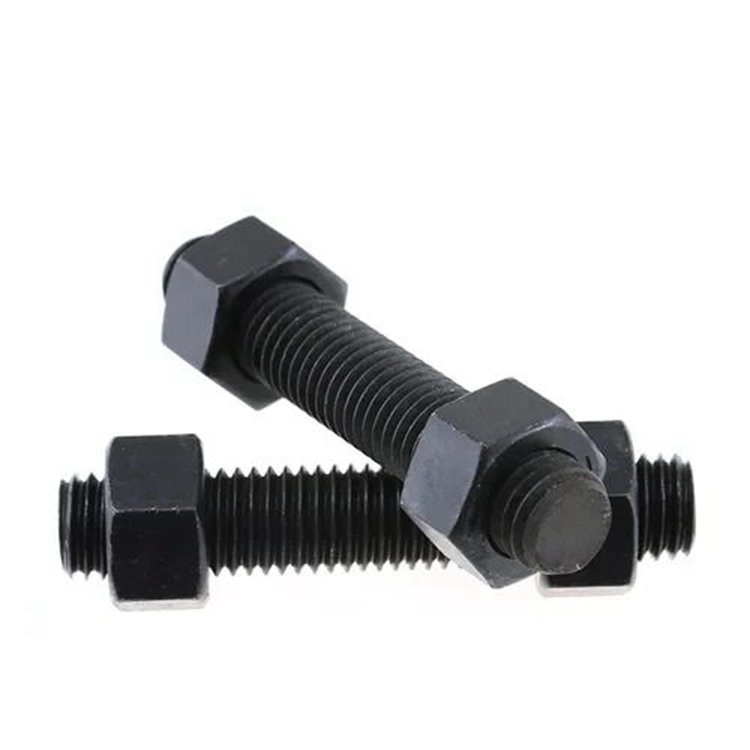
All thread bolts, also known as fully threaded rods, are fasteners characterized by continuous threading along their entire length. Unlike bolts with threaded ends and a smooth shank, all thread bolts offer versatility in various applications. Their technical position within the fastening industry chain is as a foundational element, often utilized in conjunction with nuts and washers, or embedded into materials. Core performance characteristics revolve around tensile strength, shear strength, and load distribution. A critical pain point within the industry is ensuring consistent thread quality across manufacturing batches and preventing galling or seizing during assembly, particularly in high-torque applications. The selection of appropriate materials and coatings is paramount to mitigating these concerns and ensuring long-term reliability. Further complicating matters is the need to adhere to stringent industry standards regarding dimensional accuracy and mechanical properties, especially in safety-critical applications such as structural engineering and pressure vessel construction.
Material Science & Manufacturing
All thread bolts are commonly manufactured from carbon steels (e.g., 1045, 4140), alloy steels, stainless steels (e.g., 304, 316), and occasionally, aluminum or brass depending on the application's requirements. Carbon steels offer a balance of strength and cost-effectiveness, while alloy steels provide enhanced strength, toughness, and hardenability. Stainless steels excel in corrosion resistance. The raw material’s chemical composition directly influences mechanical properties like yield strength, tensile strength, and ductility. Manufacturing primarily involves cold heading or machining. Cold heading, suitable for high-volume production, involves forcing the metal into a die to form the threads. This process work-hardens the material, increasing its strength. Machining, preferred for larger diameters or specialized materials, uses cutting tools to create the threads. Key parameters controlled during manufacturing include thread pitch, major diameter, minor diameter, and thread form. Surface finish is also critical, as rough surfaces can increase friction and susceptibility to corrosion. Post-processing treatments like heat treatment (hardening, tempering) and surface coatings (zinc plating, hot-dip galvanizing, PTFE coating) are applied to enhance performance characteristics. Chemical compatibility of coatings with the surrounding environment is a key consideration to avoid accelerated corrosion or coating failure. Thread rolling, a specialized forming process, creates threads without material removal, maintaining grain flow for increased strength.
Performance & Engineering
The performance of all thread bolts is fundamentally governed by their ability to withstand tensile, shear, and bending forces. Force analysis requires consideration of the bolt’s cross-sectional area, material properties, and applied load. Tensile strength dictates the maximum tensile stress the bolt can endure before fracture. Shear strength defines the resistance to forces acting parallel to the bolt’s axis. Environmental resistance is crucial; exposure to corrosive environments (saline spray, acidic conditions) can lead to pitting corrosion, stress corrosion cracking, and ultimately, failure. The choice of material and coating directly impacts corrosion resistance. Compliance requirements are often dictated by industry-specific standards (e.g., ASME for pressure vessels, ASTM for structural applications). Functional implementation details include proper tightening torque to achieve the desired clamping force. Insufficient torque leads to loosening, while excessive torque can cause yielding or stripping of the threads. Finite element analysis (FEA) is frequently employed to model stress distribution under various loading conditions, optimizing bolt geometry and material selection. Galvanic corrosion, occurring when dissimilar metals are in contact in the presence of an electrolyte, must be considered when selecting materials and coatings. Fatigue performance, the ability to withstand repeated loading cycles, is another critical factor, particularly in dynamic applications.
Technical Specifications
| Diameter (mm) | Thread Pitch (mm) | Material Grade | Tensile Strength (MPa) |
|---|---|---|---|
| M6 | 1.0 | 4.8 | 400 |
| M8 | 1.25 | 8.8 | 800 |
| M10 | 1.5 | 10.9 | 1000 |
| M12 | 1.75 | A2-70 (304 SS) | 700 |
| M16 | 2.0 | A4-80 (316 SS) | 800 |
| M20 | 2.5 | 4140 | 1200 |
Failure Mode & Maintenance
All thread bolts are susceptible to several failure modes. Fatigue cracking, induced by cyclic loading, initiates at stress concentration points (e.g., thread roots). Stripping of threads occurs when the shear stress exceeds the material's shear strength. Galling, a form of adhesive wear, arises from friction between mating threads, particularly under high loads and without adequate lubrication. Corrosion, as previously mentioned, weakens the material and accelerates failure. Hydrogen embrittlement, a concern with high-strength steels, causes cracking in the presence of hydrogen. Maintenance involves regular inspection for signs of corrosion, thread damage, or loosening. Lubrication with appropriate thread lubricants (e.g., anti-seize compounds) is crucial to prevent galling and reduce torque requirements. Torque monitoring during installation ensures proper clamping force. Non-destructive testing methods, such as ultrasonic testing or magnetic particle inspection, can detect internal flaws. If a bolt shows signs of significant corrosion or damage, it must be replaced. Proper storage in a dry environment prevents corrosion during periods of inactivity. Periodic re-tightening of bolts, especially in dynamic applications, prevents loosening due to vibration or thermal expansion/contraction.
Industry FAQ
Q: What is the impact of thread form on the performance of an all thread bolt?
A: The thread form (e.g., metric, UNC, UNF) influences the load-carrying capacity and engagement area between the bolt and nut. Metric threads generally offer a steeper helix angle, resulting in faster assembly but potentially lower shear strength. UNC (Unified National Coarse) threads are suitable for applications requiring rapid assembly and disassembly, while UNF (Unified National Fine) threads provide higher tensile strength and resistance to loosening. The specific application dictates the optimal thread form.
Q: How does material selection affect the corrosion resistance of all thread bolts in marine environments?
A: In marine environments, corrosion is a major concern. Carbon steel bolts will corrode rapidly without protection. Stainless steel alloys, specifically 316 stainless steel, offer superior corrosion resistance due to the addition of molybdenum, which enhances pitting resistance. However, even 316 can suffer from crevice corrosion in stagnant seawater. Surface coatings like hot-dip galvanizing or PTFE coatings can provide additional protection, but their effectiveness depends on the coating's integrity.
Q: What are the considerations when selecting an all thread bolt for a high-temperature application?
A: High temperatures can significantly reduce the strength and creep resistance of materials. Alloy steels designed for high-temperature service are preferred. Consideration must be given to thermal expansion coefficients of the bolt and connected materials to prevent loosening. Oxidation resistance is also critical; coatings may be necessary to protect the bolt from oxidation at elevated temperatures. Bolts should be tightened when cold, and allowances made for thermal expansion during operation.
Q: What is the role of thread locking compounds in all thread bolt applications?
A: Thread locking compounds (e.g., Loctite) are used to prevent loosening due to vibration or thermal cycling. They work by filling the gaps between the threads, increasing friction and creating a locking force. Different formulations offer varying levels of locking strength, ranging from low-strength removable compounds to high-strength permanent compounds. Selection depends on the application’s requirements.
Q: How can I determine the appropriate tightening torque for an all thread bolt?
A: Tightening torque is determined by factors such as bolt diameter, material grade, thread pitch, and lubrication. Torque-tension relationships are typically provided by bolt manufacturers or can be calculated using established formulas. Using a calibrated torque wrench is essential to ensure accurate torque application. Over-tightening can yield the bolt or strip the threads, while under-tightening can lead to loosening.
Conclusion
All thread bolts represent a versatile and essential fastening solution across numerous industries. Their continuous threading allows for adaptable applications not feasible with standard bolts. The selection process, however, demands a thorough understanding of material science, manufacturing processes, and performance considerations. Careful attention to factors like tensile strength, corrosion resistance, and tightening torque is crucial for ensuring reliable and long-lasting performance.
Future trends point towards the increased use of high-strength, lightweight materials, coupled with advanced surface coatings and predictive maintenance technologies. The integration of digital torque wrenches and data logging systems will enhance quality control and traceability. Continued research into innovative thread forms and locking mechanisms will further improve the performance and reliability of all thread bolts in demanding applications.