
Introduction
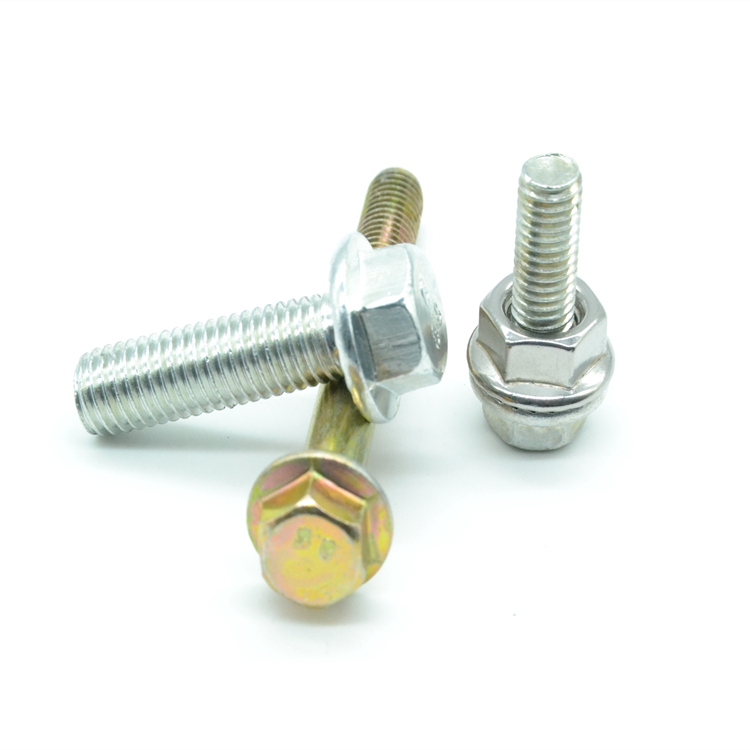
12-point bolts represent a critical fastening solution across a diverse range of industrial applications, including automotive, aerospace, heavy machinery, and structural engineering. Distinguished by their twelve-sided head, these bolts offer significantly increased wrenching engagement compared to traditional six-point or twelve-lobe (Torx) designs. This characteristic minimizes the risk of rounding the bolt head during tightening or loosening, particularly under high torque conditions. The inherent geometry distributes force more evenly across the wrenching surface, enhancing durability and extending tool life. While often more expensive to manufacture than six-point bolts, the superior performance and reduced maintenance costs associated with 12-point configurations frequently justify the increased initial investment. This guide provides an in-depth technical analysis of 12-point bolts, covering material science, manufacturing processes, performance characteristics, potential failure modes, and relevant industry standards. Understanding these aspects is crucial for engineers, procurement managers, and maintenance personnel involved in specifying, installing, and maintaining bolted joints.
Material Science & Manufacturing
12-point bolts are commonly manufactured from carbon steel, alloy steel, and stainless steel, with material selection dictated by the application’s strength, corrosion resistance, and temperature requirements. Carbon steels (e.g., SAE 1045) provide high strength at a relatively low cost, but are susceptible to corrosion. Alloy steels (e.g., 4140, 4340) incorporate elements like chromium, molybdenum, and vanadium to enhance strength, toughness, and hardenability. Stainless steels (e.g., 304, 316) offer excellent corrosion resistance but generally exhibit lower tensile strength than alloy steels. The manufacturing process typically begins with cold heading or hot forging of the raw material into the desired bolt shape. Cold heading, used for smaller bolts, offers excellent surface finish and dimensional accuracy. Hot forging is employed for larger bolts and provides superior grain flow, enhancing strength. Following forming, the bolts undergo heat treatment – typically quenching and tempering – to achieve the specified mechanical properties. The 12-point head is formed via a broaching operation, precisely creating the twelve flats. Thread rolling, rather than machining, is preferred to maintain the grain structure of the material, further enhancing fatigue resistance. Surface treatments such as zinc plating, black oxide, or PTFE coating are often applied to improve corrosion resistance and reduce friction. Critical parameters during manufacturing include precise control of alloy composition, forging temperature, quenching media, tempering temperature, and thread rolling force. Deviation from these parameters can lead to variations in mechanical properties and premature failure.

Performance & Engineering
The performance of a 12-point bolt in a bolted joint is governed by several factors, including tensile strength, yield strength, proof load, prevailing torque, and fatigue resistance. Tensile strength represents the maximum stress the bolt can withstand before fracturing, while yield strength indicates the point at which permanent deformation begins. Proof load is the maximum tensile load that can be applied without causing permanent elongation. Prevailing torque, crucial for self-locking bolts, is the resistance to rotation after initial tightening. From an engineering perspective, the design of the bolted joint must consider the applied loads (tensile, shear, bending) and the resulting stresses on the bolt. Finite Element Analysis (FEA) is frequently used to simulate stress distribution and optimize joint geometry. The thread engagement length, bolt preload, and clamping force are critical parameters. Insufficient preload can lead to joint slippage and fatigue failure, while excessive preload can exceed the bolt's yield strength, causing permanent deformation or fracture. Environmental factors also play a significant role. Temperature fluctuations cause thermal expansion and contraction, introducing stress into the joint. Corrosion can weaken the bolt material and reduce its load-carrying capacity. The 12-point geometry inherently provides a larger contact area between the wrench and the bolt head, allowing for higher torque application and improved clamping force. However, this also necessitates the use of a 12-point socket to prevent damage to the head. Proper tightening procedures, including torque control and angle control, are essential to achieve the desired clamping force and ensure joint integrity.
Technical Specifications
| Material Grade | Tensile Strength (MPa) | Yield Strength (MPa) | Hardness (Rockwell C) |
|---|---|---|---|
| SAE 1045 | 620-860 | 310-550 | 25-35 |
| 4140 | 750-950 | 450-650 | 30-40 |
| 304 Stainless Steel | 517-724 | 205-310 | 20-30 |
| 316 Stainless Steel | 586-862 | 241-345 | 25-35 |
| A4-80 (316L) | 800-1000 | 240-320 | 28-35 |
| Class 8.8 (Alloy) | 800 | 600 | 32-38 |
Failure Mode & Maintenance
12-point bolts are susceptible to several failure modes, including fatigue cracking, thread stripping, corrosion, and embrittlement. Fatigue cracking typically initiates at stress concentrations, such as the thread roots or the corners of the 12-point head, and propagates under cyclic loading. Thread stripping occurs when the load exceeds the shear strength of the threads. Corrosion, particularly in aggressive environments, can weaken the bolt material and promote stress corrosion cracking. Hydrogen embrittlement, common in high-strength steels, can lead to brittle fracture. Proper maintenance practices are crucial to prevent these failures. Regular inspection for signs of corrosion, cracking, or thread damage is essential. Torque checks should be performed periodically to ensure adequate clamping force. Lubrication of the threads can reduce friction and prevent galling. In applications involving high vibration, the use of locking devices, such as lock washers or prevailing torque nuts, is recommended. When replacing a failed bolt, it is important to use a bolt of the same material grade and size. Thorough cleaning of the mating surfaces is also critical to prevent corrosion and ensure proper seating. Failure analysis techniques, such as fractography and metallography, can be used to identify the root cause of failures and implement corrective actions. Preventative maintenance programs should include regular bolt inspection, lubrication, and torque verification to extend the service life of bolted joints.
Industry FAQ
Q: What are the advantages of a 12-point bolt over a standard hex bolt in high-torque applications?
A: 12-point bolts offer a larger wrenching surface, distributing force more evenly and minimizing the risk of rounding the bolt head under high torque. This results in improved tool engagement, reduced slippage, and a greater capacity for applying tightening force without damaging the fastener.
Q: How does material selection impact the corrosion resistance of a 12-point bolt?
A: Material selection is paramount. Carbon steel bolts are prone to corrosion and require protective coatings. Alloy steels offer improved resistance, but stainless steels (304, 316, 316L) provide the best corrosion protection, especially in harsh environments. The specific grade of stainless steel impacts the level of protection.
Q: What is the significance of proof load and how does it relate to bolt preload?
A: Proof load is the maximum tensile load a bolt can withstand without permanent deformation. Bolt preload – the clamping force applied during tightening – should be significantly below the proof load, typically 75-80% of the yield strength, to ensure the joint remains within the elastic region and resists loosening under load.
Q: What are the common causes of thread stripping in 12-point bolts and how can it be prevented?
A: Thread stripping can result from excessive torque, improper thread engagement, or using mismatched materials. Prevention includes using appropriate torque specifications, ensuring sufficient thread length, applying anti-seize lubricant, and using bolts and nuts of compatible materials.
Q: What are the implications of hydrogen embrittlement on high-strength 12-point bolts?
A: Hydrogen embrittlement reduces the ductility of high-strength steels, making them susceptible to brittle fracture. This is often caused by exposure to hydrogen-containing environments during processes like electroplating or pickling. Prevention includes using appropriate coatings and avoiding hydrogen-generating processes or using materials less susceptible to embrittlement.
Conclusion
12-point bolts represent a sophisticated fastening solution optimized for high-torque applications and demanding environments. Their enhanced wrenching geometry, coupled with appropriate material selection and rigorous manufacturing control, offers superior performance and reliability compared to traditional fasteners. Understanding the interplay between material science, engineering principles, and potential failure modes is critical for ensuring the long-term integrity of bolted joints.
Moving forward, advancements in bolt manufacturing, such as improved heat treatment processes and the development of novel corrosion-resistant alloys, will continue to enhance the performance and durability of 12-point bolts. The integration of smart fastening technologies, including torque sensors and data analytics, will enable proactive maintenance and prevent premature failures, further optimizing the lifecycle cost of critical infrastructure and equipment.