
Introduction
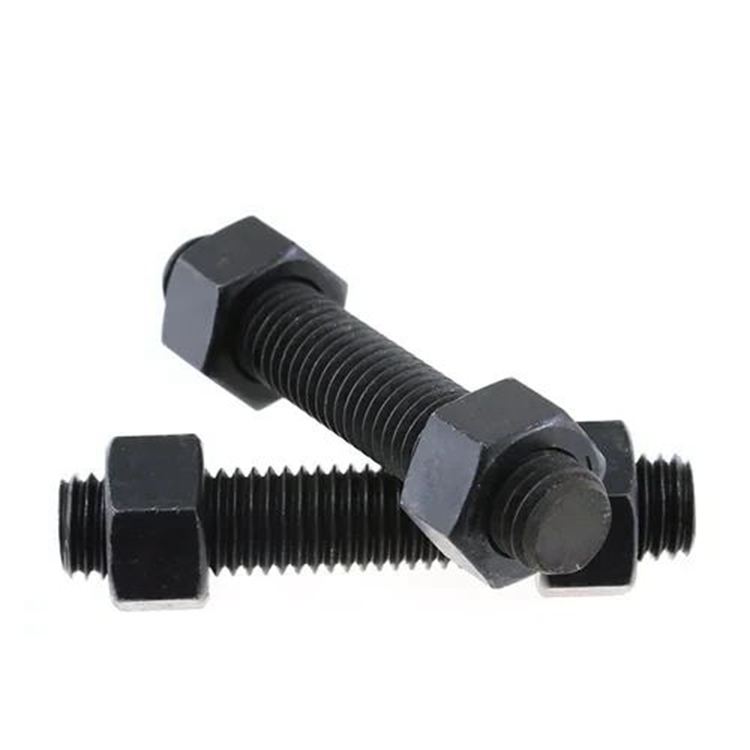
Hexagon socket countersunk head bolts, commonly referred to as flat head cap screws, are a crucial fastening element in a multitude of industrial applications. Positioned within the mechanical fastening segment of the broader industrial hardware supply chain, these bolts are employed where a flush or recessed mounting is required, offering a clean and aesthetically pleasing finish. Their primary function is to securely join materials by applying compressive force, leveraging the principle of threaded engagement. Core performance characteristics include tensile strength, shear strength, yield strength, and resistance to loosening under vibration. This guide will provide an in-depth technical overview of these fasteners, covering material science, manufacturing processes, performance engineering, failure modes, and relevant industry standards. The selection of appropriate hexagon socket countersunk head bolts is critical for ensuring the integrity and longevity of assembled products, mitigating risks associated with joint failure, and adhering to stringent safety regulations.
Material Science & Manufacturing
The predominant material for hexagon socket countersunk head bolts is carbon steel, specifically medium carbon steels like AISI 1045 or equivalent standards (e.g., GB 45 steel). These steels offer a balance of strength, ductility, and cost-effectiveness. However, stainless steels (304, 316) and alloy steels (4140, 8.8/10.9 grade) are frequently specified for applications demanding enhanced corrosion resistance or higher mechanical properties. The chemical composition significantly influences properties; for instance, chromium in stainless steel forms a passive layer protecting against oxidation. Manufacturing typically begins with cold heading, where wire stock is fed into a machine and formed into the bolt shape using compressive force. This process improves the grain structure, increasing strength. Subsequent machining operations create the countersunk head and hexagon socket. Critical parameters during manufacturing include die alignment (to ensure socket concentricity), upsetting pressure (for head formation), and thread rolling parameters (to control thread profile and surface finish). Heat treatment, including hardening and tempering, is vital. Hardening increases strength and wear resistance, while tempering enhances ductility and reduces brittleness. Surface treatments, such as zinc plating, black oxide, or passivization (for stainless steel), provide corrosion protection. Hydrogen embrittlement is a potential risk during plating, requiring post-treatment baking to diffuse hydrogen out of the material. Thread forming is carefully controlled to achieve the correct pitch diameter and thread form per ISO 6150 or equivalent standards. Deviation from specified tolerances can lead to improper clamping force and premature failure.
Performance & Engineering
The performance of hexagon socket countersunk head bolts is fundamentally governed by principles of stress and strain under load. Tensile loading, resulting from axial forces, is resisted by the bolt’s cross-sectional area and tensile strength. Shear loading, occurring when forces act perpendicular to the bolt axis, relies on the shear strength of the bolt material and the number of shear planes engaged. Torque-tension relationships are critical; the tightening torque must be sufficient to achieve the desired preload, which is the clamping force generated by the bolt. This preload is essential for preventing joint separation and fatigue failure. Environmental resistance is a significant concern. Corrosion, particularly in harsh environments, can reduce the effective cross-sectional area and lead to stress corrosion cracking. Galvanic corrosion can occur when dissimilar metals are in contact. Thermal expansion and contraction can induce stresses in bolted joints, especially in applications with significant temperature fluctuations. Compliance requirements dictate the need for specific material certifications (e.g., RoHS, REACH) and mechanical testing (e.g., tensile testing, hardness testing, proof load testing). Finite element analysis (FEA) is routinely used to optimize bolt geometry and assess stress distribution under various loading conditions. Head geometry is engineered to maximize contact area and minimize stress concentrations. Socket depth and drive profile (e.g., Torx, hex) are chosen to facilitate efficient torque application and prevent tool slippage. Consideration must be given to potential fretting corrosion, which occurs due to small amplitude oscillatory movements between contacting surfaces.
Technical Specifications
| Parameter | Grade 4.8 (Typical Carbon Steel) | Grade 8.8 (High Strength Carbon Steel) | A2 Stainless Steel (304) | A4 Stainless Steel (316) |
|---|---|---|---|---|
| Tensile Strength (MPa) | 400 | 800 | 700 | 930 |
| Yield Strength (MPa) | 240 | 600 | 210 | 290 |
| Hardness (HV) | 170-210 | 320-380 | 180-220 | 230-270 |
| Corrosion Resistance | Low (requires coating) | Low (requires coating) | Good | Excellent |
| Typical Applications | General purpose fastening | High-stress applications | Food processing, chemical environments | Marine environments, corrosive applications |
| Thread Standard | ISO 6150 | ISO 6150 | ISO 6150 | ISO 6150 |
Failure Mode & Maintenance
Hexagon socket countersunk head bolts are susceptible to several failure modes. Tensile overload leads to ductile fracture, characterized by significant plastic deformation before rupture. Shear overload results in shear failure along the thread plane. Fatigue failure occurs under cyclic loading, initiating from stress concentrations at the thread root or head-shank junction. Hydrogen embrittlement, as previously mentioned, can drastically reduce ductility and lead to brittle fracture. Corrosion, particularly crevice corrosion in stainless steel, weakens the bolt and can initiate failure. Loosening under vibration is a common issue, especially in dynamic applications. Improper tightening torque or inadequate thread locking mechanisms contribute to this. Maintenance involves periodic inspection for corrosion, damage, and loosening. Torque checks should be performed regularly, especially in critical applications. Lubrication with appropriate thread lubricant reduces friction and prevents galling during tightening and loosening. If corrosion is detected, bolts should be replaced. In applications prone to vibration, locking features such as thread lockers (e.g., Loctite) or lock washers should be employed. Failure analysis techniques, including fractography (examining the fracture surface), metallography (analyzing the microstructure), and chemical analysis, are crucial for determining the root cause of failures and implementing corrective actions. Preventative maintenance schedules should be established based on the severity of the operating environment and the criticality of the application.
Industry FAQ
Q: What is the impact of thread pitch on the bolt's performance?
A: Thread pitch, defined as the distance between adjacent threads, directly influences the bolt's shear strength and clamping force. A finer thread pitch generally offers higher shear strength and more precise clamping control, but it also increases the risk of thread stripping if not properly lubricated or tightened. A coarser thread pitch is more tolerant to debris and easier to assemble, but provides lower shear strength. Selecting the appropriate pitch requires careful consideration of the application’s loading conditions and assembly environment.
Q: How does the head geometry affect the stress distribution within the fastened joint?
A: The countersunk head geometry is designed to distribute the clamping force over a larger area, minimizing stress concentrations. However, the transition between the head and the shank is a potential stress riser. Proper machining and finishing of the head are crucial to avoid introducing stress concentrations. The angle of the countersunk head also affects the bearing area and the likelihood of localized deformation.
Q: What are the differences between Grade 8.8 and Grade 10.9 bolts, and when would you choose one over the other?
A: Grade 10.9 bolts have significantly higher tensile and yield strengths compared to Grade 8.8 bolts. This makes them suitable for applications requiring higher clamping forces and greater resistance to fatigue. However, they are typically more expensive and can be more brittle. Grade 8.8 bolts are a good compromise between strength and cost for general-purpose applications. Choosing between the two depends on the specific load requirements, safety factors, and cost constraints of the application.
Q: What is the role of surface treatments like zinc plating in extending the lifespan of carbon steel bolts?
A: Zinc plating provides a sacrificial barrier against corrosion. The zinc corrodes preferentially to the steel, protecting the underlying metal from environmental degradation. However, zinc plating is susceptible to white rust formation in humid environments. Alternatives like dichromate conversion coatings or powder coating offer improved corrosion resistance. Proper surface preparation prior to plating is essential for ensuring adhesion and effectiveness.
Q: What are the considerations when selecting bolts for use in elevated temperature applications?
A: Elevated temperatures can significantly reduce the yield strength and tensile strength of materials. For high-temperature applications, alloy steels specifically designed for heat resistance (e.g., Inconel, Hastelloy) are often required. Creep, the slow deformation of a material under sustained stress at high temperature, is a critical concern. Bolts should be chosen with sufficient creep resistance for the expected operating temperature and load. The thermal expansion coefficient of the bolt material should also be considered to avoid inducing stresses in the joint.
Conclusion
Hexagon socket countersunk head bolts represent a foundational element in countless engineering designs. Their selection demands a thorough understanding of material science, manufacturing processes, and performance characteristics. Factors like tensile strength, corrosion resistance, and preload capabilities are paramount for ensuring long-term reliability and structural integrity. A holistic approach, encompassing meticulous material selection, precise manufacturing control, and diligent maintenance practices, is essential for optimizing bolt performance and minimizing the risk of failure.
Looking ahead, advancements in bolt technology will focus on developing lighter-weight materials, improved corrosion resistance coatings, and smart fasteners with integrated sensors for real-time monitoring of preload and stress levels. The integration of digital twins and predictive maintenance algorithms will further enhance the reliability and efficiency of bolted joints. Continued research into novel materials and manufacturing techniques will undoubtedly push the boundaries of bolt performance and enable more robust and durable designs.
