
Introduction
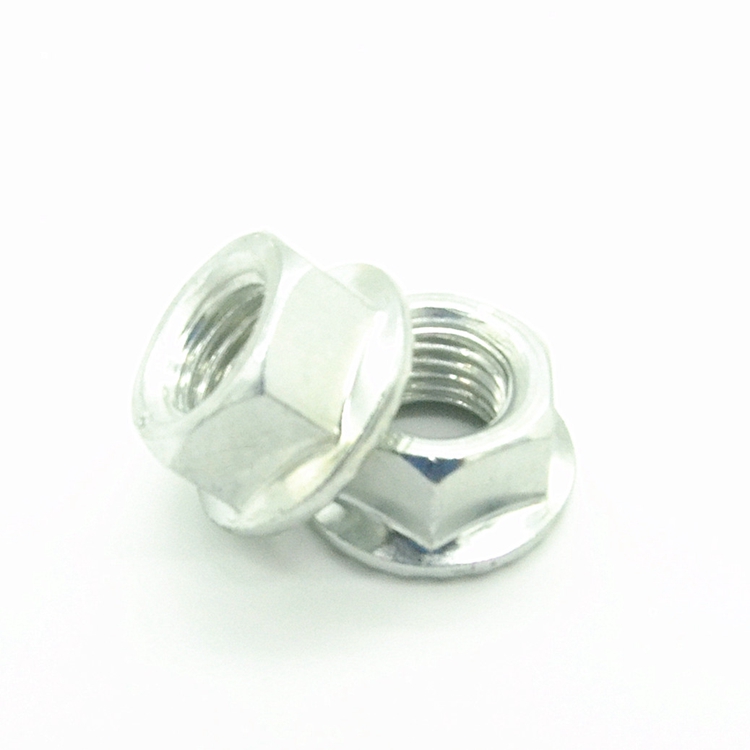
BS flange head bolts are high-strength fasteners defined by British Standard EN 15048. They are predominantly utilized in structural steelwork, pipe flanges, and other critical applications requiring a secure and reliable joint. Their broad flange under the head distributes load, reducing stress on connected materials, and providing enhanced resistance to loosening under vibration. These bolts are typically manufactured from carbon alloy steels and are characterized by their high tensile strength and yield strength, making them vital components in industries demanding robust fastening solutions. This guide provides an in-depth technical overview of BS flange head bolts, encompassing material science, manufacturing processes, performance characteristics, failure modes, and relevant industry standards.
Material Science & Manufacturing
BS flange head bolts are most commonly manufactured from medium carbon alloy steels such as 8.8, 10.9, and 12.9 grades, conforming to EN 15048-1 standards. The numerical designation (e.g., 8.8) indicates the ultimate tensile strength (in MPa multiplied by 100) and yield strength (as a fraction of the tensile strength). The core material typically comprises steel conforming to S355J2 or S355J1 specifications, providing the necessary ductility and strength. Manufacturing commences with hot rolling or forging to create the bolt blank. Subsequent cold forming processes, including upset forging, refine the head shape and enhance the grain structure for increased strength. Critical parameters during manufacturing include precise control of the cold working process to avoid stress concentrations and maintain dimensional accuracy. Heat treatment, typically involving quenching and tempering, is crucial for achieving the desired mechanical properties. Surface treatments, such as zinc plating or galvanizing, are applied to enhance corrosion resistance. Thread rolling is preferred over thread cutting as it maintains the grain flow of the material, resulting in a stronger thread form. Bolt manufacturers must adhere to strict quality control procedures, including non-destructive testing (NDT) methods like magnetic particle inspection (MPI) and ultrasonic testing (UT) to detect any surface or internal defects.
Performance & Engineering
The performance of BS flange head bolts is governed by several key engineering principles. Preload is a critical factor; proper tightening to the specified torque value generates clamping force, which resists joint separation. This preload is influenced by bolt diameter, material properties, and friction coefficients between the bolt, nut, and mating surfaces. The flange head design distributes load over a wider area compared to traditional hexagonal head bolts, reducing stress concentrations in the connected components, particularly in softer materials like aluminum or composites. Environmental resistance is a significant concern. Exposure to corrosive environments can lead to degradation of the bolt material and reduced joint integrity. Corrosion protection measures, such as surface coatings and the use of compatible materials, are essential. Fatigue performance is critical in applications involving cyclic loading. The bolt must withstand repeated stress cycles without failure. Factors influencing fatigue life include stress amplitude, mean stress, and surface finish. Finite Element Analysis (FEA) is often employed to optimize bolt design and predict stress distribution under various loading conditions. Compliance with EN 15048 ensures the bolt meets minimum performance requirements for tensile strength, yield strength, elongation, and hardness. The bolts must also meet requirements specified in structural design codes, such as Eurocode 3, which dictate appropriate safety factors and tightening procedures.
Technical Specifications
| Property | 8.8 Grade | 10.9 Grade | 12.9 Grade | Standard (EN 15048-1) |
|---|---|---|---|---|
| Ultimate Tensile Strength (MPa) | 800 | 1000 | 1200 | Variable, depending on grade |
| Yield Strength (MPa) | 640 | 900 | 1100 | Variable, depending on grade |
| Hardness (HV) | 245-350 | 310-410 | 380-480 | Specified in EN 15048-2 |
| Elongation at Break (%) | 16 | 14 | 12 | Minimum values defined in standard |
| Typical Material | S355J2/J1 | S355J2/J1 | S355J2/J1 | Carbon Alloy Steel |
| Common Sizes (Diameter) | M8 – M36 | M8 – M36 | M8 – M36 | Range defined by standard |
Failure Mode & Maintenance
BS flange head bolts can fail through several mechanisms. Fatigue cracking is a common failure mode in cyclically loaded applications, originating at stress concentrations (e.g., thread roots, under the flange head). Hydrogen embrittlement can occur in high-strength bolts exposed to corrosive environments, leading to brittle fracture. Corrosion, particularly galvanic corrosion when dissimilar metals are in contact, weakens the bolt material and reduces its load-carrying capacity. Loosening due to vibration is another frequent issue. This can be mitigated by using locking mechanisms such as lock washers or thread-locking compounds. Over-tightening can cause yielding of the bolt or damage to the connected components. Under-tightening results in insufficient clamping force and potential joint separation. Maintenance involves periodic inspection of bolted joints for signs of corrosion, loosening, or damage. Torque checks should be performed regularly using calibrated torque wrenches. Lubrication of the threads can reduce friction and ensure accurate preload. If corrosion is detected, the bolts should be replaced with compatible materials or coated with a corrosion-resistant finish. Regularly cleaning the bolted joints to remove debris and contaminants can also extend their service life.
Industry FAQ
Q: What is the significance of the bolt grade (e.g., 8.8, 10.9, 12.9) in determining its suitability for a specific application?
A: The bolt grade directly correlates to the tensile and yield strength of the fastener. Higher grades indicate greater strength, allowing for higher clamping forces and the ability to withstand greater loads. Choosing the appropriate grade is crucial to ensure the joint can withstand the anticipated stresses without failure. For static applications, selecting a grade that provides an adequate safety factor is sufficient. For dynamic or fatigue-sensitive applications, a higher grade may be necessary to resist cyclic loading.
Q: How does the flange head design contribute to the overall performance of the bolt?
A: The flange head distributes the clamping force over a larger area compared to a hexagonal head. This reduces the stress concentration on the connected material, particularly beneficial when fastening softer materials. It also provides increased resistance to loosening due to vibration, as the larger bearing surface increases friction.
Q: What are the best practices for ensuring accurate preload when tightening BS flange head bolts?
A: Accurate preload is achieved through controlled tightening procedures. Using a calibrated torque wrench is essential. Consider factors like friction coefficient, which can vary depending on lubrication and surface finish. Torque-angle tightening methods, where the bolt is tightened to a specific torque and then rotated by a specified angle, offer more precise control over preload. Always adhere to the tightening specifications provided in relevant structural design codes.
Q: What corrosion protection methods are recommended for BS flange head bolts used in harsh environments?
A: Several corrosion protection methods are available. Zinc plating is a common and cost-effective option. Hot-dip galvanizing provides superior corrosion resistance. Surface coatings like PTFE or ceramic coatings can offer enhanced protection in highly corrosive environments. Using bolts manufactured from stainless steel or other corrosion-resistant alloys is another solution, though often more expensive. Applying anti-seize compounds to the threads can also prevent corrosion and facilitate disassembly.
Q: What are the potential consequences of using bolts that do not meet EN 15048 standards?
A: Using non-compliant bolts can have severe consequences. The material properties may not meet the required specifications, leading to premature failure under load. Dimensional inaccuracies can result in improper fit and reduced clamping force. Lack of traceability and quality control can compromise the reliability of the entire structure. In critical applications, this can lead to catastrophic failures, resulting in significant financial losses and potential safety hazards. Always verify that bolts are certified to EN 15048.
Conclusion
BS flange head bolts, governed by EN 15048, represent a critical fastening solution in a wide range of structural and industrial applications. Understanding their material properties, manufacturing processes, performance characteristics, and potential failure modes is paramount for ensuring joint integrity and long-term reliability. Proper selection, installation, and maintenance are essential to maximize their lifespan and prevent catastrophic failures.
Continued advancements in material science and manufacturing techniques are driving the development of even higher-strength and more corrosion-resistant BS flange head bolts. Future trends may include the integration of smart monitoring systems to detect loosening or corrosion in real-time, enhancing preventative maintenance and improving overall safety. Adherence to relevant industry standards and best practices will remain crucial for maintaining the reliability and performance of these critical fasteners.
