
Introduction
Coarse thread flange head bolts are a critical fastening component utilized across a wide spectrum of industrial applications, including automotive, construction, and heavy machinery. These bolts are characterized by a flange integrated beneath the head, distributing clamping force over a larger surface area and increasing joint stability. The coarse thread pitch offers faster assembly and disassembly, alongside enhanced resistance to vibration loosening, particularly relevant in dynamic environments. Their primary function is to securely join two or more materials, resisting tensile, shear, and fatigue stresses. Compared to fine thread bolts, coarse thread variants are generally less susceptible to cross-threading and damage during installation, but may offer slightly reduced tensile strength for a given bolt diameter. This guide provides a comprehensive overview of the material science, manufacturing processes, performance characteristics, failure modes, and maintenance considerations for coarse thread flange head bolts.
Material Science & Manufacturing
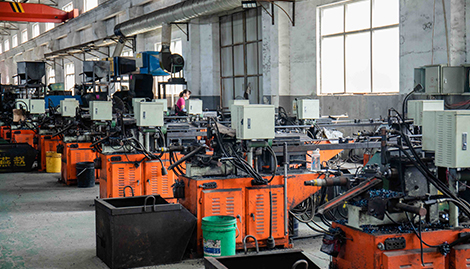
The most common material for coarse thread flange head bolts is carbon steel, specifically medium carbon steels like ASTM A307 Grade A or A574. These steels offer a balance of strength, ductility, and cost-effectiveness. Higher strength applications utilize alloy steels conforming to standards such as ASTM A193 Grade B7, incorporating elements like chromium, molybdenum, and nickel to enhance mechanical properties and corrosion resistance. Stainless steels (e.g., 304, 316 – ASTM A193) are employed in corrosive environments. The raw material is typically sourced as hot-rolled bar stock. Manufacturing begins with cold drawing to achieve the desired diameter and surface finish. The head and flange are then formed through a process of heading or forging, often followed by machining to precise dimensions. The threads are created via thread rolling, a cold-forming process that imparts compressive stresses, increasing fatigue strength. Critical parameters during manufacturing include material composition verification (spectroscopic analysis), thread pitch accuracy (using calibrated gauges), hardness testing (Rockwell or Vickers), and dimensional control (coordinate measuring machines - CMM). Surface treatments like zinc plating, black oxide, or galvanization are frequently applied to enhance corrosion resistance. Hydrogen embrittlement, a potential byproduct of certain plating processes, is mitigated through baking treatments.
Performance & Engineering
The performance of a coarse thread flange head bolt is determined by several factors, including preload, fatigue resistance, shear strength, and environmental resistance. Preload, the tension introduced into the bolt during tightening, is crucial for maintaining joint integrity and preventing loosening. The clamp load is directly related to the bolt’s tensile strength and the tightening torque applied. Fatigue resistance is paramount in applications subjected to cyclic loading. Finite Element Analysis (FEA) is often used to simulate stress concentrations around the thread root and flange interface. Shear strength dictates the bolt’s ability to withstand forces acting perpendicular to the bolt axis. Environmental resistance considers corrosion, temperature extremes, and chemical exposure. Flange head bolts, by distributing the load over a larger area, reduce the stress on the connected materials. The flange also provides a greater bearing surface, which improves joint stability and prevents damage to softer materials. Compliance requirements, such as RoHS and REACH, dictate restrictions on certain chemical substances used in the bolt’s materials and coatings. Proper installation procedures, including appropriate torque specifications and lubrication, are essential for achieving optimal performance and preventing failures.
Technical Specifications
| Diameter (mm) | Thread Pitch (mm) | Material Grade | Minimum Tensile Strength (MPa) |
|---|---|---|---|
| M6 | 1.0 | ASTM A307 Grade A | 400 |
| M8 | 1.25 | ASTM A307 Grade A | 400 |
| M10 | 1.5 | ASTM A193 Grade B7 | 690 |
| M12 | 1.75 | ASTM A193 Grade B7 | 690 |
| M16 | 2.0 | ASTM A193 Grade B7 | 690 |
| M20 | 2.5 | ASTM A193 Grade B7 | 690 |
Failure Mode & Maintenance
Coarse thread flange head bolts can fail through several mechanisms. Fatigue failure, caused by repeated loading and unloading, often initiates at the thread root or under the flange. Stress corrosion cracking occurs in corrosive environments, particularly with susceptible materials like low-alloy steels. Hydrogen embrittlement, as mentioned earlier, can reduce ductility and promote brittle fracture. Shear failure occurs when the shear stress exceeds the bolt’s shear strength. Thread stripping, due to improper tightening or excessive loads, damages the threads, rendering the bolt ineffective. Corrosion, particularly galvanic corrosion between dissimilar metals, weakens the bolt and increases the risk of failure. Maintenance includes regular inspection for signs of corrosion, damage, or loosening. Torque checks should be performed periodically, especially in critical applications. Lubrication with appropriate thread lubricants reduces friction and prevents galling during tightening and loosening. If a bolt shows signs of fatigue or corrosion, it should be replaced immediately. Proper storage in a dry environment prevents corrosion. The use of calibrated torque wrenches and adherence to specified tightening procedures are essential preventative measures.
Industry FAQ
Q: What is the primary advantage of a coarse thread versus a fine thread in a flange head bolt application?
A: The primary advantage of a coarse thread is faster assembly and disassembly, alongside improved resistance to vibration loosening. Coarse threads have a larger cross-sectional area, providing greater resistance to stripping and are less susceptible to damage during installation. This makes them ideal for applications where frequent maintenance is required or where vibration is a significant concern.
Q: What material grade would you recommend for a flange head bolt used in a high-temperature, corrosive environment?
A: For high-temperature, corrosive environments, we recommend an Austenitic stainless steel, such as ASTM A193 Grade B8 (304 or 316). These materials offer excellent corrosion resistance and retain their mechanical properties at elevated temperatures. Careful consideration should also be given to the specific corrosive agents present to ensure material compatibility.
Q: How does the flange on a flange head bolt contribute to joint performance?
A: The flange increases the bearing surface area, distributing the clamping force over a wider area. This reduces the stress on the connected materials, improving joint stability and preventing damage, particularly to softer materials. It also helps to align the bolt and prevent tilting, ensuring even load distribution.
Q: What are the consequences of over-tightening a coarse thread flange head bolt?
A: Over-tightening can lead to several issues, including thread stripping, bolt stretching beyond its elastic limit (resulting in permanent deformation), and damage to the connected materials. It can also induce residual stresses that reduce fatigue life. Using a calibrated torque wrench and adhering to specified tightening procedures are crucial to avoid over-tightening.
Q: What surface treatments are commonly used to enhance the corrosion resistance of these bolts and what are their limitations?
A: Common surface treatments include zinc plating, black oxide, and galvanization. Zinc plating provides sacrificial corrosion protection but can be susceptible to white rust. Black oxide offers mild corrosion resistance and primarily provides a cosmetic finish. Galvanization provides excellent corrosion protection but can be brittle and susceptible to hydrogen embrittlement, requiring a baking process to mitigate this issue.
Conclusion
Coarse thread flange head bolts are essential fasteners offering a robust and reliable solution across diverse industrial applications. Their design, material selection, and manufacturing processes directly influence their performance characteristics, including preload capability, fatigue resistance, and environmental durability. Understanding the potential failure modes and implementing proactive maintenance strategies are crucial for ensuring long-term joint integrity and preventing catastrophic failures. Proper selection based on application requirements and adherence to established industry standards are paramount.
Looking forward, continued advancements in material science, such as the development of higher-strength alloy steels and corrosion-resistant coatings, will further enhance the performance and longevity of these critical components. The increased use of digital technologies, including FEA and predictive maintenance algorithms, will allow for more optimized designs and proactive identification of potential issues. This will lead to improved safety, reduced downtime, and increased efficiency in various industrial sectors.
