
Introduction
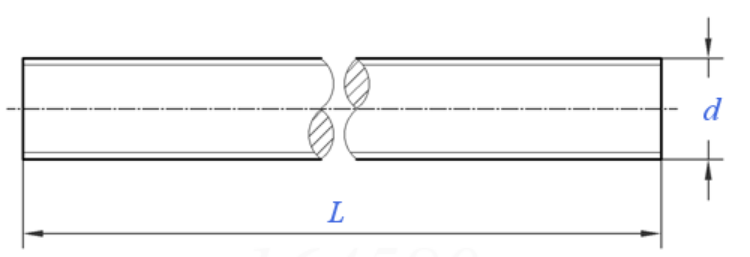
ISO thread rods, also known as threaded studs, are cylindrical fasteners with external threads running along their entire length. They are fundamental components in mechanical engineering, utilized for a broad spectrum of applications spanning construction, machinery, automotive assembly, and piping systems. Positioned within the fastening and joining technology sector, ISO thread rods serve as critical load-bearing elements, often employed in tension applications. Their standardized threading (typically metric, according to ISO 6150) ensures interchangeability and compatibility with a wide array of nuts and tapped holes. Core performance characteristics include tensile strength, yield strength, shear strength, fatigue resistance, and corrosion resistance, directly influencing the structural integrity and longevity of assembled components. A key industry pain point revolves around consistently achieving accurate thread form and maintaining dimensional tolerances to prevent assembly failures and ensure optimal load distribution.
Material Science & Manufacturing
The predominant material for ISO thread rod manufacturing is carbon steel, specifically grades such as Grade 4.8, 8.8, and 12.9, denoting increasing tensile strength levels. Alloy steels (e.g., stainless steel – 304, 316) are employed in corrosive environments. Material properties dictate performance; carbon steel offers high strength but is susceptible to corrosion, while stainless steel provides excellent corrosion resistance at a reduced strength. Manufacturing processes commonly include cold heading and subsequent thread rolling. Cold heading forms the cylindrical shape, improving the grain flow and enhancing strength. Thread rolling, a cold-forming process, creates the threads without material removal, preserving the material's strength and surface finish. Key parameters during thread rolling include roller pressure, feed rate, and die profile. Incorrect pressure can lead to work hardening and reduced thread form quality. Surface treatments, such as zinc plating, galvanization, or passivation (for stainless steel), are applied to enhance corrosion resistance. Hydrogen embrittlement, a risk during electroplating, requires post-plating heat treatment to release trapped hydrogen and prevent brittle failure. Quality control includes dimensional checks using calibrated gauges, hardness testing (Rockwell, Vickers), and tensile testing to verify mechanical properties against ISO standards.
Performance & Engineering
Performance of ISO thread rods is primarily governed by their ability to withstand tensile, shear, and fatigue loads. Tensile strength dictates the maximum load the rod can bear before fracturing, while yield strength defines the point at which permanent deformation occurs. Shear strength is critical in applications involving transverse forces. Fatigue resistance is paramount in dynamically loaded applications, such as machinery where cyclic stresses are prevalent. Engineering calculations for threaded fasteners must account for stress concentration at the thread roots, which can initiate failure. Preload, the initial tension applied to the rod during assembly, significantly affects fatigue life. Insufficient preload can lead to joint loosening, while excessive preload can exceed the rod's yield strength. Environmental resistance is another crucial factor. Exposure to corrosive environments can lead to thread galling, pitting corrosion, and ultimately, reduced load-carrying capacity. Selection of appropriate materials and surface treatments is vital for maintaining performance in harsh conditions. Compliance requirements include adherence to ISO 6150 (thread dimensions), ISO 898-1 (mechanical properties), and relevant industry-specific standards regarding material traceability and testing.
Technical Specifications
| Material Grade | Tensile Strength (MPa) | Yield Strength (MPa) | Hardness (HRC) | |
|---|---|---|---|---|
| 4.8 | 400 | 240 | 24-32 | |
| 8.8 | 800 | 600 | 32-38 | |
| 12.9 | 1200 | 980 | 38-44 | |
| A2 Stainless Steel (304) | 500 | 210 | 20-25 | |
| A4 Stainless Steel (316) | 600 | 220 | 22-30 | |
| Thread Diameter (mm) | M6 | M8 | M10 | M12 |
Failure Mode & Maintenance
Common failure modes for ISO thread rods include fatigue cracking (particularly in dynamically loaded applications), thread stripping (due to excessive torque or improper preload), corrosion-induced failure (pitting, stress corrosion cracking), and brittle fracture (especially in cold temperatures or with hydrogen embrittlement). Fatigue cracking typically initiates at stress concentration points, such as thread roots. Thread stripping occurs when the threads are deformed beyond their elastic limit. Corrosion weakens the material and accelerates fatigue crack growth. Brittle fracture is characterized by a sudden, catastrophic failure with little or no plastic deformation. Preventive maintenance involves regular visual inspection for signs of corrosion, thread damage, or deformation. Applying appropriate lubricants during assembly and periodically re-tightening fasteners can help prevent thread galling and maintain preload. For applications in corrosive environments, protective coatings should be inspected and reapplied as necessary. In cases of suspected fatigue damage, non-destructive testing methods (e.g., ultrasonic testing, magnetic particle inspection) can be used to detect cracks before they lead to catastrophic failure. When replacing a failed rod, it is crucial to use a rod of the same material grade and dimensions to maintain the integrity of the assembly.
Industry FAQ
Q: What is the impact of thread engagement length on the joint strength of an ISO thread rod connection?
A: The thread engagement length – the amount of thread area in contact between the rod and the nut or tapped hole – significantly impacts joint strength. Shorter engagement lengths result in lower shear area and increased stress concentration, reducing the connection's shear capacity. Generally, a minimum engagement length of at least one and a half times the thread diameter is recommended to ensure adequate strength and prevent thread stripping. However, exceeding this length provides diminishing returns and can increase the risk of galling.
Q: How do different surface treatments affect the corrosion resistance of ISO thread rods?
A: Different surface treatments offer varying levels of corrosion protection. Zinc plating provides sacrificial corrosion protection, meaning the zinc corrodes preferentially, protecting the steel underneath. Galvanization offers thicker zinc coating and superior corrosion resistance. Stainless steel passivation creates a passive chromium oxide layer that inhibits corrosion. The selection of surface treatment depends on the severity of the corrosive environment. For marine or highly corrosive applications, stainless steel is generally preferred. Regular inspection and reapplication of protective coatings are essential to maintain corrosion resistance over time.
Q: What are the key considerations when selecting an ISO thread rod for a high-temperature application?
A: In high-temperature applications, material selection is crucial. Carbon steels lose strength and creep resistance at elevated temperatures. Alloy steels, particularly those containing chromium and molybdenum, offer better high-temperature performance. The fastening joint should also be designed to accommodate thermal expansion and contraction. Lubricants used during assembly must be compatible with the operating temperature. Additionally, the risk of oxidation and scaling increases with temperature, potentially affecting thread fit and load-carrying capacity.
Q: How does the proof load differ from the tensile strength of an ISO thread rod, and why is it important?
A: The proof load is the maximum tensile stress that a fastener can withstand without permanent deformation, while tensile strength is the stress at which the fastener fractures. The proof load is a more relevant parameter for most engineering applications, as it ensures that the fastener will maintain its clamping force under load. It is typically 75-90% of the ultimate tensile strength. Using the proof load in design calculations ensures a safety factor and prevents permanent set, which can lead to joint loosening and failure.
Q: What are the potential consequences of using a thread rod with an incorrect thread form or pitch?
A: Using a thread rod with an incorrect thread form or pitch can lead to several issues, including difficulty in assembly, thread galling, reduced clamping force, and ultimately, joint failure. If the threads do not engage properly, the load will not be distributed evenly, leading to stress concentration and premature failure. Furthermore, improper thread engagement can cause the nut or tapped hole to strip, rendering the connection unusable. It is essential to verify that the thread form and pitch of the rod match those of the mating components.
Conclusion
ISO thread rods are indispensable fasteners, offering standardized solutions for a multitude of engineering applications. Their performance is intrinsically linked to material science, manufacturing precision, and rigorous adherence to industry standards. Understanding the impact of material grade, thread engagement length, surface treatments, and environmental factors is paramount for ensuring reliable and durable joint design. Careful consideration of potential failure modes – including fatigue, corrosion, and thread stripping – combined with proactive maintenance practices, is crucial for maximizing the service life and safety of these critical components.
Looking ahead, advancements in material science and manufacturing techniques will continue to refine the performance characteristics of ISO thread rods. The development of high-strength alloys and optimized thread profiles promises to enhance load-carrying capacity and fatigue resistance. Furthermore, the increasing adoption of digital twins and predictive maintenance tools will enable engineers to monitor fastener health and proactively address potential issues, further enhancing the reliability and longevity of mechanical assemblies.