
Introduction
Grade 4.8 hex nuts are standardized fasteners critical to numerous industrial applications. Positioned within the fastening supply chain, these nuts are integral components in bolted joint assemblies, providing clamping force and preventing loosening. The ‘4.8’ designation indicates the tensile strength (400 MPa) and yield strength (240 MPa) of the steel used in their manufacture. This guide provides an in-depth analysis of grade 4.8 hex nuts, covering material composition, manufacturing processes, performance characteristics, failure modes, and relevant industry standards. Core performance characteristics include load-bearing capacity, corrosion resistance (dependent on coating), and dimensional accuracy. A primary industry pain point revolves around ensuring consistent material quality and accurately identifying counterfeit or substandard products which compromise structural integrity and safety.
Material Science & Manufacturing
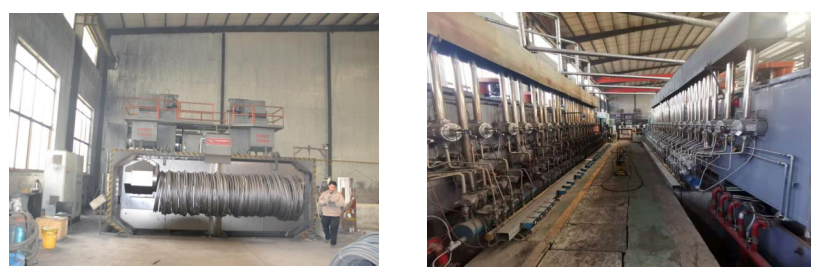
Grade 4.8 hex nuts are predominantly manufactured from medium carbon steel, typically conforming to standards like ISO 898-2. The steel composition generally includes carbon (0.25-0.33%), manganese (0.60-0.90%), silicon (0.20-0.40%), phosphorus (≤0.035%), and sulfur (≤0.035%). The precise chemical composition directly impacts mechanical properties. Manufacturing begins with steel billet forming, followed by cold heading to create the nut’s basic shape. Critical parameters during cold heading include die geometry, heading speed, and lubrication to prevent material defects and ensure dimensional precision. A crucial step is thread rolling, utilizing a forming process rather than cutting threads, to enhance thread strength and work harden the material. Heat treatment, specifically quenching and tempering, is essential to achieve the desired hardness and ductility. Quality control involves rigorous material testing (chemical analysis, tensile strength testing) and dimensional inspection (thread pitch, nut height) using calibrated instruments like coordinate measuring machines (CMMs). Surface treatments like zinc plating, phosphate coating, or other corrosion-resistant coatings are applied as a final step to enhance environmental protection.
Performance & Engineering
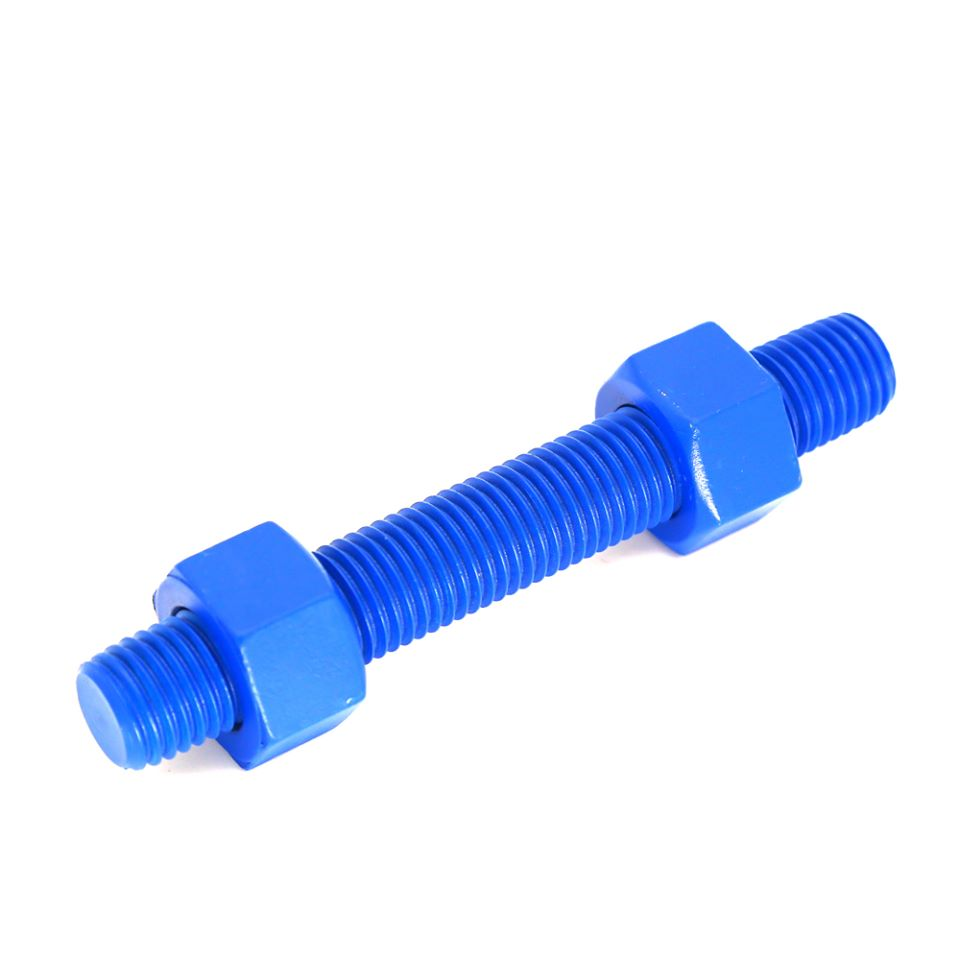
The performance of a grade 4.8 hex nut is fundamentally governed by its load-bearing capacity, which is determined by its tensile strength, shear strength, and prevailing torque resistance. Force analysis involves calculating the clamping force generated by tightening the nut onto a bolt, accounting for factors like friction between the nut and bolt threads, and the bolt’s proof load. Environmental resistance is critical; exposure to corrosive environments (e.g., saltwater, industrial chemicals) can lead to degradation of the coating and eventual corrosion of the nut material. This necessitates careful selection of appropriate coatings based on the intended application. Compliance requirements, such as those stipulated by ISO 898-2 and DIN 934, specify dimensional tolerances, mechanical properties, and material traceability. Furthermore, in applications subject to dynamic loading (vibration, impact), fatigue resistance becomes a key engineering consideration. Finite element analysis (FEA) is frequently employed to simulate stress distribution within the nut under various loading conditions, optimizing its design to maximize fatigue life. Prevailing torque, achieved through features like nylon inserts or deformed threads, resists loosening due to vibration.
Technical Specifications
| Property | Value | Test Method | Tolerance |
|---|---|---|---|
| Tensile Strength | 400 MPa | ISO 898-1 | ±20 MPa |
| Yield Strength | 240 MPa | ISO 898-1 | ±15 MPa |
| Hardness (Brinell) | 240-340 HB | ASTM E10 | ±10 HB |
| Thread Pitch | Varies by Size | ISO 965 | ±0.025 mm |
| Coating Thickness (Zinc Plating) | 5-12 µm | ASTM B693 | ±1 µm |
| Hydrogen Embrittlement Resistance | Class A | ISO 4946 | Pass/Fail |
Failure Mode & Maintenance
Grade 4.8 hex nuts are susceptible to several failure modes. Fatigue cracking can occur under cyclic loading, initiating at stress concentration points like thread roots. Corrosion, particularly if the coating is compromised, leads to material degradation and reduced strength. Stripped threads can result from over-tightening or use of incompatible bolt/nut combinations. Hydrogen embrittlement, a concern with zinc-plated parts, can cause brittle fracture under tensile load. Shear failure can occur if the nut is subjected to excessive shear forces. Preventative maintenance includes regular inspection for corrosion, thread damage, and signs of deformation. Lubrication of threads during installation reduces friction and prevents galling. Proper torque control is crucial to avoid over-tightening. If corrosion is detected, the nut should be replaced. For critical applications, periodic non-destructive testing (NDT) methods like magnetic particle inspection can detect subsurface cracks. Storage of nuts should be in a dry environment to prevent corrosion.
Industry FAQ
Q: What is the impact of varying the zinc plating thickness on the corrosion resistance of a grade 4.8 hex nut?
A: Increasing zinc plating thickness generally improves corrosion resistance, providing a greater barrier against environmental elements. However, thicker coatings can also introduce increased hydrogen embrittlement risk, requiring post-coating treatments like baking to drive off hydrogen. ASTM B693 specifies different zinc coating classes (Class 50, Class 80, etc.) based on coating thickness and corrosion performance requirements.
Q: Can a grade 4.8 hex nut be safely used with a grade 8.8 bolt? What are the considerations?
A: While mechanically compatible, combining a grade 4.8 nut with a grade 8.8 bolt is generally not recommended for critical applications. The lower strength of the nut will become the limiting factor in the joint’s overall load-bearing capacity. Using mismatched grades can lead to premature failure of the nut under high stress. It's best practice to match bolt and nut grades to ensure optimal performance.
Q: What are the key differences between a standard hex nut and a flange hex nut in terms of performance and application?
A: A flange hex nut incorporates a flange with a larger bearing surface. This distributes the load over a wider area, reducing stress concentration on the joined material, and providing a more secure connection. Flange nuts are particularly advantageous when used with softer materials or when dealing with oversized holes. They also offer increased resistance to loosening.
Q: How does the manufacturing process – specifically, cold heading versus machining – affect the mechanical properties of a grade 4.8 hex nut?
A: Cold heading improves the material’s tensile strength due to work hardening. It also creates a favorable grain flow along the contours of the nut, enhancing its strength and fatigue resistance. Machining, while offering greater dimensional precision, doesn’t impart the same degree of work hardening and can introduce stress concentrations at cut surfaces. Therefore, cold heading is the preferred manufacturing method for grade 4.8 hex nuts.
Q: What quality control checks are essential to verify the authenticity and integrity of a grade 4.8 hex nut shipment?
A: Essential quality control checks include visual inspection for surface defects (cracks, corrosion), dimensional verification (thread pitch, nut height) using calibrated instruments, material certification (chemical composition), and mechanical testing (tensile strength, hardness). Batch traceability and adherence to relevant industry standards (ISO 898-2, DIN 934) are also critical for ensuring product integrity.
Conclusion
Grade 4.8 hex nuts represent a fundamental fastening element, demanding rigorous attention to material science, manufacturing precision, and quality control. Understanding their performance characteristics, potential failure modes, and adherence to relevant standards is paramount for ensuring the reliability and safety of bolted joint assemblies across diverse industries. The ‘4.8’ designation is not merely a number, but a codified specification that dictates the nut’s suitability for specific applications.
Future advancements in hex nut technology will likely focus on enhancing corrosion resistance through novel coating materials and optimizing designs for improved fatigue life, particularly in dynamic loading scenarios. Increased emphasis on traceability and counterfeit detection will also be crucial to maintaining the integrity of the supply chain and safeguarding against substandard products. The continued development of improved NDT methods will be vital for proactive identification of defects.