
Introduction
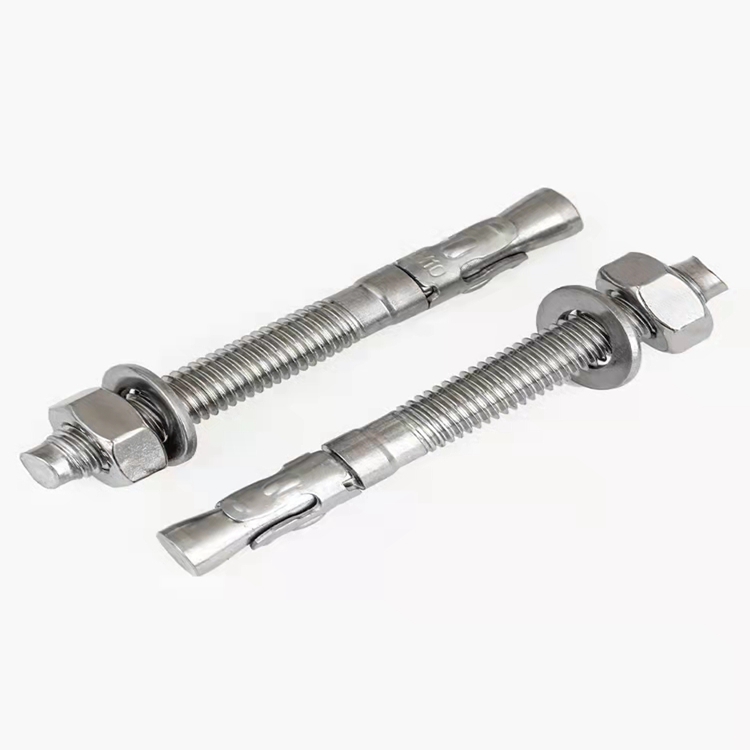
White zinc wedge anchors are a critical fastening solution employed in a diverse range of construction and industrial applications. These anchors are designed for use in concrete, brick, and block substrates, providing a secure and reliable connection for various fixtures and structural elements. Their primary function is to distribute applied loads across a wider area of the base material, minimizing stress concentrations and preventing premature failure. The “white zinc” finish refers to a zinc coating applied via mechanical deposition, offering moderate corrosion resistance compared to hot-dip galvanizing. Positioned within the fastening industry as a cost-effective alternative to more expensive anchoring systems like epoxy anchors or sleeved anchors, white zinc wedge anchors find utility in non-critical structural applications, interior fixtures, and general-purpose fastening where high corrosion resistance is not paramount. Core performance characteristics include tensile strength, shear strength, embedment depth requirements, and pull-out resistance. Understanding these characteristics is essential for proper selection and installation to ensure optimal performance and safety.
Material Science & Manufacturing
The manufacturing of white zinc wedge anchors involves several key material science and process controls. The anchor body is typically manufactured from medium carbon steel, such as AISI 1045 or equivalent, offering a balance of strength and ductility. The steel undergoes a cold forming process, typically upset forging or cold heading, to create the anchor’s body shape, including the tapered cone and threaded section. This process orients the grain flow of the steel for improved tensile strength. The “wedge” component, crucial for the anchor's function, is also made from medium carbon steel and is often case hardened to increase its wear resistance. The white zinc coating is applied via mechanical plating, often utilizing a zinc-nickel alloy to improve adhesion and corrosion protection. This process involves impacting zinc particles onto the steel surface, creating a metallurgical bond. Key parameters controlled during manufacturing include steel composition, cold forming temperature, hardening depth of the wedge, zinc coating thickness (typically 15-25 μm), and coating uniformity. Deviation from these parameters can significantly affect the anchor’s performance and longevity. The mechanical properties of the steel, such as yield strength and ultimate tensile strength, are critical, and batch testing is performed to ensure compliance with relevant standards. Surface preparation prior to zinc coating, involving degreasing and cleaning, is vital for adequate adhesion. The chemical composition of the zinc bath is also meticulously monitored and adjusted to maintain coating quality.
Performance & Engineering
The performance of white zinc wedge anchors is governed by a complex interplay of mechanical forces and material properties. Under tensile loading, the anchor relies on the wedging action between the anchor body, the expansion sleeve (if present), and the surrounding concrete. Force analysis indicates that the majority of the load is transferred through shear stresses along the length of the expanded anchor. Shear forces are critical in applications where lateral loads are significant. The anchor’s pull-out strength is directly related to the embedment depth, the diameter of the anchor, and the compressive strength of the concrete. Increasing the embedment depth increases the surface area available for shear transfer, improving pull-out resistance. Environmental resistance is primarily determined by the zinc coating's ability to prevent corrosion of the underlying steel. While white zinc provides a degree of protection, it is susceptible to corrosion in harsh environments, particularly those with high chloride concentrations or acidic conditions. Compliance requirements are dictated by various international standards (detailed in the footer section) that specify minimum performance criteria for tensile strength, shear strength, and pull-out capacity. Engineering design considerations include proper anchor spacing to avoid edge distances that compromise concrete breakout strength, and selection of the appropriate anchor diameter and length based on the anticipated loads and concrete properties. Finite element analysis (FEA) is often used to model the anchor’s behavior under various loading scenarios and optimize its design.
Technical Specifications
| Anchor Diameter (mm) | Minimum Tensile Strength (kN) | Minimum Shear Strength (kN) | Minimum Embedment Depth (mm) |
|---|---|---|---|
| 6 | 25 | 15 | 40 |
| 8 | 40 | 25 | 50 |
| 10 | 60 | 40 | 60 |
| 12 | 85 | 60 | 75 |
| 16 | 130 | 90 | 90 |
| 20 | 200 | 140 | 110 |
Failure Mode & Maintenance
White zinc wedge anchors are susceptible to several failure modes in practical applications. Fatigue cracking can occur under cyclic loading, particularly if the anchor is subjected to vibration or repeated stress fluctuations. This is initiated at stress concentration points, such as the thread roots. Concrete breakout failure occurs when the concrete surrounding the anchor fails in compression, exceeding its compressive strength. This is often caused by insufficient embedment depth or excessive loading. Pull-out failure, as mentioned earlier, results from inadequate frictional resistance between the anchor and the concrete. Corrosion is a significant concern, especially in exposed environments. The white zinc coating can degrade over time, leading to rust formation and a reduction in the anchor's strength. Hydrogen embrittlement can also occur, particularly in high-strength steel, when exposed to corrosive environments. Maintenance primarily involves regular inspection for signs of corrosion, loosening, or concrete degradation. If corrosion is detected, the anchor should be replaced. Preventative maintenance includes applying a protective coating to the exposed portion of the anchor and ensuring proper drainage to minimize moisture accumulation. Periodic torque checks can verify that the anchor remains securely fastened. When replacing a failed anchor, it’s critical to ensure the new anchor has identical or superior specifications to the original.
Industry FAQ
Q: What is the primary difference between a white zinc coating and a hot-dip galvanized coating in terms of corrosion resistance?
A: While both coatings provide corrosion protection, hot-dip galvanizing offers significantly superior corrosion resistance due to its thicker coating and metallurgical bond with the steel substrate. White zinc, being mechanically deposited and thinner, provides moderate protection suitable for less aggressive environments. Hot-dip galvanizing is preferred for outdoor applications and exposure to chlorides or harsh chemicals.
Q: What concrete compressive strength is typically required for optimal performance of a white zinc wedge anchor?
A: Most manufacturers specify a minimum concrete compressive strength of 25 MPa (3600 psi) for reliable performance. Higher compressive strengths generally result in increased pull-out and shear resistance. However, using anchors in concrete with excessively high strength can also lead to premature concrete failure if the anchor isn't appropriately sized.
Q: How does embedment depth affect the anchor's performance, and what are the typical minimum embedment recommendations?
A: Increased embedment depth significantly enhances both pull-out strength and shear resistance by increasing the surface area for load transfer. Minimum embedment depths vary based on anchor diameter and manufacturer specifications, but typically range from 40mm to 110mm, as shown in the Technical Specifications table. Insufficient embedment can lead to premature failure.
Q: What factors should be considered when selecting the appropriate diameter of a white zinc wedge anchor for a specific application?
A: Anchor diameter selection should be based on the anticipated tensile and shear loads, the concrete compressive strength, and the required safety factor. Higher loads necessitate larger diameter anchors. Consideration must also be given to edge distances and spacing to prevent concrete breakout failure. Performing load calculations and consulting manufacturer’s data sheets are essential.
Q: Can white zinc wedge anchors be used in cracked concrete, and if so, are there any specific considerations?
A: While white zinc wedge anchors can be used in cracked concrete, it requires careful consideration. They are generally not suitable for sustained tensile loads in cracked concrete unless specifically tested and approved for such applications. Using anchors with enhanced ductility and corrosion resistance is recommended, and appropriate safety factors must be applied to account for the reduced concrete strength due to cracking.
Conclusion
White zinc wedge anchors represent a versatile and cost-effective fastening solution for a wide spectrum of construction and industrial applications. Their performance is critically dependent on meticulous material selection, precise manufacturing processes, and adherence to established engineering principles. Understanding the material science behind the anchor’s components – from the steel substrate to the zinc coating – is essential for predicting long-term performance and mitigating potential failure modes. The specified technical parameters, as outlined in this guide, provide a foundation for selecting the appropriate anchor for a given load and substrate condition.
Ultimately, the successful implementation of white zinc wedge anchors hinges on a comprehensive understanding of their limitations and proper installation techniques. While providing adequate fastening strength in many applications, their corrosion resistance is moderate and may necessitate alternative anchoring systems in highly corrosive environments. Continued advancements in coating technologies and anchor designs will likely lead to enhanced performance and expanded applications for this class of fastener, offering engineers and contractors increasingly reliable and durable fastening solutions.