
Introduction
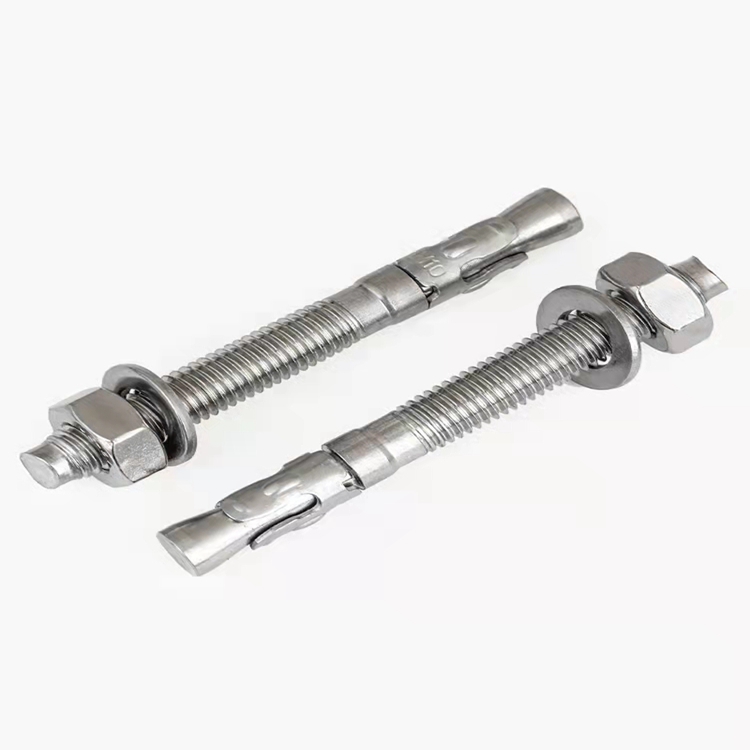
Color-zinc wedge anchors represent a critical fastening solution within the broader structural anchoring industry. These anchors are designed for securing fixtures into concrete, brick, and block substrates, offering a robust alternative to expansion bolts and sleeve anchors. Positioned within the supply chain between raw material manufacturers (steel, zinc, and chromate conversion coating suppliers) and construction/industrial end-users, the performance of these anchors is fundamentally tied to material composition, manufacturing precision, and adherence to stringent performance standards. Core performance characteristics include tensile strength, shear strength, embedment depth requirements, and resistance to environmental corrosion. The increasing demand for durable and aesthetically pleasing fastening solutions drives the continued development and refinement of color-zinc coating technologies applied to wedge anchor designs, particularly in applications where visual integration is paramount. A key industry pain point lies in inconsistent coating quality leading to premature corrosion and structural failure, necessitating meticulous quality control throughout the manufacturing process.
Material Science & Manufacturing
The primary material for color-zinc wedge anchors is carbon steel, typically AISI 1018 or equivalent, selected for its balance of strength, ductility, and weldability. The steel is formed into the anchor body via cold forging, a process crucial for grain refinement and increased strength compared to casting. This process necessitates precise control of forging pressure, die geometry, and lubrication to prevent defects like laps and voids. Following forging, the anchors undergo a series of surface preparation steps. This begins with degreasing to remove machining oils, followed by pickling in an acid bath (typically hydrochloric or sulfuric acid) to remove mill scale and rust. A zinc coating is then applied via hot-dip galvanizing, providing a sacrificial barrier against corrosion. Finally, a chromate conversion coating is applied – this is where the ‘color’ aspect is introduced. Different chromate formulations (clear, yellow, black, olive drab) create varying hues. The chromate layer passivates the zinc surface, further enhancing corrosion resistance. Manufacturing tolerances are critical. Thread pitch, anchor diameter, and wedge angle must adhere to strict specifications (typically ANSI/ASME B1.13.3M) to ensure proper engagement and load transfer. Failure to maintain these tolerances can result in stripping, pull-out failure, or reduced load capacity. Chemical compatibility between the steel substrate, zinc coating, and chromate conversion coating must also be verified to prevent intermetallic layer formation or coating delamination.
Performance & Engineering
The performance of color-zinc wedge anchors is governed by several engineering principles. Force analysis focuses on tensile loading (pull-out resistance) and shear loading (lateral force resistance). Pull-out resistance depends on the anchor embedment depth, the concrete compressive strength, and the anchor’s geometry (wedge angle and body diameter). Shear resistance is primarily determined by the concrete breakout strength and the anchor’s edge distance and spacing. Finite element analysis (FEA) is commonly used to model stress distribution within the anchor and the surrounding concrete under various loading conditions. Environmental resistance is a major consideration. While the zinc coating provides sacrificial protection, prolonged exposure to corrosive environments (saltwater, acidic rain) can lead to coating degradation and eventual corrosion of the steel substrate. The effectiveness of the chromate conversion coating in inhibiting corrosion is directly related to its thickness, uniformity, and chemical composition. Compliance requirements vary depending on the application and geographical location. For seismic applications, anchors must meet seismic performance criteria outlined in ICC-ES AC308. For critical infrastructure projects, adherence to Buy American Act provisions may be mandatory. The wedge mechanism itself is subject to fatigue analysis; repeated loading and unloading cycles can induce micro-cracking and eventual failure of the wedge. Proper installation torque is crucial; over-torquing can damage the anchor or the substrate, while under-torquing can result in insufficient clamping force.
Technical Specifications
| Diameter (inches) | Length (inches) | Minimum Tensile Strength (lbs) | Minimum Shear Strength (lbs) |
|---|---|---|---|
| 1/4 | 2-1/2 | 6,500 | 3,250 |
| 3/8 | 3 | 11,000 | 5,500 |
| 1/2 | 3-1/2 | 18,000 | 9,000 |
| 5/8 | 4 | 25,000 | 12,500 |
| 3/4 | 4-1/2 | 35,000 | 17,500 |
| 1 | 5 | 50,000 | 25,000 |
Failure Mode & Maintenance
Color-zinc wedge anchors are susceptible to several failure modes. Corrosion is a primary concern, particularly in marine or chemically aggressive environments. Galvanic corrosion can occur if the anchor is in contact with dissimilar metals. Hydrogen embrittlement, induced by acidic conditions, can reduce the ductility of the steel, leading to brittle fracture. Mechanical failure can manifest as stripping of the threads, shearing of the anchor body, or pull-out failure due to inadequate embedment depth. Fatigue cracking can occur under cyclic loading, especially near stress concentrators (e.g., thread roots). Concrete failure can involve concrete breakout, cone cracking, or splitting of the concrete. Maintenance recommendations include periodic visual inspection for signs of corrosion or damage. If corrosion is detected, the anchor should be replaced. Re-tightening of anchors may be necessary to compensate for concrete creep or thermal expansion/contraction. Preventative measures include applying a protective coating to the exposed portion of the anchor and ensuring proper drainage to prevent water accumulation around the anchor. Regular inspection of the surrounding concrete structure for cracks or spalling is also crucial. For critical applications, consider using stainless steel anchors or applying a supplemental corrosion inhibitor.
Industry FAQ
Q: What is the impact of concrete compressive strength on the pull-out capacity of a wedge anchor?
A: The pull-out capacity of a wedge anchor is directly proportional to the square root of the concrete compressive strength (f'c). Higher f'c values result in increased concrete breakout strength and, consequently, higher pull-out resistance. Manufacturers typically provide pull-out capacity data for various f'c levels, and it's essential to select an anchor appropriate for the specific concrete being used. Using an anchor rated for a lower f'c than the actual concrete strength is acceptable, but using one rated for a higher f'c provides no additional benefit.
Q: How does the edge distance and spacing affect the performance of wedge anchors?
A: Edge distance (the distance from the center of the anchor to the edge of the concrete) and spacing (the distance between adjacent anchors) are critical parameters that influence shear capacity and prevent concrete breakout. Insufficient edge distance or spacing can lead to premature concrete failure. Industry standards (ICC-ES AC308) specify minimum edge distance and spacing requirements based on the anchor diameter and concrete strength. These requirements must be strictly adhered to during installation.
Q: What is the role of the chromate conversion coating in color-zinc anchors and what are the alternatives?
A: The chromate conversion coating provides an additional layer of corrosion protection by passivating the zinc surface. However, hexavalent chromium, traditionally used in chromate conversion coatings, is a known environmental hazard. Alternatives include trivalent chromium conversion coatings, which are less toxic, and non-chromate coatings based on molybdate or phosphate chemistries. While these alternatives offer improved environmental performance, they may not provide the same level of corrosion resistance as hexavalent chromate coatings.
Q: What torque values should be used during installation, and how do you prevent over-torquing?
A: Recommended torque values are specified by the anchor manufacturer and depend on the anchor diameter, embedment depth, and concrete strength. Using a calibrated torque wrench is crucial to ensure proper installation. Over-torquing can damage the anchor threads or the concrete, reducing its load capacity. Under-torquing can result in insufficient clamping force and potential loosening. A progressive tightening approach, gradually increasing torque in increments, is recommended.
Q: Are color-zinc wedge anchors suitable for use in saltwater environments?
A: While the zinc coating provides sacrificial corrosion protection, color-zinc wedge anchors are generally not recommended for prolonged, direct exposure to saltwater environments without additional protection. Saltwater accelerates corrosion, even with the zinc coating. In such applications, stainless steel anchors or anchors with specialized corrosion-resistant coatings (e.g., epoxy-coated) are preferable. If color-zinc anchors must be used, applying a supplemental protective coating (e.g., marine-grade epoxy) to the exposed threads and body is strongly advised.
Conclusion
Color-zinc wedge anchors represent a versatile and cost-effective fastening solution for a wide range of applications. However, their performance is intimately linked to material science principles, precise manufacturing control, and adherence to established engineering practices. Understanding the potential failure modes – particularly corrosion, mechanical failure, and concrete breakout – is crucial for ensuring long-term structural integrity. Proper material selection, meticulous installation procedures, and routine maintenance are essential for maximizing the service life and reliability of these critical components.
The industry trend toward more sustainable coating technologies necessitates a shift away from hexavalent chromium-based conversion coatings. Continued research and development in alternative coating chemistries will be crucial for maintaining both corrosion resistance and environmental compliance. Future developments may also focus on improved anchor geometries and material compositions to enhance load-carrying capacity and fatigue resistance, especially in demanding applications such as seismic zones and critical infrastructure projects.