
Introduction
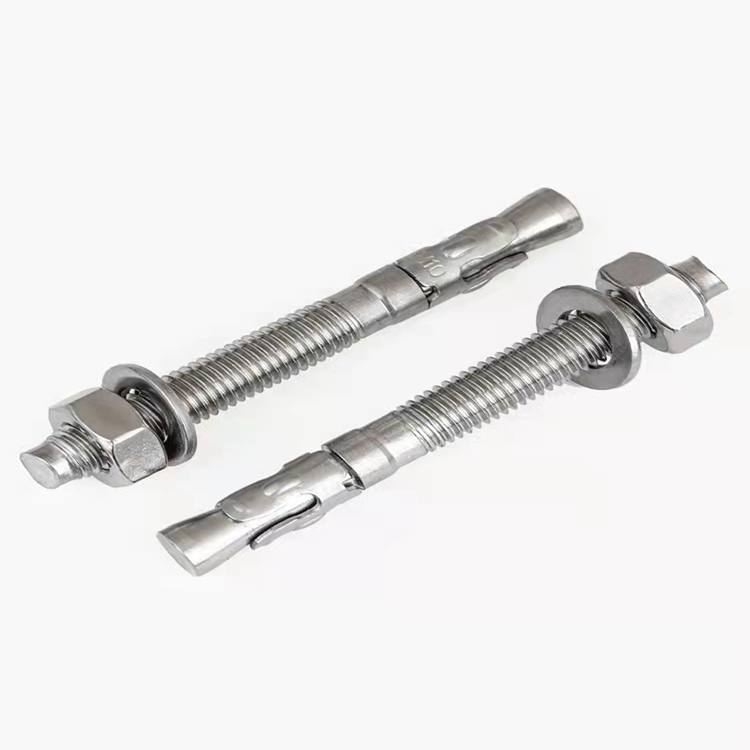
TC bolts, or Tension Control bolts, represent a critical fastening solution in numerous industrial applications, particularly within the automotive, construction, and heavy machinery sectors. These bolts are designed to provide a consistent and measurable clamping force during installation, differentiating them from standard bolts tightened via torque control. Their technical position within the fastening chain lies beyond simple mechanical joining; they facilitate preloaded connections crucial for structural integrity and dynamic performance. Core performance characteristics include high tensile strength, precise clamp load control, and resistance to loosening under vibration and cyclical loading. The increasing demand for lighter, stronger, and more reliable assemblies drives the continued adoption of TC bolts, especially in applications where fatigue life and joint durability are paramount concerns. They are fundamentally distinct from self-locking nuts or adhesive bonding in that they provide a definitive, measurable, and repeatable clamping force through controlled elongation.
Material Science & Manufacturing
TC bolt manufacturing relies heavily on high-strength alloy steels, primarily conforming to standards like AISI 4340, 8740, or similar grades depending on the application’s stress requirements. These steels undergo rigorous heat treatment processes, including hardening and tempering, to achieve desired tensile strengths exceeding 1000 MPa. Raw material composition is critical; controlled levels of carbon, manganese, chromium, and molybdenum contribute to optimal mechanical properties and fracture toughness. The manufacturing process typically begins with cold forging to establish the bolt's initial shape, enhancing grain flow and improving strength. Thread rolling, rather than machining, is preferred for thread formation as it maintains the integrity of the material's grain structure, preventing stress concentrations. A critical step is the application of a specialized coating, often cadmium or zinc flake, providing corrosion resistance. The tension control feature is achieved by machining a precise spline or groove onto the bolt shank. Parameter control during spline machining is paramount; dimensional accuracy within ±0.02 mm is standard to ensure predictable elongation and clamp load. Quality control includes ultrasonic testing for internal defects and dimensional inspection using coordinate measuring machines (CMMs). Hydrogen embrittlement is a significant concern during heat treatment and coating processes, requiring strict adherence to controlled atmosphere practices and post-treatment baking.
Performance & Engineering
The performance of TC bolts is fundamentally governed by force analysis, specifically the relationship between bolt elongation, clamping force, and tensile stress. The clamp load is directly proportional to the bolt’s elongation and material’s tensile strength (F = kΔL, where F is force, k is the stiffness, and ΔL is elongation). Finite element analysis (FEA) is routinely employed to model bolt behavior under various loading conditions, including static, dynamic, and fatigue. Environmental resistance is a key consideration; TC bolts are subjected to corrosion testing (salt spray testing, ASTM B117) to evaluate coating effectiveness. Compliance requirements are dictated by industry-specific standards (e.g., automotive OEMs often have proprietary standards exceeding general ISO specifications). Functional implementation involves a specific tightening sequence utilizing a calibrated tensioning tool. This tool measures the bolt’s elongation directly, ensuring the desired clamp load is achieved. A critical engineering aspect is the prevention of thread galling during installation, addressed through lubricant selection and proper thread preparation. The preload achieved by TC bolts minimizes joint separation, reducing fatigue loading and enhancing the overall structural integrity of the assembly. Moreover, proper preload mitigates the effects of thermal expansion and contraction, preventing loosening due to temperature fluctuations. Bolt material selection impacts fatigue performance; higher yield strength materials offer improved fatigue resistance but may exhibit reduced ductility.
Technical Specifications
| Parameter | Grade 8.8 (Typical) | Grade 10.9 (High Strength) | Grade 12.9 (Premium) | Coating |
|---|---|---|---|---|
| Tensile Strength (MPa) | 800 | 1000 | 1200 | Zinc Flake (Typically) |
| Yield Strength (MPa) | 640 | 900 | 1100 | Cadmium (Alternative) |
| Elongation (%) | 18 | 16 | 14 | Passivation (Post-Coating) |
| Hardness (HRC) | 30-34 | 33-37 | 35-40 | Coating Thickness (µm) |
| Spline Tolerance (mm) | ±0.02 | ±0.02 | ±0.015 | 12-25 (Depending on Corrosion Resistance Level) |
| Typical Diameter (mm) | M8 - M20 | M10 - M24 | M12 - M30 | Hydrogen Embrittlement Relief (Baking) |
Failure Mode & Maintenance
TC bolt failures are multifaceted, originating from several modes. Fatigue cracking, particularly in high-vibration environments, is a prevalent issue. This arises from cyclical stress exceeding the material’s endurance limit. Thread stripping, often due to improper installation torque or insufficient lubrication, leads to loss of clamping force. Hydrogen embrittlement, as previously mentioned, compromises ductility and promotes brittle fracture. Corrosion, especially in aggressive environments, weakens the bolt material and contributes to stress corrosion cracking. Over-tightening, despite the controlled elongation principle, can still induce yielding and reduce bolt preload over time. Maintenance strategies focus on periodic inspections to detect signs of corrosion, cracking, or loosening. Visual inspection for surface defects and thread damage is crucial. Non-destructive testing (NDT) methods, such as dye penetrant inspection (DPI) and magnetic particle inspection (MPI), can reveal subsurface cracks. Regular torque checks, although less critical than initial tensioning, can confirm the continued integrity of the joint. Replacement of TC bolts is recommended following detection of any significant defect or after exceeding their service life based on application-specific requirements. Proper storage in a dry environment is essential to prevent corrosion during periods of non-use. Re-use of TC bolts is generally not recommended due to the potential for altered mechanical properties and reduced clamping force.
Industry FAQ
Q: What is the primary advantage of using TC bolts over standard torque-controlled bolts in a high-vibration application?
A: The key advantage lies in the consistent and measurable clamping force achieved with TC bolts. Torque control is susceptible to variations due to friction between the bolt, nut, and mating surfaces. TC bolts, relying on elongation, bypass this friction issue, providing a precise preload that resists loosening under vibration, significantly improving joint fatigue life.
Q: How does the spline machining process impact the fatigue life of a TC bolt?
A: While spline machining is essential for tension control, it introduces a stress concentration. However, modern machining techniques and careful spline geometry design minimize this effect. Proper surface finishing and shot peening are often employed to further enhance fatigue resistance in the spline area.
Q: What coating is most effective for maximizing corrosion resistance in a marine environment?
A: Zinc flake coatings, particularly those with a high aluminum content and post-treatment passivation, offer superior corrosion resistance in marine environments compared to standard cadmium plating. However, the specific requirements should be assessed based on the severity of the exposure and applicable industry standards.
Q: What is the recommended procedure for verifying the correct clamp load after installation of a TC bolt?
A: While the installation process should achieve the designed clamp load through elongation measurement, periodic verification can involve ultrasonic elongation measurement or, in some cases, strain gauging of the bolted joint. This is especially crucial for critical applications where joint integrity is paramount.
Q: What are the key considerations when selecting a TC bolt material for elevated temperature applications?
A: Material creep resistance and retention of mechanical properties at elevated temperatures are critical. Alloy steels with increased chromium and molybdenum content are often preferred, as they maintain higher yield strength and tensile strength at higher operating temperatures. Careful consideration of the thermal expansion coefficient is also necessary to avoid preload loss.
Conclusion
TC bolts represent a sophisticated fastening technology, offering superior performance and reliability compared to conventional bolting methods in demanding applications. Their capacity to deliver a consistently precise clamp load, coupled with robust material science and stringent manufacturing controls, makes them indispensable in industries prioritizing structural integrity and fatigue life. The selection and proper implementation of TC bolts require a thorough understanding of their underlying principles, including force analysis, material properties, and environmental considerations.
Looking ahead, continued advancements in material science, coating technologies, and non-destructive testing methods will further enhance the performance and longevity of TC bolts. The integration of smart fastening systems, incorporating sensors for real-time preload monitoring, represents a significant area of future development. Adopting a holistic approach to bolted joint design, encompassing TC bolt selection, proper installation procedures, and diligent maintenance protocols, is crucial for maximizing the benefits of this advanced fastening technology.