
Introduction
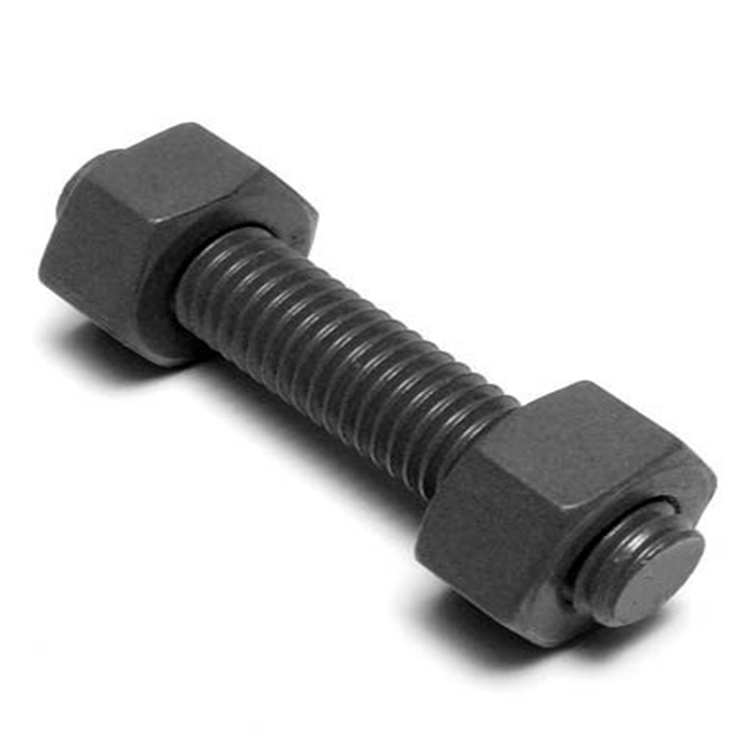
Stud bolts are internally threaded fasteners, distinguished by their two threaded ends and a plain, unthreaded shank. Positioned within the fastening industry as critical components for joining materials under high stress and temperature conditions, they offer superior tensile strength and fatigue resistance compared to conventional bolts. Their application spans a diverse range of industries, including petrochemical, power generation, pressure vessel fabrication, and automotive, where reliable and robust fastening solutions are paramount. Core performance characteristics include tensile strength, yield strength, proof load, prevailing torque (if applicable - for those with locking features), and corrosion resistance. The selection criteria are largely dictated by the applied load, operating temperature, and the chemical environment. A primary industry pain point is ensuring consistent material quality and thread accuracy to prevent joint failure, particularly in critical applications where downtime or catastrophic failure carries significant economic and safety repercussions.
Material Science & Manufacturing
Stud bolts are commonly manufactured from carbon steel (ASTM A193 Grade B7, A572 Grade 60), alloy steel (ASTM A193 Grade B8, Class 1, 2, 3; A320 Grade L7, L4), and stainless steel (ASTM A193 Grade B8M, A286, A419). The choice of material depends heavily on the application’s requirements for strength, corrosion resistance, and temperature performance. Carbon steel offers high strength at a relatively low cost, but is susceptible to corrosion. Alloy steels provide enhanced strength and toughness, crucial for high-pressure and high-temperature applications. Stainless steels exhibit excellent corrosion resistance, making them ideal for use in corrosive environments.
Manufacturing processes primarily involve cold heading followed by thread rolling, or hot forging for larger diameters. Cold heading provides superior material grain flow, enhancing tensile strength. Thread rolling forms the threads without cutting, preserving the material's integrity and improving fatigue life. Key parameter controls during manufacturing include precise control of material composition to meet specified alloy requirements, accurate thread form to ensure proper engagement with mating components (controlled by pitch diameter and thread angle), heat treatment (quenching and tempering) to achieve desired mechanical properties, and surface treatment (e.g., zinc plating, PTFE coating) to enhance corrosion resistance. Non-destructive testing (NDT) methods, such as magnetic particle inspection (MPI) and ultrasonic testing (UT), are employed to detect surface and subsurface flaws. For critical applications, traceability is maintained through material certifications and batch numbers.
Performance & Engineering
Performance analysis of stud bolts centers on their ability to withstand tensile, shear, and bending loads without failure. Force analysis involves calculating the stress concentration at the thread root and the shank, considering factors such as applied load, bolt diameter, and material properties. Fatigue analysis is critical for applications involving cyclical loading. The endurance limit of the material, combined with the stress amplitude, determines the bolt’s fatigue life. Environmental resistance is crucial, particularly in corrosive environments. Galvanic corrosion can occur when dissimilar metals are in contact in the presence of an electrolyte. Coatings, such as zinc, cadmium, or PTFE, are used to mitigate corrosion.
Compliance requirements vary by industry and application. Pressure Vessel Codes (ASME Section VIII Division 1 & 2) stipulate detailed requirements for stud bolt material selection, loading calculations, and inspection procedures. Nuclear applications require adherence to stringent quality assurance standards (e.g., ASME NQA-1). Automotive applications are governed by standards such as ISO 898-1. Prevailing torque, important for self-locking stud bolts, is determined by the thread geometry and the friction coefficient between the threads. Proper tightening procedures are essential to achieve the desired clamping force without exceeding the bolt’s yield strength. Torque-angle tightening is often employed to ensure accurate preload.
Technical Specifications
| Material Grade | Tensile Strength (MPa) | Yield Strength (MPa) | Hardness (HRC) |
|---|---|---|---|
| ASTM A193 Grade B7 | 860 | 745 | 30-34 |
| ASTM A193 Grade B8 Class 1 | 965 | 830 | 32-35 |
| ASTM A193 Grade B8M Class 1 | 930 | 800 | 32-35 |
| ASTM A286 | 950 | 830 | 35-40 |
| A572 Grade 60 | 655 | 345 | 26-32 |
| A320 Grade L7 | 790 | 620 | 28-32 |
Failure Mode & Maintenance
Stud bolt failure modes include tensile overload leading to fracture, fatigue cracking under cyclic loading, hydrogen embrittlement in high-strength materials exposed to hydrogen-containing environments, corrosion (pitting, crevice, galvanic) leading to material degradation, and thread stripping due to improper tightening or excessive load. Fatigue cracking typically initiates at the thread root, where stress concentration is highest. Hydrogen embrittlement reduces the bolt’s ductility and can cause brittle fracture. Corrosion weakens the material and reduces its load-carrying capacity.
Preventive maintenance involves regular inspection for signs of corrosion, damage, or loosening. Torque checks should be performed periodically to ensure proper preload. Lubrication of threads can reduce friction and prevent galling. In corrosive environments, protective coatings should be inspected and reapplied as needed. If a stud bolt shows signs of fatigue cracking or corrosion, it should be replaced immediately. Proper storage is crucial to prevent corrosion. Bolts should be stored in a dry, clean environment and protected from exposure to corrosive elements. For critical applications, a bolting specialist should be consulted to develop a comprehensive maintenance plan.
Industry FAQ
Q: What is the impact of thread form on stud bolt performance?
A: The thread form, specifically the pitch diameter and thread angle, significantly impacts stud bolt performance. Accurate thread form ensures proper engagement with mating components, maximizing load transfer efficiency. Deviations from specified tolerances can lead to stress concentration, premature fatigue failure, or thread stripping. Metric threads (ISO metric screw threads) are commonly used, but Unified National Coarse (UNC) and Unified National Fine (UNF) threads are also prevalent in certain industries. The choice of thread form depends on the application’s requirements and industry standards.
Q: How does heat treatment affect the mechanical properties of stud bolts?
A: Heat treatment, specifically quenching and tempering, is critical for achieving the desired mechanical properties of stud bolts. Quenching hardens the material by rapidly cooling it from a high temperature, while tempering reduces brittleness and improves toughness. The specific heat treatment parameters (temperature, time, cooling rate) are carefully controlled to achieve the target tensile strength, yield strength, and hardness. Improper heat treatment can result in insufficient hardness, reduced toughness, or residual stresses that compromise the bolt’s performance.
Q: What are the considerations for selecting stud bolts in high-temperature applications?
A: In high-temperature applications, creep resistance and oxidation resistance are crucial considerations. Materials such as alloy steels (e.g., A320 Grade L7) and stainless steels (e.g., A286) are preferred due to their superior high-temperature strength and creep resistance. Oxidation resistance can be enhanced by applying protective coatings. The applied load must be derated to account for the reduction in material strength at elevated temperatures. Bolting specialists should be consulted to select the appropriate material and tightening procedure for high-temperature applications.
Q: What is the role of prevailing torque in self-locking stud bolts?
A: Prevailing torque is the resistance to rotation when the nut is run onto the stud bolt. Self-locking stud bolts utilize various mechanisms (e.g., nylon inserts, deformed threads) to create prevailing torque, preventing loosening due to vibration or thermal cycling. The amount of prevailing torque is specified to ensure reliable locking performance. Excessive prevailing torque can lead to increased tightening effort and potential damage to the threads. Insufficient prevailing torque may result in inadequate locking.
Q: How can hydrogen embrittlement be mitigated in high-strength stud bolts?
A: Hydrogen embrittlement is a significant concern for high-strength stud bolts exposed to hydrogen-containing environments. Mitigation strategies include using materials with low susceptibility to hydrogen embrittlement, applying protective coatings (e.g., cadmium plating), controlling the surface condition of the bolts, and minimizing exposure to hydrogen. Baking (heat treatment) after plating can also help to drive out absorbed hydrogen. Proper material selection, careful manufacturing processes, and appropriate coating selection are crucial for preventing hydrogen embrittlement.
Conclusion
Stud bolts are essential fastening components demanding meticulous material selection, precise manufacturing control, and a thorough understanding of their performance characteristics. Their role in ensuring the integrity of critical infrastructure and equipment across diverse industries necessitates a proactive approach to failure analysis and preventative maintenance. The ongoing demand for higher strength, improved corrosion resistance, and enhanced fatigue life will continue to drive innovation in stud bolt materials and manufacturing techniques.
Selecting the correct stud bolt for a given application requires careful consideration of load requirements, environmental conditions, and applicable industry standards. Proper installation procedures, including accurate torque control, are vital to achieving optimal performance and preventing premature failure. By adhering to established best practices and conducting regular inspections, users can maximize the reliability and longevity of stud bolt connections, ensuring safe and efficient operation of their systems.