
Introduction
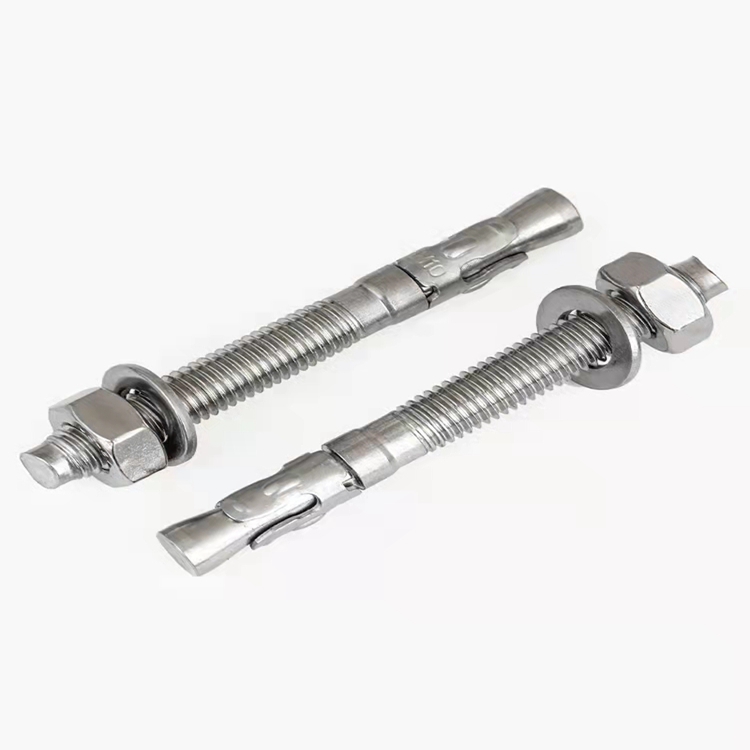
Fastenal nuts and bolts represent a foundational element within mechanical fastening systems, critical across diverse industrial applications including automotive, aerospace, construction, and manufacturing. These components provide a reliable method for joining materials, resisting shear and tensile forces to maintain structural integrity. Their technical position in the industry chain is as a final, often crucial, component in assembled products, dictating assembly speed, maintenance requirements, and long-term operational reliability. Core performance characteristics include tensile strength, yield strength, hardness, corrosion resistance, and dimensional accuracy. Understanding these parameters is paramount for selecting appropriate fasteners for specific applications, preventing premature failure, and ensuring system safety. This guide provides a comprehensive technical overview of fastenal nuts and bolts, covering material science, manufacturing processes, performance engineering, failure modes, and relevant industry standards.
Material Science & Manufacturing
Fastenal nuts and bolts are commonly manufactured from carbon steels, alloy steels, stainless steels, and occasionally aluminum or titanium alloys. Carbon steel, particularly medium carbon steel (e.g., AISI 1045) offers a balance of strength and cost-effectiveness. Alloy steels, incorporating elements like chromium, molybdenum, and nickel, provide enhanced strength, toughness, and hardenability. Stainless steels (e.g., 304, 316) are valued for their superior corrosion resistance, critical in environments exposed to moisture, chemicals, or high temperatures. Titanium alloys are employed where high strength-to-weight ratios are required, often in aerospace applications.
Manufacturing processes vary depending on the fastener type and material. Cold heading is prevalent for high-volume production of smaller bolts and screws. This process involves plastically deforming a wire or rod at room temperature, creating the head and forming the shank. Hot forging is used for larger fasteners and those requiring higher strength; the material is heated and shaped using dies. Thread rolling, a precise and efficient method, forms the threads by cold-forming the material between dies. Heat treatment, including hardening, tempering, and case hardening, is crucial for achieving desired mechanical properties. Surface treatments such as zinc plating, hot-dip galvanizing, or passivation are applied to enhance corrosion resistance. Key parameter control during manufacturing involves precise control of material composition, forging/heading temperatures, thread pitch and form, and heat treatment cycles. Deviation from these parameters can significantly impact fastener performance and lead to premature failure. The metallurgical structure is critically examined for grain size, inclusion content, and surface defects.
Performance & Engineering
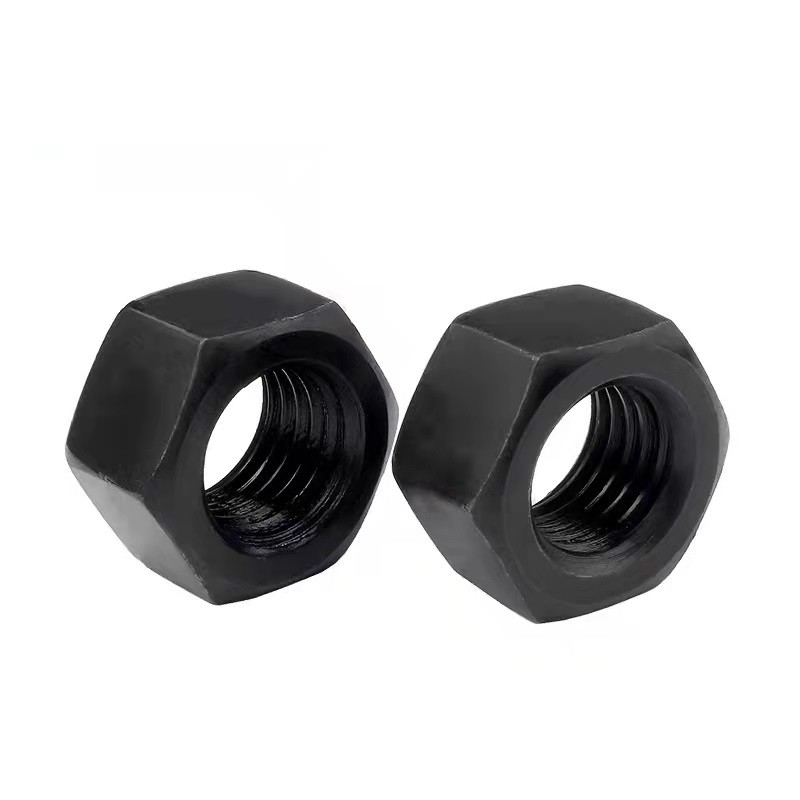
The performance of fastenal nuts and bolts is fundamentally governed by principles of stress analysis and material behavior. Under load, fasteners experience tensile stress (pulling force) and shear stress (sliding force). Tensile strength represents the maximum stress a fastener can withstand before fracturing, while yield strength indicates the point at which permanent deformation begins. Preload, the initial tension applied to the fastener during tightening, is critical for maintaining clamping force and preventing joint loosening. Insufficient preload can lead to fatigue failure, while excessive preload can exceed the fastener’s yield strength, resulting in plastic deformation or fracture.
Environmental resistance is a crucial performance consideration. Corrosion, caused by electrochemical reactions, weakens fasteners and can lead to joint failure. Factors influencing corrosion rate include material composition, environmental exposure (e.g., salt spray, humidity, chemicals), and surface treatment. Temperature fluctuations induce thermal expansion and contraction, creating stress in the joint. Fatigue, resulting from cyclic loading, is a common failure mode in dynamic applications. Compliance requirements, dictated by industry standards (detailed in the footer), specify performance criteria such as tensile strength, hardness, and corrosion resistance. Functional implementation necessitates proper fastener selection based on load requirements, environmental conditions, and material compatibility. Bolt circle diameter, thread size, and fastener grade all play a crucial role in achieving a secure and reliable joint.
Technical Specifications
| Fastener Grade | Tensile Strength (MPa) | Yield Strength (MPa) | Hardness (Rockwell C) |
|---|---|---|---|
| SAE Grade 2 | 400-570 | 240-360 | 30-35 |
| SAE Grade 5 | 690-830 | 480-620 | 35-45 |
| SAE Grade 8 | 930-1050 | 690-830 | 40-50 |
| A2 Stainless Steel | 500-700 | 210-310 | 20-30 |
| A4 Stainless Steel | 800-1000 | 400-550 | 25-35 |
| Titanium Grade 5 (Ti-6Al-4V) | 895-965 | 827-895 | 30-35 |
Failure Mode & Maintenance
Fastenal nuts and bolts are susceptible to various failure modes. Fatigue cracking, initiated by cyclic loading, occurs through progressive crack growth until fracture. Shear failure occurs when the fastener’s cross-sectional area is exceeded by shear forces. Tensile failure results from exceeding the fastener’s tensile strength. Hydrogen embrittlement, common in high-strength steels, reduces ductility and promotes cracking in corrosive environments. Corrosion, as previously discussed, weakens the fastener material. Thread stripping occurs when the threads are worn or damaged, reducing clamping force. Loosening, caused by vibration or thermal cycling, reduces joint integrity. Delamination can occur in coated fasteners, exposing the underlying material to corrosion.
Maintenance solutions involve regular inspection for signs of corrosion, damage, or loosening. Torque checks, using calibrated torque wrenches, ensure proper preload. Lubrication reduces friction and prevents galling. Replacing fasteners exhibiting signs of degradation is crucial. For critical applications, non-destructive testing methods like ultrasonic inspection or magnetic particle inspection can detect hidden flaws. Using appropriate corrosion inhibitors and protective coatings extends fastener life. Implementing a fastener management system, including proper storage, handling, and documentation, minimizes the risk of failure. Periodic re-tightening of fasteners, particularly in dynamic applications, is recommended.
Industry FAQ
Q: What is the significance of fastener grade markings, and how do they relate to load-bearing capacity?
A: Fastener grade markings (e.g., SAE Grade 5, Grade 8, A2, A4) indicate the material’s tensile strength and yield strength. Higher grades denote stronger materials capable of withstanding greater loads. These markings are critical for selecting fasteners appropriate for the intended application and ensuring structural integrity. Using a lower grade fastener than specified in the design can lead to premature failure.
Q: How does corrosion affect fastener performance, and what are the most effective corrosion prevention methods?
A: Corrosion weakens fastener material, reduces its load-bearing capacity, and can ultimately lead to joint failure. Effective prevention methods include selecting corrosion-resistant materials (e.g., stainless steel), applying protective coatings (e.g., zinc plating, galvanizing), using corrosion inhibitors, and ensuring proper sealing of joints to prevent moisture ingress.
Q: What is the role of preload in a bolted joint, and how is it properly achieved?
A: Preload is the initial tension applied to a fastener during tightening, creating clamping force that resists joint separation. Proper preload is crucial for preventing loosening, fatigue failure, and maintaining joint integrity. It’s achieved using calibrated torque wrenches, applying the specified torque value for the fastener size and grade. Other methods include using torque-angle tightening or ultrasonic elongation measurement.
Q: What are the common causes of thread stripping, and how can it be avoided?
A: Thread stripping is often caused by excessive tightening torque, improper thread engagement, material incompatibility, or corrosion. It can be avoided by using the correct torque specifications, ensuring proper thread lubrication, selecting compatible materials, and preventing corrosion.
Q: How do temperature fluctuations impact the performance of fastened joints, and what design considerations are important?
A: Temperature fluctuations cause thermal expansion and contraction, inducing stress in the joint. This can lead to loosening or fatigue failure. Important design considerations include selecting materials with similar thermal expansion coefficients, using Belleville washers to accommodate thermal movement, and ensuring sufficient joint clamping force to maintain preload under varying temperatures.
Conclusion
The selection and application of fastenal nuts and bolts necessitate a thorough understanding of material science, manufacturing processes, and engineering principles. Optimizing fastener performance requires careful consideration of load requirements, environmental conditions, and compliance standards. Proper installation, maintenance, and regular inspection are crucial for preventing premature failure and ensuring the long-term reliability of assembled structures.
Continued advancements in fastener technology, including the development of new materials and coatings, aim to enhance performance and durability in demanding applications. A proactive approach to fastener management, combined with adherence to industry best practices, is essential for maintaining safety, reducing downtime, and optimizing overall system efficiency.