
Introduction
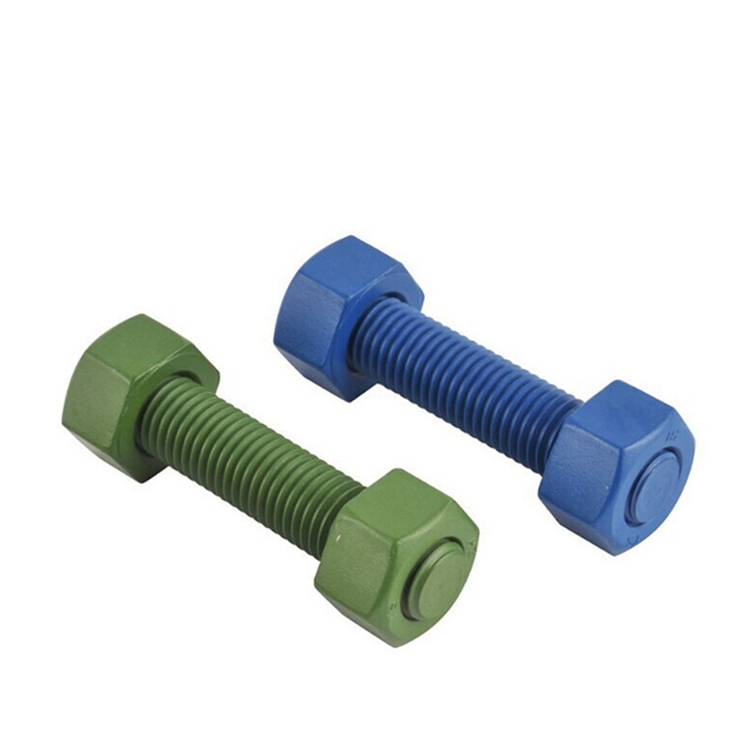
Custom bolts represent a critical fastening element across diverse industrial sectors, extending beyond standardized offerings to address highly specific application requirements. Positioned within the broader supply chain of industrial fasteners, they bridge the gap between general-purpose components and bespoke engineering solutions. These bolts are not merely commodity hardware; they are engineered solutions frequently employed where load-bearing capacity, material compatibility, environmental resistance, or dimensional constraints necessitate a non-standard design. Core performance characteristics include tensile strength, yield strength, shear strength, fatigue resistance, corrosion resistance, and adherence to precise dimensional tolerances. The increasing demand for custom bolts stems from the growing complexity of modern machinery, infrastructure, and specialized equipment where reliance on off-the-shelf fasteners compromises performance, safety, or reliability. A key pain point for industry is ensuring consistent material traceability and adherence to stringent quality control measures, particularly in critical applications such as aerospace, automotive, and energy production.
Material Science & Manufacturing
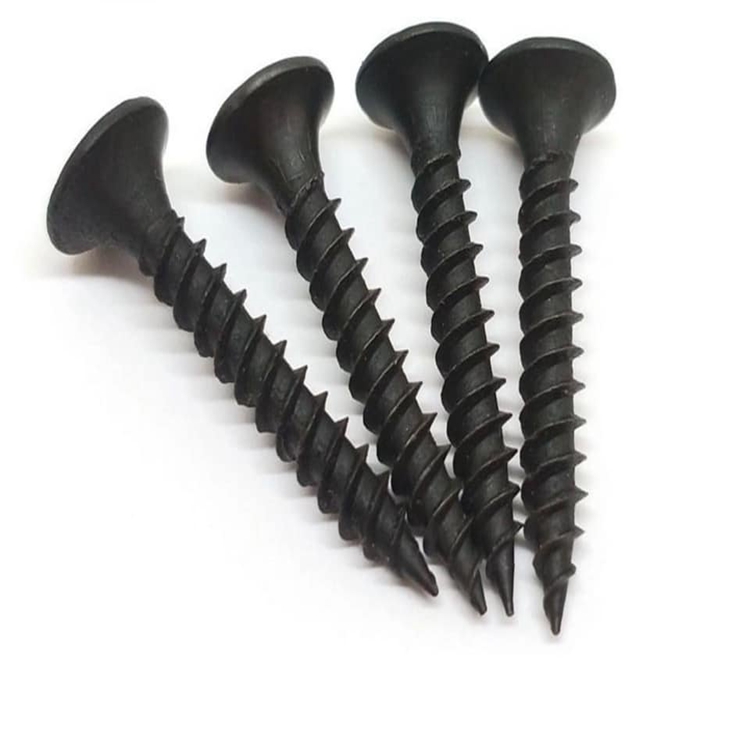
The material selection for custom bolts is paramount, dictated by the intended application and operating environment. Common materials include carbon steel (various grades – 1018, 4140, etc.), alloy steels (4340, chromoly steels), stainless steels (304, 316, duplex stainless steels), and high-performance alloys like Inconel and titanium. Carbon steel provides high strength and cost-effectiveness but is susceptible to corrosion. Alloy steels offer enhanced strength, toughness, and hardenability. Stainless steels deliver superior corrosion resistance, crucial for outdoor or marine applications. Titanium alloys exhibit exceptional strength-to-weight ratios and corrosion resistance but are considerably more expensive. Manufacturing processes typically involve cold forging, hot forging, machining, and thread rolling. Cold forging enhances the material’s grain structure, improving strength and fatigue life. Hot forging is used for larger bolt sizes and complex geometries. Machining is critical for achieving precise dimensional tolerances and thread profiles. Thread rolling, as opposed to thread cutting, imparts compressive residual stresses, increasing fatigue strength. Key parameter control during manufacturing includes precise temperature control during heat treatment (hardening, tempering, annealing) to achieve desired mechanical properties, careful monitoring of forging pressures and die geometry, and strict adherence to threading standards (UNC, UNF, metric). Chemical composition verification through methods like optical emission spectroscopy (OES) is essential for ensuring material traceability and compliance.
Performance & Engineering
Performance assessment of custom bolts involves rigorous testing to quantify their mechanical properties and resistance to failure. Force analysis, utilizing Finite Element Analysis (FEA), is employed to simulate stress distribution under various loading conditions (tensile, shear, bending, torsional). This analysis informs bolt geometry optimization and material selection. Environmental resistance is crucial; bolts operating in corrosive environments require coatings (zinc plating, hot-dip galvanizing, PTFE coatings) or the use of corrosion-resistant alloys. Compliance requirements vary depending on the application. Aerospace bolts must meet stringent standards set by organizations like SAE International and NASA. Automotive bolts adhere to IATF 16949 standards. Industrial applications often require compliance with ASME and ASTM standards. Functional implementation necessitates a detailed understanding of preload requirements. Proper tightening torque is critical for achieving the desired clamping force and preventing joint separation or bolt failure. Torque-angle tightening methods are often preferred for precise preload control. Fatigue performance is a major concern, especially in dynamically loaded applications. Fatigue life is influenced by factors such as surface finish, stress concentration points (e.g., thread roots), and the presence of residual stresses. Detailed stress-life (S-N) curves are generated to predict fatigue performance under cyclic loading conditions. Bolts designed for high-temperature applications require materials with adequate creep resistance and oxidation resistance.
Technical Specifications
| Material Grade | Tensile Strength (MPa) | Yield Strength (MPa) | Hardness (Rockwell C) |
|---|---|---|---|
| 1018 Carbon Steel | 440-560 | 250-350 | C20-C30 |
| 304 Stainless Steel | 480-720 | 205-310 | C20-C25 |
| 316 Stainless Steel | 580-860 | 240-350 | C25-C32 |
| 4140 Alloy Steel | 790-960 | 530-690 | C30-C38 |
| Inconel 718 | 1000-1100 | 690-825 | C40-C48 |
| Titanium Grade 5 (Ti-6Al-4V) | 895-1035 | 828-965 | C30-C35 |
Failure Mode & Maintenance
Common failure modes in custom bolts include fatigue cracking, thread stripping, corrosion-induced failure, tensile overload, and hydrogen embrittlement. Fatigue cracking initiates at stress concentration points, such as thread roots or surface imperfections, and propagates under cyclic loading. Thread stripping occurs when the shear stress exceeds the shear strength of the thread material. Corrosion can significantly reduce bolt strength and induce pitting or crevice corrosion. Tensile overload results in sudden fracture when the applied load exceeds the bolt’s ultimate tensile strength. Hydrogen embrittlement, particularly in high-strength steels, can lead to brittle fracture in the presence of hydrogen. Failure analysis often involves fractographic examination to determine the fracture origin and propagation mechanism. Preventive maintenance includes regular inspection for signs of corrosion, cracking, or deformation. Lubrication of threads reduces friction and prevents galling. Torque monitoring ensures proper preload and prevents over-tightening or under-tightening. Periodic re-tightening may be necessary for critical applications subject to vibration or thermal cycling. Protective coatings can mitigate corrosion. Replacement of damaged or corroded bolts is essential to maintain joint integrity and prevent catastrophic failure. Implementing a bolt management system with detailed records of material traceability, installation torque, and inspection dates is crucial for proactive maintenance and failure prevention.
Industry FAQ
Q: What material selection criteria are most critical when specifying custom bolts for a high-temperature, corrosive environment?
A: In high-temperature corrosive environments, the primary criteria are oxidation resistance, creep resistance, and corrosion resistance. Materials like Inconel 718, Hastelloy, or high-nickel alloys are often preferred. Stainless steel alloys (specifically duplex stainless steels) can also be considered, but their performance at extremely high temperatures may be limited. The specific corrosive agent must be identified to select a material with appropriate resistance. Protective coatings, such as ceramic coatings, may also be employed to enhance resistance.
Q: How does cold forging versus hot forging impact the fatigue life of a custom bolt?
A: Cold forging generally results in superior fatigue life compared to hot forging. Cold forging work hardens the material, increasing its strength and introducing compressive residual stresses at the surface, which inhibit crack initiation and propagation. Hot forging, while suitable for complex shapes, does not impart the same level of compressive residual stress and can result in a less refined grain structure.
Q: What are the key considerations for specifying thread tolerances for custom bolts in precision machinery?
A: For precision machinery, thread tolerances must be tightly controlled to ensure proper fit and prevent backlash. Class 3A or 2A threads are commonly specified for external threads, while Class 3B or 2B threads are used for internal threads. The thread pitch diameter must be carefully controlled to ensure proper engagement. Surface finish of the threads is also critical; a smooth, polished finish minimizes friction and wear.
Q: What is the significance of performing non-destructive testing (NDT) on custom bolts, and what methods are typically used?
A: NDT is crucial for detecting internal flaws or defects that could compromise bolt integrity without damaging the component. Common NDT methods include magnetic particle inspection (MPI) for detecting surface and near-surface cracks in ferromagnetic materials, liquid penetrant inspection (LPI) for detecting surface flaws in all materials, ultrasonic testing (UT) for detecting internal flaws, and radiographic testing (RT) for a comprehensive internal inspection. The choice of NDT method depends on the material, bolt geometry, and the type of defect being sought.
Q: How does preload affect the fatigue life of a bolted joint, and what methods are used to accurately control preload?
A: Preload significantly impacts fatigue life. Proper preload increases the clamping force, reducing stress range under dynamic loading and improving fatigue resistance. Insufficient preload can lead to joint separation and increased stress concentration. Excessive preload can cause bolt yielding or failure. Accurate preload control is achieved using torque-angle tightening, ultrasonic bolt stretch measurement, or direct tension indicators (DTIs). Torque-angle tightening is a widely used method, providing a balance of accuracy and practicality.
Conclusion
Custom bolts are integral components in countless engineering applications, demanding a nuanced understanding of material science, manufacturing processes, and performance engineering principles. Their specifications are dictated not only by static load requirements, but also by dynamic environmental factors, corrosion potential, and the criticality of long-term reliability. The industry’s ongoing pursuit of optimized fastening solutions drives continued innovation in materials, coatings, and manufacturing techniques.
Ultimately, the successful implementation of custom bolt solutions requires a collaborative approach between engineers, manufacturers, and end-users. Detailed specifications, rigorous quality control, and adherence to relevant industry standards are paramount. The careful consideration of potential failure modes and the implementation of proactive maintenance strategies will ensure the long-term integrity and safety of bolted joints in demanding applications.