
Introduction
AN bolts are externally threaded fasteners designed for clamping two or more parts together. Positioned within the mechanical fastening industry, AN bolts represent a specialized subset adhering to the Air Force-Navy Aeronautical Specification AN470, commonly utilized in aerospace and high-reliability applications. These fasteners differ significantly from standard bolts due to stringent material requirements, precise manufacturing tolerances, and controlled head geometries. Core performance characteristics include shear strength, tensile strength, fatigue resistance, and corrosion protection, all critical for ensuring structural integrity in demanding environments. The primary pain point in the industry revolves around maintaining traceability of materials and ensuring consistent quality control to meet the rigorous demands of aerospace certifications.
Material Science & Manufacturing
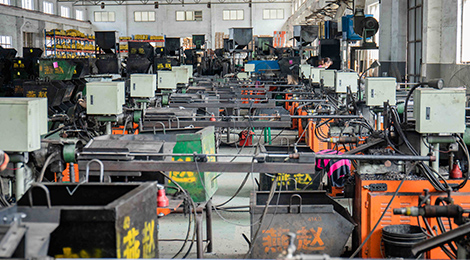
AN bolts are typically manufactured from alloy steels, most commonly 4140 or 300M steel, selected for their high strength-to-weight ratio and hardenability. The raw material undergoes rigorous testing to verify chemical composition, ensuring compliance with AN470 specifications. Manufacturing begins with hot forging, creating the bolt’s basic shape. This is followed by machining operations – turning, drilling, and thread rolling – to achieve precise dimensions and thread form. Heat treatment, encompassing hardening, tempering, and case hardening (depending on the grade), is critical for developing the desired mechanical properties. Surface treatments, such as cadmium plating, passivate coating, or specialized corrosion-resistant coatings, are applied to enhance durability. Key parameter control focuses on thread pitch diameter, head height, and core diameter, all measured using calibrated coordinate measuring machines (CMMs). Hydrogen embrittlement is a frequent concern during the plating process, necessitating post-plating baking to diffuse hydrogen and prevent premature failure. Material traceability is maintained throughout the entire process, from raw material sourcing to final inspection, utilizing unique batch numbers and material certifications.
Performance & Engineering
The performance of AN bolts is governed by several critical engineering principles. Tensile strength, typically ranging from 170,000 to 260,000 psi depending on the grade, dictates the bolt’s ability to withstand pulling forces. Shear strength, usually 85% of the tensile strength, determines its resistance to forces acting perpendicular to the bolt axis. Fatigue resistance is paramount in aerospace applications, where components are subjected to cyclic loading. This is assessed through S-N curve testing, characterizing the bolt’s life under varying stress amplitudes. Environmental resistance is addressed through surface treatments, protecting against corrosion in harsh environments. The head geometry (typically hexagonal or countersunk) is engineered for optimal wrench engagement and to distribute load effectively. Failure analysis often involves Finite Element Analysis (FEA) to predict stress concentrations and identify potential failure points. Compliance with AN470 requires rigorous testing including proof load testing, tensile testing, and salt spray corrosion testing, with detailed documentation of results. Preload control is essential; improper tightening can lead to joint loosening or bolt failure. Torque wrenches and angle-of-turn methods are commonly used to achieve the correct preload.
Technical Specifications
| Grade | Material | Tensile Strength (psi) | Shear Strength (psi) | Hardness (Rockwell C) | Typical Coating |
|---|---|---|---|---|---|
| AN470-1 | 4140 Steel | 170,000 | 144,500 | 30-35 | Cadmium Plated |
| AN470-2 | 4140 Steel | 200,000 | 170,000 | 36-41 | Cadmium Plated |
| AN470-3 | 300M Steel | 220,000 | 187,000 | 40-45 | Passivate Coating |
| AN470-4 | 300M Steel | 260,000 | 221,000 | 44-49 | Passivate Coating |
| AN470-5 | Alloy Steel (Custom) | Variable | Variable | Variable | Specialized Coating |
| AN470-6 | Alloy Steel (Custom) | Variable | Variable | Variable | Specialized Coating |
Failure Mode & Maintenance
AN bolts are susceptible to several failure modes. Fatigue cracking, initiated by cyclic loading, is a common issue in aerospace applications, often starting at thread roots or under the bolt head. Corrosion, particularly in marine or humid environments, can lead to pitting and weakening of the bolt material. Hydrogen embrittlement, as mentioned previously, can cause delayed cracking under tensile stress. Thread stripping occurs when the mating threads are damaged due to excessive torque or improper alignment. Gallling, a form of adhesive wear, can occur when dissimilar metals are tightly fastened together. Maintenance primarily involves regular visual inspections for corrosion, cracks, and thread damage. Torque checks should be performed periodically to ensure proper preload. Lubrication with an appropriate anti-seize compound can prevent galling and corrosion. If a bolt is suspected of being damaged, it should be removed, inspected using non-destructive testing methods (such as dye penetrant inspection or ultrasonic testing), and replaced if necessary. Detailed records of bolt replacements and maintenance activities should be maintained for traceability and quality control purposes. Preventive maintenance programs including corrosion inhibitor applications are critical in extending the service life of AN bolts.
Industry FAQ
Q: What is the significance of the AN470 specification, and how does it differ from standard bolt specifications like ASTM A307?
A: The AN470 specification is specifically designed for aerospace applications, imposing far stricter requirements than general-purpose bolt standards like ASTM A307. AN470 mandates specific alloy steels, precise manufacturing tolerances, controlled heat treatment processes, and comprehensive testing procedures—including fatigue and corrosion resistance—to ensure reliability in demanding flight conditions. ASTM A307, conversely, is geared towards lower-stress applications and allows for a broader range of materials and manufacturing processes.
Q: How does material traceability impact the reliability of AN bolts, and what methods are used to ensure it?
A: Material traceability is critical because it provides a complete history of the bolt, from raw material sourcing to final inspection, verifying that all specifications were met. Loss of traceability compromises confidence in the bolt's integrity. Methods include unique batch numbers, material certifications from suppliers, and meticulous record-keeping throughout the manufacturing process.
Q: What are the most common causes of fatigue failure in AN bolts used in aircraft structures?
A: Fatigue failure often originates at stress concentration points, such as the thread roots, bolt head, or any surface imperfections. Cyclic loading, caused by vibrations and aerodynamic forces during flight, initiates crack propagation. Improper preload, corrosion, and material defects can exacerbate fatigue failure. FEA modelling can help predict stress concentrations and mitigate these issues.
Q: What surface treatments are commonly used on AN bolts, and what are their primary benefits?
A: Cadmium plating and passivate coatings are the most common surface treatments. Cadmium plating provides excellent corrosion resistance, particularly in saltwater environments, but is increasingly restricted due to environmental concerns. Passivate coatings, typically applied to stainless steel bolts, create a protective oxide layer. Specialized coatings, such as those incorporating molybdenum disulfide, offer enhanced lubrication and corrosion protection.
Q: What is the importance of proper torque control during AN bolt installation, and what tools are recommended?
A: Proper torque control is paramount for achieving the correct preload, which is essential for maintaining joint integrity and preventing loosening or bolt failure. Insufficient torque can lead to joint separation, while excessive torque can damage the bolt or mating threads. Torque wrenches, calibrated regularly, and angle-of-turn methods are recommended for accurate preload control.
Conclusion
AN bolts, defined by the rigorous AN470 specification, represent a critical component in aerospace and high-reliability applications. Their performance hinges on careful material selection, precision manufacturing, controlled heat treatment, and effective corrosion protection. Maintaining material traceability and adhering to strict quality control procedures are non-negotiable for ensuring the integrity and safety of fastened joints.
Future developments will likely focus on lighter-weight materials, improved corrosion-resistant coatings, and enhanced non-destructive testing methods. Furthermore, advances in digital torque control systems and predictive maintenance strategies will contribute to extended service life and reduced maintenance costs. The ongoing pursuit of enhanced reliability and performance will continue to drive innovation in AN bolt technology.