
Introduction
12-inch lag bolts represent a critical fastening solution within the broader construction and industrial sectors. Defined as heavy-duty wood screws possessing a hexagonal head, these bolts are employed to join heavy timber, secure structural components, and provide robust anchoring in applications where high shear and tensile strength are paramount. Their significant length allows penetration deep into the substrate material, maximizing holding power. Positioned within the fastening supply chain, lag bolts serve as a direct alternative to through-bolting in situations where access from both sides of the material is restricted, or where a less obtrusive fastening method is desired. Core performance characteristics – including shear strength, tensile strength, and resistance to pull-out – dictate their suitability for demanding structural applications. A primary industry pain point centers on proper material selection to mitigate corrosion and ensuring consistent thread engagement to prevent stripping, which can lead to catastrophic failures.
Material Science & Manufacturing
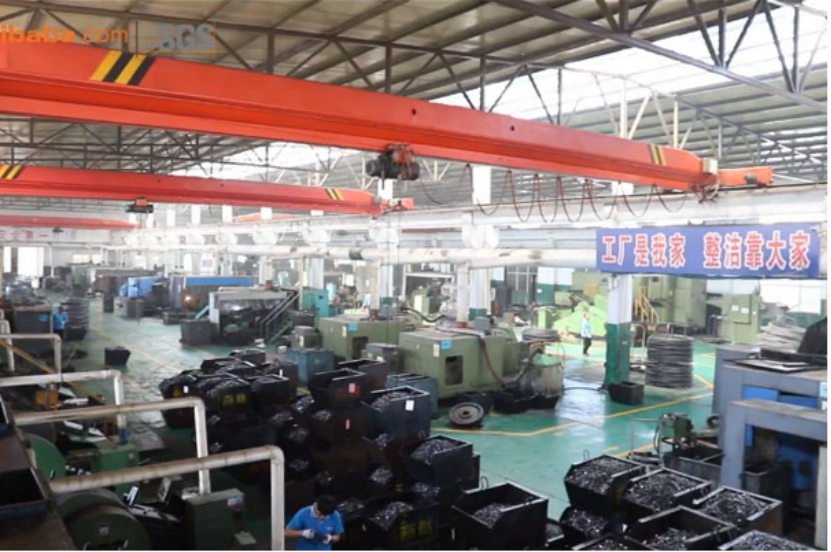
The manufacture of 12-inch lag bolts typically begins with carbon steel, most commonly grades 5 or 8, although stainless steel (304, 316) and alloy steels are used for corrosion-resistant applications. Carbon steel offers a balance of strength and cost-effectiveness. Material properties are critical: the yield strength of the steel directly impacts the bolt’s load-bearing capacity, while its ductility influences its resistance to fracture. Manufacturing processes involve cold heading to form the hexagonal head, followed by thread rolling – a process imparting higher fatigue strength than thread cutting. The thread form adheres to Unified National Coarse (UNC) standards, although metric options exist. Heat treatment, specifically quenching and tempering, is applied to achieve the desired hardness and tensile strength. Parameter control during heat treatment is vital; insufficient quenching can lead to insufficient hardness, while excessive tempering can reduce strength. Protective coatings, such as zinc plating (galvanization) or epoxy coating, are applied to enhance corrosion resistance. Quality control includes dimensional inspection, hardness testing (Rockwell C scale), and tensile testing to verify adherence to specifications. Hydrogen embrittlement, a potential issue during galvanization, is managed through post-coating baking processes.
Performance & Engineering
The performance of 12-inch lag bolts is fundamentally governed by principles of force analysis and material mechanics. Shear strength, representing the bolt’s resistance to forces acting parallel to its axis, is particularly crucial in applications such as timber framing. Tensile strength dictates the bolt's ability to withstand pulling forces. The engagement length – the depth of thread engagement within the substrate – significantly impacts pull-out resistance. Engineering calculations must account for wood species, wood density, and any applied load factors. Environmental resistance is a significant concern. Exposure to moisture, chemicals, and temperature fluctuations can induce corrosion and reduce the bolt’s strength. Wood movement, due to changes in humidity, creates cyclical stress on the bolt, potentially leading to fatigue failure. Compliance requirements dictate adherence to building codes and industry standards. For example, in seismic zones, specific lag bolt specifications are mandated to ensure structural integrity during earthquake events. The diameter of the shank, thread pitch, and the hexagonal head dimensions are critical for proper wrenching torque and preventing head rounding. Proper pre-drilling is essential; a pilot hole diameter slightly smaller than the bolt's core diameter ensures adequate thread engagement without causing wood splitting.
Technical Specifications
| Diameter (in) | Length (in) | Material Grade | Minimum Tensile Strength (psi) |
|---|---|---|---|
| 0.5 | 12 | Grade 5 | 85,000 |
| 0.75 | 12 | Grade 5 | 75,000 |
| 0.75 | 12 | Grade 8 | 150,000 |
| 1 | 12 | Grade 5 | 75,000 |
| 1 | 12 | Grade 8 | 150,000 |
| 1.25 | 12 | Grade 5 | 70,000 |
Failure Mode & Maintenance
12-inch lag bolts are susceptible to several failure modes. Fatigue cracking, induced by cyclical loading, is common in applications experiencing vibration or dynamic loads. This initiates at stress concentration points, often around the thread roots. Pull-out failure occurs when the holding power of the substrate material is exceeded. Wood splitting, caused by improper pre-drilling or excessive torque, reduces engagement length and accelerates pull-out. Corrosion, particularly in untreated carbon steel, weakens the bolt and can lead to brittle fracture. Shear failure happens when the shear stress exceeds the bolt’s shear strength, often due to overloading. Hydrogen embrittlement, as previously mentioned, can contribute to premature failure in galvanized bolts. Maintenance involves periodic inspection for signs of corrosion, loosening, or damage. Tightening may be necessary to restore clamping force, but over-tightening must be avoided to prevent stripping. Protective coatings should be reapplied if damaged. For critical applications, consider using corrosion-resistant materials or implementing a corrosion protection program. If a bolt shows signs of significant corrosion or fatigue, it should be replaced immediately.
Industry FAQ
Q: What is the optimal pilot hole size for a 12-inch, 0.75-inch diameter lag bolt in Southern Yellow Pine?
A: For Southern Yellow Pine, a pilot hole diameter approximately 5/32 inch (0.15625 inches) smaller than the bolt's minor diameter (root diameter of the threads) is recommended. This ensures sufficient wood for thread engagement without causing splitting. Consult wood species-specific guidelines as density variations affect optimal hole size.
Q: How does the coating type (zinc vs. epoxy) impact the long-term performance of lag bolts in a coastal environment?
A: In coastal environments, epoxy coatings generally offer superior corrosion protection compared to zinc plating. While zinc provides sacrificial protection, it corrodes over time, especially in high-salinity conditions. Epoxy creates a barrier, preventing corrosive agents from reaching the steel substrate. However, the effectiveness of epoxy relies on proper application and maintaining its integrity.
Q: What load factors should be considered when using 12-inch lag bolts in a structural application subject to seismic activity?
A: Seismic design requires significantly higher load factors. Building codes (e.g., IBC) specify factors based on the seismic design category and the importance factor of the structure. Typically, load factors of 1.6 for dead load and 1.6 for live load are applied, along with additional considerations for wind and seismic forces. A qualified structural engineer should perform these calculations.
Q: What are the primary causes of lag bolt stripping in hardwood, and how can it be prevented?
A: Stripping occurs when the threads of the bolt cut into the wood rather than engaging properly. Common causes include insufficient pilot hole size, excessive torque application, and using a bolt with inadequate thread length for the wood's thickness. Prevention involves proper pilot hole sizing, using a torque wrench to apply the correct torque, and ensuring the bolt is long enough to achieve sufficient thread engagement.
Q: Are there any differences in performance between cold-headed and cut-threaded 12-inch lag bolts?
A: Cold-headed lag bolts, where the head is formed via cold forging, generally exhibit higher fatigue strength compared to cut-threaded bolts. The cold-heading process work-hardens the material, increasing its resistance to cracking under cyclic loading. Cut threads, while adequate for many applications, can have stress risers at the thread roots.
Conclusion
12-inch lag bolts remain a crucial component in numerous construction and industrial applications, providing a robust and reliable fastening solution where substantial holding power is required. The selection of appropriate material grade, coating, and installation technique is paramount to ensuring long-term performance and preventing premature failure. Understanding the underlying principles of force analysis, material science, and potential failure modes is essential for engineers and procurement professionals alike.
Future advancements may involve the development of innovative coating technologies offering enhanced corrosion resistance, and the integration of smart sensors to monitor bolt stress and predict potential failures. Continued adherence to industry standards and best practices, coupled with ongoing research and development, will ensure the continued reliability and efficacy of 12-inch lag bolts in demanding structural applications.