
Introduction
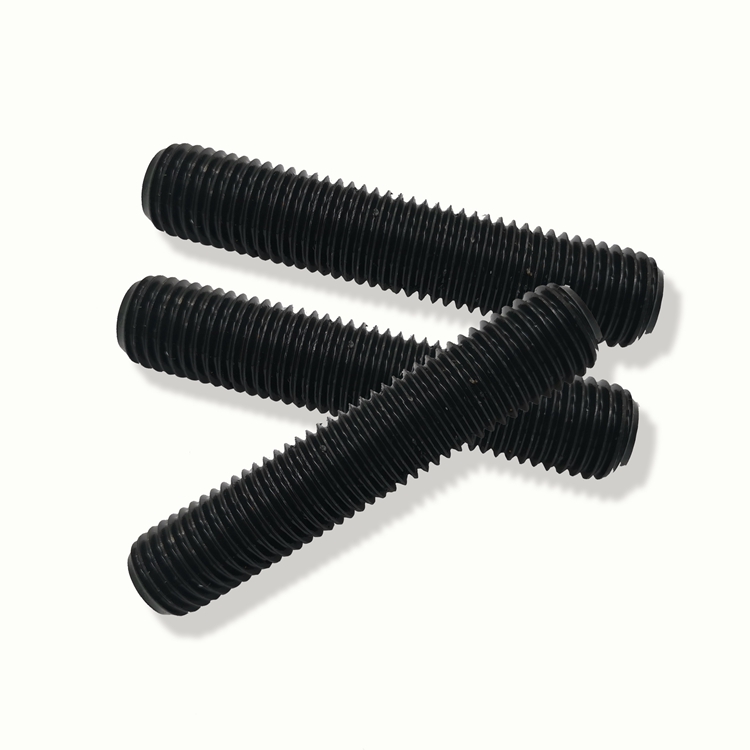
Zinc bolts are threaded fasteners utilizing zinc coating for corrosion resistance, commonly employed across diverse industrial applications including automotive, construction, and infrastructure. Their technical position resides within the broader fastening industry, specifically as a cost-effective alternative to stainless steel or cadmium-plated bolts where extreme strength isn’t paramount. The core performance characteristics encompass tensile strength, yield strength, proof load, and resistance to atmospheric corrosion. Zinc coating, typically applied through hot-dip galvanizing or electroplating, provides a sacrificial layer, protecting the underlying steel from rust. The selection of the appropriate zinc coating and bolt grade is critical for long-term performance and ensuring structural integrity in the intended environment. Industry pain points center around coating thickness consistency, hydrogen embrittlement susceptibility during manufacturing, and long-term durability in aggressive chemical environments, especially those containing chlorides.
Material Science & Manufacturing
The primary material for zinc bolts is carbon steel, typically AISI 1018, 1045, or equivalent, chosen for its balance of strength, ductility, and cost-effectiveness. The steel undergoes cold forming (heading) to create the bolt shape, followed by thread rolling. Zinc coatings are applied via several processes. Hot-dip galvanizing involves immersing the steel in molten zinc, creating a metallurgical bond and a relatively thick coating (50-150 μm). Electroplating utilizes an electrolytic process to deposit a thinner zinc layer (5-25 μm), often with various additives like chromates for enhanced corrosion resistance. Zinc-nickel alloy plating offers superior corrosion protection, particularly in saltwater environments. Manufacturing parameter control is critical. For hot-dip galvanizing, maintaining the zinc bath temperature (around 450°C) and immersion time are crucial. For electroplating, current density, voltage, and electrolyte composition dictate coating thickness and uniformity. Post-coating, passivation treatments (chromate conversion coatings) are often applied. Hydrogen embrittlement is a significant concern, particularly with high-strength steels. Baking after plating removes absorbed hydrogen, mitigating the risk of brittle failure. Material property variations in the steel substrate, such as inclusions or improper heat treatment, can impact both bolt strength and coating adhesion.
Performance & Engineering
The performance of zinc bolts is governed by several engineering principles. Tensile strength, measured in MPa, indicates the maximum load the bolt can withstand before fracturing. Yield strength defines the point at which permanent deformation occurs. Proof load is the maximum tensile load that can be applied without causing permanent deformation. Environmental resistance is paramount; zinc provides cathodic protection to the steel, slowing corrosion. However, the rate of corrosion depends on the zinc coating thickness, the presence of chlorides (e.g., in marine environments), and atmospheric pollution. Force analysis, utilizing principles of statics and dynamics, is essential in determining the required bolt size and grade for a given application. Factors like preload (tightening torque), joint stiffness, and external loads must be considered to prevent fastener failure. Compliance requirements vary by industry and region. For example, automotive applications require adherence to IATF 16949 standards, while construction projects may necessitate compliance with building codes like IBC (International Building Code). The choice of bolt grade (e.g., 4.8, 8.8, 10.9) impacts the mechanical properties and, consequently, the load-carrying capacity. Finite element analysis (FEA) can be used to simulate bolt behavior under various loading conditions and optimize design parameters.
Technical Specifications
| Bolt Grade | Tensile Strength (MPa) | Yield Strength (MPa) | Zinc Coating Thickness (µm) |
|---|---|---|---|
| 4.8 | 400 | 240 | 5-15 (Electroplated) / 50-75 (Hot-Dip Galvanized) |
| 8.8 | 800 | 640 | 5-25 (Electroplated) / 75-100 (Hot-Dip Galvanized) |
| 10.9 | 1000 | 980 | 15-30 (Electroplated) / 80-120 (Hot-Dip Galvanized) |
| Zinc-Nickel Alloy | 800-1200 (depending on alloy composition) | 600-900 | 25-40 |
| ASTM A193 Grade B7 | 1050 | 830 | 75-150 (Hot-Dip Galvanized) |
| ISO 898-1 Class 8.8 | 800 | 640 | Variable (depending on coating process) |
Failure Mode & Maintenance
Zinc bolts are susceptible to several failure modes. Corrosion, particularly galvanic corrosion in contact with dissimilar metals, leads to gradual material loss and reduced strength. Hydrogen embrittlement, as previously mentioned, causes brittle fracture, especially in high-strength bolts. Fatigue cracking occurs under cyclic loading, initiating at stress concentrators like thread roots. Stripping of threads can occur due to improper tightening torque or material incompatibility. Coating degradation, including blistering, flaking, and creep, reduces corrosion protection. Maintenance involves regular inspection for signs of corrosion, damage, or loosening. Lubrication with appropriate corrosion inhibitors can extend bolt life. For critical applications, periodic torque checks are recommended. If corrosion is detected, bolts should be replaced. When removing corroded bolts, use penetrating oil and appropriate tools to avoid damaging the surrounding materials. For heavily corroded bolts, controlled heating may be necessary to break the bond. Preventative measures include selecting the appropriate bolt grade and coating for the environment, applying anti-seize compounds, and following proper tightening procedures. A comprehensive failure analysis should be conducted if a bolt fails unexpectedly to identify the root cause and prevent future occurrences.
Industry FAQ
Q: What is the difference between hot-dip galvanizing and electroplating in terms of corrosion protection?
A: Hot-dip galvanizing provides a thicker, more durable coating with superior corrosion resistance due to the metallurgical bond formed between the zinc and the steel. Electroplating offers a thinner coating, typically with lower corrosion resistance, but allows for greater control over coating thickness and surface finish. Electroplating often includes chromate conversion coatings for enhanced protection, but these are increasingly regulated due to environmental concerns. Hot-dip galvanizing is generally preferred for outdoor applications and harsh environments.
Q: How can I mitigate the risk of hydrogen embrittlement in high-strength zinc bolts?
A: Hydrogen embrittlement can be minimized by baking the bolts after plating to drive off absorbed hydrogen. Using a lower plating current density can also reduce hydrogen absorption. Selecting a coating process that minimizes hydrogen uptake, such as zinc-nickel alloy plating, is another effective strategy. Proper steel selection, using grades with lower susceptibility to hydrogen embrittlement, is crucial. Also, avoiding excessive mechanical stress during and after plating helps.
Q: What torque should I apply to a zinc bolt?
A: Torque specifications depend on the bolt size, grade, and material of the joined components. Consult engineering drawings or relevant standards (e.g., ISO 898-1, ASTM A526) for recommended torque values. Using a calibrated torque wrench is essential for accurate tightening. Applying lubrication to the threads can affect the torque-tension relationship, so adjust the torque accordingly. Over-tightening can lead to thread stripping or bolt failure, while under-tightening can result in joint loosening.
Q: Can zinc bolts be used in direct contact with aluminum?
A: Direct contact between zinc and aluminum can cause galvanic corrosion, accelerating the corrosion of the aluminum. To prevent this, use an isolating barrier such as a plastic washer or a corrosion-inhibiting paste between the two metals. Alternatively, consider using a zinc-nickel alloy coated bolt, which exhibits improved galvanic compatibility with aluminum.
Q: What is the impact of chloride exposure on the lifespan of zinc bolts?
A: Chloride ions, commonly found in marine environments and road salt, accelerate the corrosion of zinc coatings. Chlorides penetrate the protective zinc layer, leading to localized corrosion and pitting. In chloride-rich environments, using thicker zinc coatings, zinc-nickel alloy plating, or stainless steel fasteners is recommended. Regular inspection and maintenance are critical to identify and address corrosion damage promptly.
Conclusion
Zinc bolts represent a widely utilized fastening solution, offering a compelling balance of cost-effectiveness and corrosion resistance. Understanding the underlying material science – specifically the interaction between the steel substrate and the zinc coating – is crucial for selecting the appropriate bolt for a given application. The manufacturing process, encompassing cold forming and coating techniques, significantly influences the bolt’s performance characteristics, and stringent parameter control is essential.
Ultimately, a thorough consideration of environmental factors, potential failure modes, and adherence to relevant industry standards are paramount for ensuring the long-term reliability and structural integrity of zinc bolted joints. Future advancements in coating technologies, such as the development of more environmentally friendly alternatives to chromate conversion coatings and the optimization of zinc-nickel alloy compositions, will continue to enhance the performance and sustainability of these critical fasteners.
