
Introduction
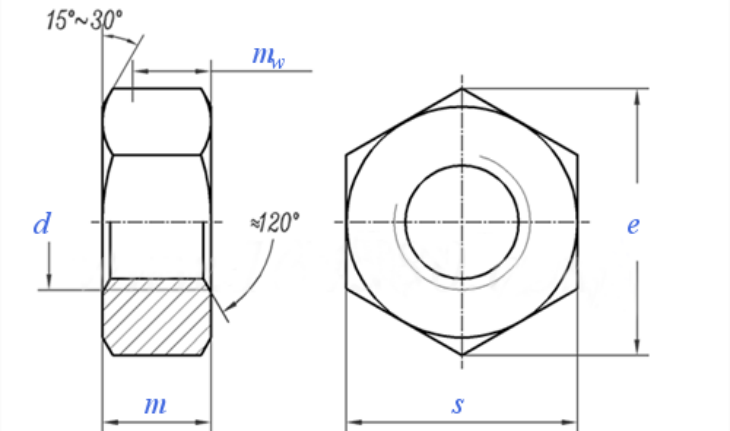
Head bolts are critical fastening components utilized across a broad spectrum of industries, including automotive, aerospace, power generation, and heavy machinery. Their primary function is to securely clamp two or more components together, resisting tensile, shear, and vibrational forces. Distinguished by their external hexagonal or internal drive heads, they differ from cap screws primarily in their intended use—generally, head bolts are designed for applications where a tight, permanent clamp load is essential, often involving tapped holes in one component and a nut on the other. This guide provides an in-depth exploration of head bolt material science, manufacturing processes, performance characteristics, potential failure modes, and relevant industry standards, addressing the core challenges faced by engineers and procurement specialists in ensuring reliable and long-lasting bolted joint integrity. A key industry pain point resides in accurately predicting long-term bolt performance under cyclical loading and corrosive environments, leading to premature failures and costly downtime. Proper selection, installation torque, and preventative maintenance are paramount to mitigate these risks.
Material Science & Manufacturing
Head bolts are commonly manufactured from medium carbon alloy steels (e.g., 40CrMo, 42CrMo4, 8620) due to their high tensile strength, ductility, and hardenability. The selection of steel grade depends on the anticipated load, operating temperature, and corrosive environment. Austenitic stainless steels (e.g., 304, 316) are employed in applications demanding corrosion resistance, albeit with lower tensile strength. Material properties such as yield strength, ultimate tensile strength, elongation, and hardness (measured via Rockwell C scale) are tightly controlled. The manufacturing process typically involves cold heading, which forms the bolt head and partially shapes the shank, followed by thread rolling, a process that induces compressive residual stresses, enhancing fatigue life. Heat treatment—quenching and tempering—is critical to achieve the desired mechanical properties. Quenching rapidly cools the steel, transforming the microstructure into martensite, a hard and brittle phase. Tempering then reduces the brittleness while maintaining strength. Surface treatments, such as phosphate coating or zinc plating, provide corrosion protection. Precise control of heat treatment parameters (temperature, time, cooling rate) and thread rolling forces are essential to prevent defects like martensitic cracking or thread damage. Microstructural analysis, including optical microscopy and scanning electron microscopy, is routinely performed for quality control.
Performance & Engineering
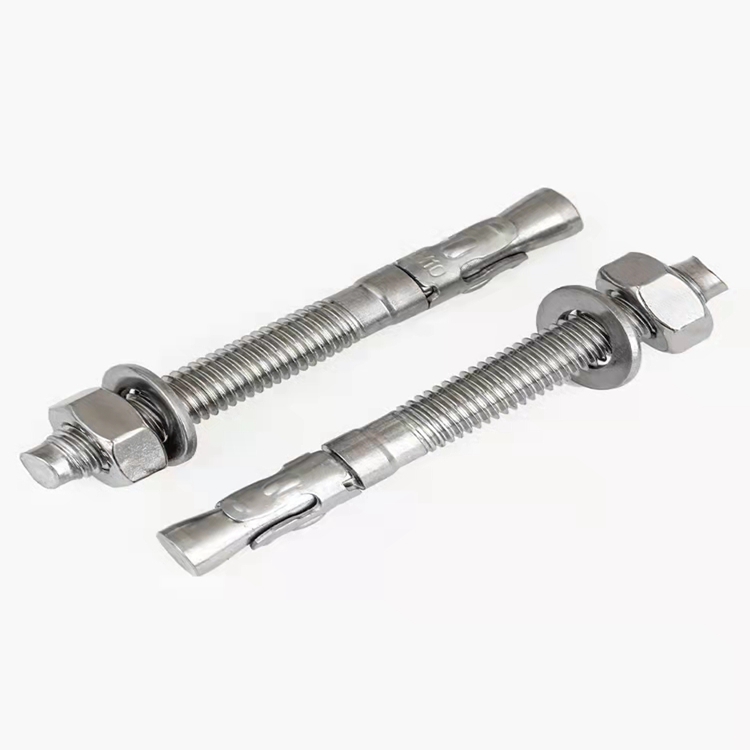
The performance of a head bolt is governed by several engineering principles. Tensile strength dictates the maximum load the bolt can withstand before fracturing. Yield strength determines the load at which permanent deformation begins. Preload, induced by tightening the bolt, is crucial for maintaining clamp force and preventing joint separation. The relationship between preload and clamp force is governed by the bolt stiffness (axial rigidity) and thread pitch. Fatigue performance is a significant concern in applications subjected to cyclical loading. Fatigue life is influenced by the stress concentration at the thread root and the presence of surface defects. Environmental factors, such as temperature, humidity, and corrosive media, can significantly degrade bolt performance. Creep, the time-dependent deformation under sustained load at elevated temperatures, can also be a critical failure mechanism. Engineering calculations must account for these factors, employing finite element analysis (FEA) to predict stress distributions and assess joint integrity. Compliance requirements, such as those outlined in ISO 898-1, dictate the mechanical properties, dimensions, and testing procedures for head bolts. Proper torque control, using calibrated torque wrenches and adhering to recommended tightening sequences, is essential to achieve the desired preload and prevent bolt failure.
Technical Specifications
| Property | SAE Grade 5 | SAE Grade 8 | ASTM A307 Grade A | ASTM A325 | ISO 8.8 | ISO 10.9 |
|---|---|---|---|---|---|---|
| Tensile Strength (MPa) | 830 | 1040 | 410 | 850 | 800 | 1000 |
| Yield Strength (MPa) | 690 | 950 | 240 | 690 | 600 | 900 |
| Hardness (Rockwell C) | 40-55 | 55-65 | <70 | 90-110 | 30-38 | 33-41 |
| Elongation (%) | 18 | 15 | 23 | 18 | 16 | 14 |
| Typical Applications | Light-duty automotive | Heavy-duty automotive, machinery | General purpose fastening | Structural bolting | General machinery | High-strength structural connections |
| Common Material | Medium Carbon Steel | Medium Carbon Alloy Steel | Low Carbon Steel | Quenched and Tempered Alloy Steel | Medium Carbon Alloy Steel | Quenched and Tempered Alloy Steel |
Failure Mode & Maintenance
Head bolts are susceptible to several failure modes. Tensile failure occurs when the bolt exceeds its ultimate tensile strength. Shear failure results from excessive shear stress, often due to misalignment or overloading. Fatigue failure arises from cyclical loading, initiating at stress concentration points like the thread root. Hydrogen embrittlement, a common issue in high-strength bolts, occurs when hydrogen atoms diffuse into the steel, reducing its ductility and promoting cracking. Corrosion, particularly in aggressive environments, can lead to pitting corrosion and reduced cross-sectional area. Thread stripping, where the threads are damaged due to excessive torque or corrosion, is another common failure mode. Preventative maintenance includes regular visual inspections for signs of corrosion or damage, torque checks to ensure proper preload, and lubrication of threads to reduce friction and prevent galling. Non-destructive testing methods, such as ultrasonic testing and magnetic particle inspection, can detect internal flaws. If a bolt shows signs of damage, it should be replaced immediately. Proper installation procedures, including the use of appropriate lubricants and tightening sequences, are crucial for preventing premature failure.
Industry FAQ
Q: What is the impact of coating type on the long-term corrosion resistance of head bolts used in marine environments?
A: The coating type significantly affects corrosion resistance. Zinc plating provides sacrificial protection, corroding before the steel. However, it offers limited protection in highly saline environments. Hot-dip galvanizing provides a thicker zinc coating, offering superior protection. Stainless steel coatings (e.g., duplex coatings) offer the highest corrosion resistance but are more expensive. The choice depends on the severity of the exposure and the required service life. Regular inspection and maintenance are critical, regardless of the coating.
Q: How does the thread form (e.g., metric, Unified National Coarse/Fine) influence the fatigue performance of a head bolt?
A: The thread form impacts stress distribution and fatigue life. Finer threads generally exhibit higher fatigue strength due to the reduced stress concentration at the thread root. Metric threads have a shallower helix angle compared to Unified threads, which can influence preload retention and fatigue performance. The thread engagement length is also critical – a longer engagement provides greater load sharing and improved fatigue resistance.
Q: What are the critical considerations for selecting the appropriate preload for a head bolt in a high-temperature application?
A: High temperatures reduce the yield strength of the bolt material and can lead to creep relaxation, reducing the preload over time. The initial preload must be adjusted to account for the anticipated preload loss at operating temperature. Material selection is crucial, with higher-temperature alloys recommended. Locking mechanisms, such as lock washers or prevailing torque nuts, are often employed to maintain preload. Finite element analysis should be conducted to predict preload relaxation and ensure joint integrity.
Q: What methods can be used to accurately measure and verify the achieved preload in a bolted joint after installation?
A: Several methods exist. Torque wrenches are the most common, but they only provide an indirect measure of preload. Ultrasonic bolt stretch measurement provides a direct measurement of bolt elongation, correlating directly to preload. Load cells integrated into the joint can measure the clamp force. Strain gauges applied to the bolt shank can also be used. The accuracy of each method varies, and careful calibration and application are essential.
Q: How does the material's surface finish impact fatigue life and corrosion resistance of head bolts?
A: Rougher surface finishes introduce stress concentrations, significantly reducing fatigue life. Polished or shot-peened surfaces create compressive residual stresses, enhancing fatigue resistance. Surface finish also impacts corrosion resistance – rough surfaces provide more sites for corrosion initiation. A smoother surface reduces the rate of corrosion and facilitates the application of protective coatings. Controlled surface roughness is a key quality control parameter.
Conclusion
Head bolts represent a foundational fastening technology, critical for the reliable operation of countless systems across diverse industries. Their performance is intimately tied to material selection, manufacturing precision, accurate preload control, and understanding potential failure modes. A comprehensive approach encompassing robust engineering analysis, adherence to relevant industry standards, and diligent preventative maintenance is essential to ensure long-term bolted joint integrity and prevent costly downtime. Ignoring these critical aspects can lead to catastrophic failures and compromise the safety and reliability of the overall system.
Future advancements in head bolt technology will likely focus on developing new materials with improved strength-to-weight ratios, enhancing corrosion resistance through novel coatings, and implementing smart bolted joint systems with integrated sensors for real-time monitoring of preload and structural health. Further research into hydrogen embrittlement mitigation strategies and improved fatigue life prediction models is also crucial. The integration of digital twins and predictive maintenance algorithms will play an increasingly important role in optimizing bolted joint performance and extending service life.
