
Introduction
High strength locknuts are critical fastening components employed across a diverse range of industries including aerospace, automotive, oil and gas, and heavy machinery. Their primary function is to provide a secure and vibration-resistant connection between threaded components, exceeding the performance capabilities of standard nuts. Classified by material grade and prevailing torque characteristics, these nuts are engineered to maintain clamping force even under dynamic loads and environmental stressors. The increasing demand for lightweighting, coupled with stringent safety regulations, drives the adoption of high strength locknuts, particularly those utilizing advanced materials and innovative locking mechanisms. This guide provides a comprehensive overview of their material science, manufacturing processes, performance characteristics, failure modes, and relevant industry standards. Core industry pain points addressed include ensuring consistent performance under extreme conditions, mitigating risks of loosening due to vibration, and maintaining compliance with evolving safety standards.
Material Science & Manufacturing
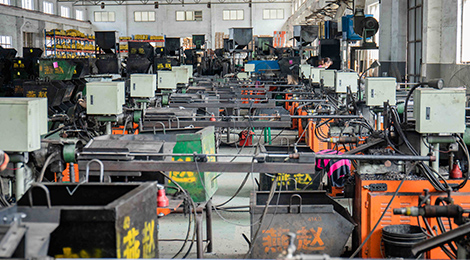
High strength locknuts are commonly manufactured from alloy steels, specifically those conforming to standards like AISI 4140, 4340, and 8740. These alloys exhibit high tensile strength, yield strength, and hardenability. However, specialized applications may utilize materials like titanium alloys (Ti-6Al-4V) or nickel alloys (Inconel 718) for superior corrosion resistance and temperature performance. The manufacturing process typically begins with hot forging or cold heading to establish the initial nut shape. This is followed by heat treatment – hardening and tempering – to achieve the desired mechanical properties. Critical parameters during heat treatment include austenitizing temperature, quenching medium, and tempering temperature, all meticulously controlled to optimize microstructure and prevent cracking. Locking features are then incorporated through various methods: prevailing torque nylon inserts (staked or molded in place), metal locking features (serrations, distorted threads), or chemical locking compounds. Thread rolling, a cold forming process, is used to create the threads with high precision and work hardening. Quality control is paramount, including dimensional inspection, hardness testing (Rockwell C scale), and non-destructive testing (NDT) such as magnetic particle inspection (MPI) or ultrasonic testing (UT) to detect subsurface defects. Chemical composition verification via spectroscopy is also standard. Material compatibility with the bolted components is vital to prevent galvanic corrosion, particularly in marine environments.
Performance & Engineering
The performance of high strength locknuts is characterized by several key engineering parameters. Prevailing torque, measured in Newton-meters (Nm) or inch-pounds (in-lbs), represents the resistance to rotational movement when the nut is tightened onto a bolt. This torque is crucial for maintaining clamping force under vibration. Tensile strength, the maximum stress the nut can withstand before fracturing, is typically in the range of 800-1200 MPa for high strength alloys. Yield strength, the stress at which permanent deformation begins, is equally important. Fatigue resistance is a critical consideration in dynamically loaded applications. Finite Element Analysis (FEA) is frequently employed to predict stress distribution and fatigue life under cyclic loading. Environmental resistance, encompassing corrosion resistance and temperature stability, must be evaluated based on the intended operating environment. Compliance with industry standards like NASM 45232 (aerospace) and DIN 6915 (automotive) dictates specific performance requirements. The clamping force generated by the nut is directly related to the tightening torque applied, adhering to the torque-tension relationship defined by the bolt's material and thread pitch. Proper bolt preload is essential to maximize joint strength and prevent loosening. Failure to achieve adequate preload can lead to fatigue failure and catastrophic joint failure.
Technical Specifications
| Grade | Material | Tensile Strength (MPa) | Prevailing Torque (Nm) |
|---|---|---|---|
| SAE Grade 8 | 4140 Alloy Steel | 830 - 965 | 30 - 60 |
| Class 10 | 4340 Alloy Steel | 950 - 1100 | 40 - 80 |
| NAS 45232 | 300M Alloy Steel | 1050 - 1200 | 50 - 100 |
| Ti-6Al-4V (Grade 5) | Titanium Alloy | 895 - 965 | 20 – 50 |
| Inconel 718 | Nickel-Chromium Alloy | 1380 – 1530 | 60 - 120 |
| A4-80 (Stainless Steel) | 316 Stainless Steel | 800 - 1000 | 15 - 40 |
Failure Mode & Maintenance
High strength locknuts can fail through several mechanisms. Fatigue cracking is common in dynamically loaded applications, initiating at stress concentrations such as thread roots or locking features. Hydrogen embrittlement, caused by the ingress of hydrogen into the material, can significantly reduce ductility and promote brittle fracture. Corrosion, particularly in marine or corrosive environments, can weaken the nut and lead to thread galling. Stripped threads, resulting from excessive torque or improper installation, render the nut ineffective. Prevailing torque loss, caused by wear of the locking insert or deformation of metal locking features, compromises the nut's ability to resist loosening. Maintenance strategies include regular visual inspection for signs of corrosion or damage. Torque verification using calibrated torque wrenches is crucial to ensure adequate clamping force. Lubrication with appropriate thread lubricants can reduce friction and prevent galling. For critical applications, non-destructive testing (NDT) such as dye penetrant inspection or ultrasonic testing can detect subsurface cracks. Replace any nut exhibiting signs of damage or exceeding its service life. Proper storage in a dry environment is essential to prevent corrosion. It’s crucial to understand that improper installation, exceeding torque specifications, or using incompatible materials can dramatically accelerate failure rates.
Industry FAQ
Q: What is the impact of thread form (e.g., coarse vs. fine) on the performance of high strength locknuts?
A: Coarse threads generally offer higher shear strength and are less susceptible to cross-threading, making them suitable for applications where vibration is a concern. Fine threads, on the other hand, provide greater tensile strength and are less likely to loosen under dynamic loading due to the smaller helix angle. The optimal thread form depends on the specific application requirements and the materials involved. A careful assessment of load type, vibration frequency, and environmental conditions is necessary to determine the appropriate thread form.
Q: How do I select the appropriate prevailing torque for a given application?
A: Prevailing torque should be selected based on the required locking force and the potential for vibration. Higher prevailing torque provides greater resistance to loosening but also requires more torque to install. Consider the bolt size, material, and the anticipated dynamic loads. Consult industry standards and manufacturer's recommendations to determine the appropriate range. Excessive prevailing torque can overstress the bolt and nut, while insufficient torque may lead to loosening.
Q: What are the risks associated with using dissimilar metals in a bolted joint with high strength locknuts?
A: Dissimilar metals can create a galvanic cell, leading to accelerated corrosion of the more anodic metal. This is particularly problematic in marine environments or corrosive atmospheres. To mitigate this risk, select compatible materials or use corrosion-inhibiting coatings. Consider using insulating washers to break the electrical contact between the metals. Cathodic protection techniques can also be employed in severe cases.
Q: What is the role of surface treatment (e.g., zinc plating, black oxide) in enhancing the performance of high strength locknuts?
A: Surface treatments provide corrosion protection, improve wear resistance, and enhance aesthetic appeal. Zinc plating offers sacrificial corrosion protection, while black oxide provides a mild level of corrosion resistance and reduces glare. Phosphate coatings improve paint adhesion and provide some corrosion protection. The choice of surface treatment depends on the operating environment and the desired level of protection. Consider the potential impact on prevailing torque and dimensional tolerances.
Q: How does temperature affect the performance of high strength locknuts?
A: Elevated temperatures can reduce the yield strength and tensile strength of the nut material, potentially leading to premature failure. Creep, the slow deformation of the material under sustained stress, can also occur at high temperatures. Conversely, low temperatures can embrittle the material, making it more susceptible to fracture. Select materials specifically designed for the operating temperature range and consider the thermal expansion coefficients of the nut and bolt to prevent loosening due to differential expansion.
Conclusion
High strength locknuts are essential components in critical fastening applications, providing reliable and vibration-resistant connections. Their performance is fundamentally linked to material selection, manufacturing precision, and adherence to stringent engineering principles. Understanding the nuances of prevailing torque, tensile strength, fatigue resistance, and corrosion behavior is paramount to ensure long-term joint integrity.
As industries continue to demand higher performance and greater safety, the development of advanced high strength locknuts utilizing novel materials and innovative locking mechanisms will be crucial. Continued research into failure modes and the implementation of rigorous quality control measures will further enhance the reliability and durability of these vital components. Ongoing adherence to relevant international standards will be essential for maintaining consistency and ensuring global interoperability.