
Introduction
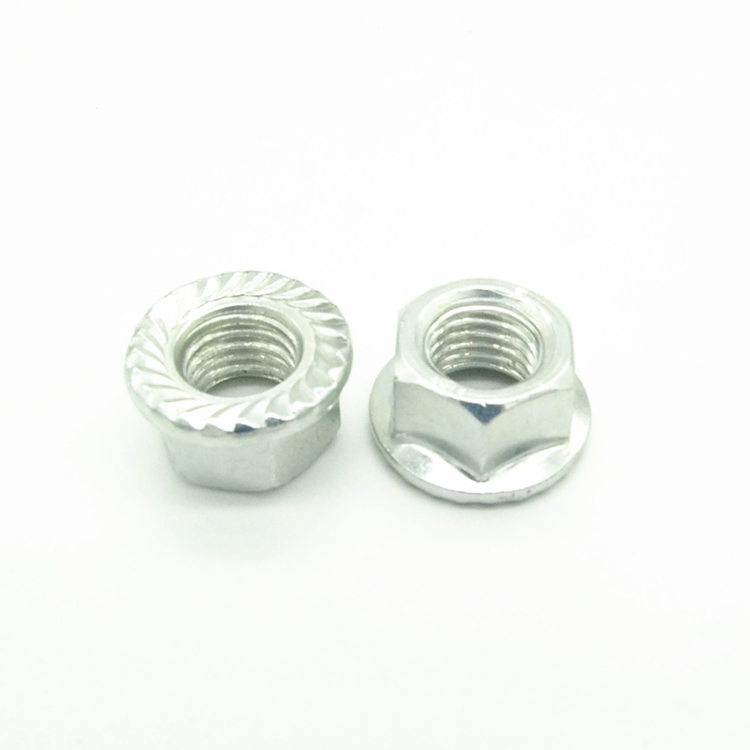
Hexagon lock nuts, also known as prevailing torque nuts, are internally locking fasteners designed to resist loosening under vibration and dynamic loads. Positioned within the broader fastening industry, they represent a critical component in ensuring joint integrity across diverse engineering applications, spanning automotive assembly, aerospace engineering, heavy machinery, and infrastructure projects. Unlike standard hexagon nuts, lock nuts incorporate a distorted thread form – typically a nylon insert (Nylock), metal insert (Stover), or deformed thread – creating frictional resistance that prevents self-loosening. Their core performance characteristics center around maintaining clamp load and preventing catastrophic failure due to fastener detachment. The prevailing torque applied dictates the resistance to rotation when the nut is installed, a key parameter in design considerations.
Material Science & Manufacturing
Hexagon lock nuts are predominantly manufactured from medium carbon steel (e.g., SAE 1045) offering a balance of strength, ductility, and cost-effectiveness. Alloy steels, such as 4140 or 8640, are used in high-stress applications demanding superior mechanical properties and corrosion resistance. Stainless steels (304, 316) are employed in corrosive environments, though their lower hardness requires careful consideration of prevailing torque. The manufacturing process generally begins with cold heading, where wire stock is formed into the nut shape. This is followed by machining operations to achieve precise thread dimensions and flat surfaces.
For Nylock nuts, a nylon insert is molded directly into the nut during or after the heading process. The nylon material (typically Nylon 6 or Nylon 66) exhibits a compressive yield strength significantly lower than the nut material, allowing it to deform elastically and conform to the thread flanks of the bolt. Critical parameters during nylon insert molding include temperature control (to prevent degradation), injection pressure (for complete fill), and cooling rate (to minimize shrinkage). Metal lock nuts (Stover) employ a deformed thread achieved through a specialized forming process. Precise control of the deformation parameters – force, die geometry, and feed rate – is paramount to ensure consistent prevailing torque. Heat treatment (hardening and tempering) is applied to steel nuts to achieve the desired hardness and tensile strength, complying with specified standards like ASTM A560. Surface treatments, such as zinc plating, phosphate coating, or galvanizing, enhance corrosion resistance.
Performance & Engineering
The performance of hexagon lock nuts is primarily dictated by their ability to maintain clamp load under dynamic conditions. Clamp load is the axial force holding the fastened components together, and its maintenance is crucial for joint integrity. Factors affecting clamp load include bolt preload, vibration amplitude and frequency, thermal cycling, and the prevailing torque of the nut. Finite element analysis (FEA) is frequently used to model the stress distribution within the joint and optimize the nut design for specific applications. The prevailing torque is a critical parameter, and it’s often specified by the engineer based on application requirements.
Environmental resistance is another crucial performance characteristic. Exposure to corrosive environments (salt spray, humidity, industrial chemicals) can lead to degradation of the nut material and a reduction in its mechanical properties. Selection of appropriate materials (stainless steel, coated steel) and surface treatments is essential. Compliance requirements vary depending on the industry and application. For example, automotive applications often require adherence to IATF 16949 quality management system standards and specific OEM specifications. Aerospace applications demand compliance with AS9100 and rigorous testing to ensure reliability under extreme conditions. The nut’s thread form and prevailing torque must consistently meet defined acceptance criteria throughout the product lifecycle. Failure analysis investigations frequently attribute loosening to improper installation torque, material defects, or exceeding the nut's load-carrying capacity.
Technical Specifications
| Nut Size (Metric) | Material Grade | Prevailing Torque (Nm) | Tensile Strength (MPa) |
|---|---|---|---|
| M6 | Steel Grade 8.8 | 2.5 - 4.5 | 800 |
| M8 | Steel Grade 10 | 4.0 - 6.0 | 980 |
| M10 | Stainless Steel A4 | 3.0 - 5.0 | 700 |
| M12 | Steel Grade 8.8 | 6.0 - 8.0 | 800 |
| M16 | Steel Grade 12.9 | 8.0 - 12.0 | 1200 |
| M20 | Steel Grade 10 | 10.0 - 15.0 | 980 |
Failure Mode & Maintenance
Hexagon lock nuts can fail through several mechanisms. Fatigue cracking can occur at the thread root due to cyclic loading, particularly in high-vibration applications. This is exacerbated by improper preload or material defects. Stripping of the thread, whether in the nut or the mating bolt, is another common failure mode, often resulting from over-torquing or using an incorrect bolt grade. For Nylock nuts, degradation of the nylon insert can occur due to exposure to high temperatures, aggressive chemicals, or UV radiation, leading to a loss of prevailing torque. Corrosion, especially in marine or industrial environments, can weaken the nut material and promote fracture. Galvanic corrosion can occur when dissimilar metals are in contact.
Maintenance primarily involves regular visual inspection for signs of corrosion, damage, or loosening. Torque checks should be performed periodically, especially in critical applications. Re-tightening should be performed to the specified torque value, using a calibrated torque wrench. If a nut shows signs of fatigue cracking or thread stripping, it should be replaced immediately. For Nylock nuts, periodically checking the integrity of the nylon insert is recommended. Preventive maintenance strategies include applying corrosion inhibitors and using appropriate lubricants to reduce friction and wear. A robust fastening system design, incorporating proper bolt preload and material selection, significantly reduces the likelihood of failures.
Industry FAQ
Q: What is the primary difference between a standard hexagon nut and a prevailing torque nut (lock nut)?
A: The primary difference lies in the design intended to resist loosening. A standard hexagon nut relies solely on friction between the threads to maintain clamp load, while a prevailing torque nut incorporates a deliberate interference mechanism – typically a deformed thread or a nylon insert – to create frictional resistance to rotation, preventing self-loosening under vibration.
Q: How does temperature affect the performance of a nylon insert lock nut (Nylock nut)?
A: Elevated temperatures can significantly reduce the effectiveness of a Nylock nut. The nylon insert's yield strength decreases with temperature, reducing its ability to maintain the desired prevailing torque. Prolonged exposure to high temperatures can also cause the nylon to creep, further diminishing its locking performance.
Q: What is the impact of using a lubricant on a prevailing torque nut?
A: Applying lubricant can reduce the prevailing torque of a lock nut, potentially compromising its ability to resist loosening. Lubricants decrease friction between the threads, reducing the interference between the nut and the bolt. Therefore, it is generally recommended to avoid lubrication unless specifically permitted by the nut manufacturer.
Q: What material selection considerations are important for hexagon lock nuts used in saltwater environments?
A: In saltwater environments, corrosion resistance is paramount. Stainless steel (316 is preferred over 304 for enhanced corrosion resistance) is the recommended material. Alternatively, carbon steel nuts with robust corrosion-resistant coatings, such as hot-dip galvanizing or specialized polymer coatings, can be used. Regular inspection and maintenance are still essential.
Q: What is the significance of prevailing torque specification?
A: The prevailing torque specification defines the resistance to rotation when the nut is applied to the bolt. It is a critical parameter because it ensures sufficient frictional force to prevent loosening under vibration. Specifying the correct prevailing torque range is essential for maintaining the integrity of the fastened joint and preventing failures.
Conclusion
Hexagon lock nuts represent a fundamental element in ensuring reliable fastening solutions across a broad spectrum of industries. Their ability to mitigate self-loosening under dynamic conditions is dependent upon a complex interplay of material science, precise manufacturing control, and appropriate engineering design. Understanding the failure modes, the influence of environmental factors, and adherence to relevant industry standards are essential for optimizing their performance and ensuring long-term joint integrity.
Future advancements in lock nut technology will likely focus on developing innovative locking mechanisms, utilizing advanced materials with enhanced corrosion resistance and temperature stability, and implementing smart fastening systems with integrated sensors for real-time monitoring of clamp load and torque. Continued research and development in these areas will be crucial for meeting the evolving demands of increasingly complex engineering applications.