
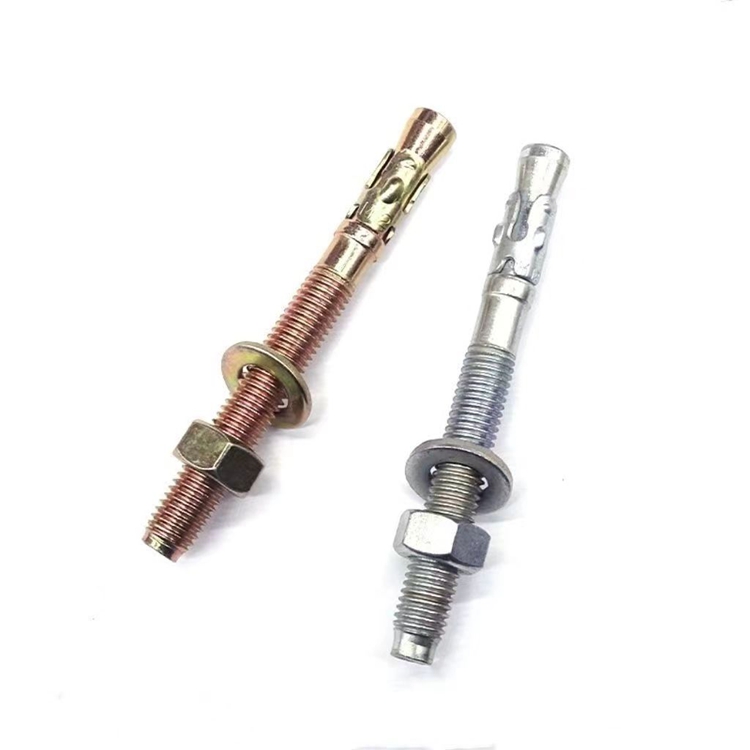
Introduction
BS Hex Nuts, conforming to British Standard EN ISO 4759-1, are externally threaded fasteners crucial for securing components across a vast array of industrial applications. Positioned as a foundational element within mechanical fastening systems, these nuts are universally employed in conjunction with bolts, screws, and studs to create robust and reliable joints. Their primary function is to distribute clamping force evenly, resisting loosening due to vibration and dynamic loading. Core performance characteristics include tensile strength, proof load, and prevailing torque (when applicable, such as with nylon insert lock nuts). The selection of a suitable BS Hex Nut hinges on factors like material compatibility with the bolted assembly, the environmental conditions of operation, and the required level of clamping force and resistance to loosening. The industry faces persistent challenges related to material traceability, corrosion prevention in harsh environments, and ensuring consistent dimensional accuracy for critical applications.
Material Science & Manufacturing
BS Hex Nuts are predominantly manufactured from carbon steels, alloy steels, and stainless steels. Carbon steels (e.g., AISI 1018, 1045) offer high strength and are cost-effective for general-purpose applications. However, they are susceptible to corrosion. Alloy steels (e.g., 4140, 4340) are heat-treated to enhance strength, toughness, and wear resistance. Stainless steels (e.g., 304, 316) provide superior corrosion resistance, making them ideal for marine, chemical processing, and food & beverage industries. Material properties like yield strength, tensile strength, elongation, and hardness are rigorously controlled during manufacturing. The manufacturing process typically begins with hot forging or cold heading of steel wire or bar stock. Forging provides superior grain structure and strength, particularly for larger nut sizes. Cold heading is more efficient for high-volume production of smaller nuts. Following forming, nuts undergo machining operations to create the hexagon shape and thread. Threading is typically performed using rolling or cutting methods. Rolling is preferred for its superior thread quality and material strength retention. Heat treatment (quenching and tempering) is crucial for achieving the desired mechanical properties. Surface treatments, such as zinc plating, galvanizing, or passivation, are applied to enhance corrosion resistance and improve appearance. Quality control measures, including dimensional inspection, hardness testing, and material analysis, are implemented throughout the manufacturing process to ensure compliance with BS EN ISO 4759-1 standards.
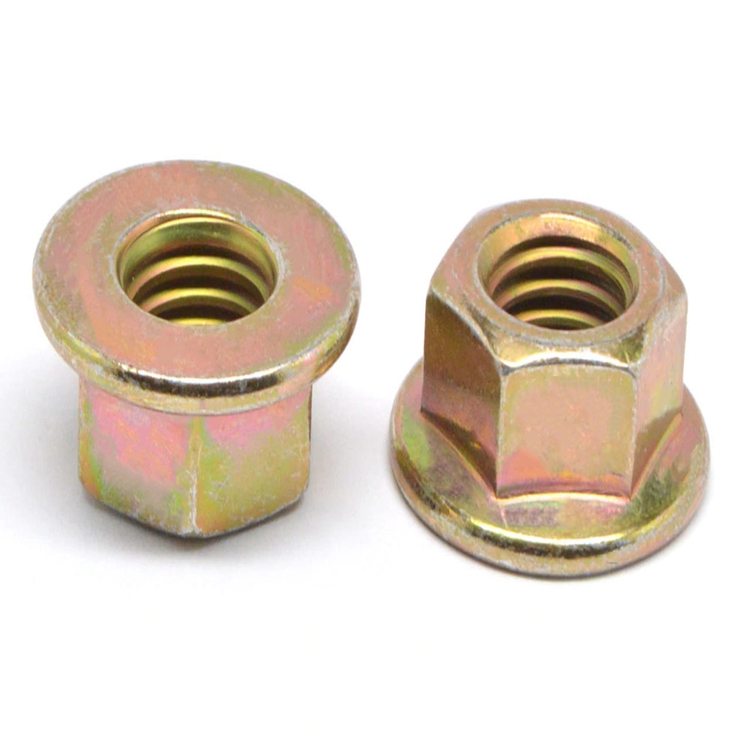
Performance & Engineering
The performance of a BS Hex Nut is fundamentally governed by its ability to withstand tensile loading and resist loosening under vibration. Tensile strength is the maximum stress the nut can endure before fracturing, while proof load represents the maximum stress it can withstand without permanent deformation. Preload, the initial clamping force applied to the bolted joint, is a critical engineering parameter. Insufficient preload can lead to joint separation, while excessive preload can cause fastener yielding or failure. The torque-tension relationship is non-linear and influenced by factors like thread friction, nut face bearing surface, and bolt material. Finite element analysis (FEA) is frequently employed to optimize nut geometry and predict stress distribution under various loading conditions. Environmental resistance is paramount, particularly in corrosive environments. Galvanic corrosion can occur when dissimilar metals are in contact, necessitating the use of compatible materials or protective coatings. Temperature extremes can also affect nut performance; high temperatures can reduce strength, while low temperatures can increase brittleness. Compliance with BS EN ISO 4759-1 dictates specific performance requirements, including dimensional tolerances, mechanical properties, and material composition. Furthermore, considerations for vibration resistance often incorporate features like nylon inserts (self-locking nuts) or serrated flanges to increase friction and prevent loosening.
Technical Specifications
| Property | Grade 4.8 | Grade 8.8 | Grade A2-70 (Stainless Steel) | Grade A4-80 (Stainless Steel) |
|---|---|---|---|---|
| Tensile Strength (MPa) | 400 | 800 | 700 | 800 |
| Proof Load (MPa) | 240 | 640 | 480 | 600 |
| Hardness (HB) | 140-170 | 240-340 | 180-240 | 250-320 |
| Material | Carbon Steel | Alloy Steel | Austenitic Stainless Steel (304) | Austenitic/Ferritic Stainless Steel (316) |
| Corrosion Resistance | Low (Requires coating) | Moderate (Requires coating) | High | Excellent |
| Typical Applications | General purpose fastening | High-strength structural connections | Corrosive environments, food processing | Marine applications, chemical processing |
Failure Mode & Maintenance
BS Hex Nuts are susceptible to several failure modes. Thread stripping occurs when the load exceeds the shear strength of the threads. This is often exacerbated by improper installation or use of incompatible materials. Fatigue cracking can develop under cyclical loading, particularly at stress concentration points like the root of the thread. Corrosion is a significant concern, especially in harsh environments. Rust can weaken the nut and cause it to seize onto the bolt. Hydrogen embrittlement, a phenomenon that occurs when atomic hydrogen diffuses into the metal lattice, can reduce ductility and lead to brittle fracture in high-strength steels. Deformation can occur under excessive load or improper tightening, leading to a loss of clamping force. Maintenance primarily focuses on preventing corrosion. Regular inspection for rust or other signs of degradation is crucial. Applying a corrosion inhibitor or protective coating can extend the service life of the nut. Retorquing nuts periodically, particularly in applications subject to vibration, helps maintain proper clamping force. If a nut shows signs of damage, it should be replaced immediately. Proper lubrication during installation can reduce friction and prevent galling. Careful selection of compatible materials can mitigate the risk of galvanic corrosion.
Industry FAQ
Q: What is the significance of the 'grade' marking on a BS Hex Nut (e.g., 8.8, A2-70)?
A: The grade marking indicates the mechanical properties of the nut, specifically its tensile strength and yield strength. Higher grade numbers generally indicate stronger materials and greater load-bearing capacity. The first digits denote the ultimate tensile strength (in 100s of MPa), and the second digit represents the yield strength as a percentage of the tensile strength. 'A' designates austenitic stainless steel, followed by a numerical value indicating the minimum tensile strength.
Q: How do I select the appropriate nut material for a corrosive environment?
A: Stainless steels, particularly grades A4-80 (316) offer superior corrosion resistance compared to carbon or alloy steels. Consider the specific corrosive agents present (e.g., salt water, chemicals). A4-80 is generally preferred for marine applications due to its higher molybdenum content, which enhances resistance to chloride pitting. Protective coatings like zinc plating or galvanizing can also provide temporary corrosion protection for carbon steel nuts.
Q: What is the impact of thread lubrication on the performance of a BS Hex Nut?
A: Proper thread lubrication reduces friction during installation, allowing for more accurate torque application and preventing galling (adhesive wear). This ensures proper clamping force and minimizes the risk of thread damage. Lubricants also provide a barrier against corrosion. However, it’s essential to select a lubricant compatible with the materials involved and the operating temperature.
Q: What are the common causes of thread stripping in BS Hex Nuts?
A: Thread stripping is often caused by exceeding the shear strength of the threads. Contributing factors include improper installation (cross-threading, over-tightening), use of incompatible materials (leading to galling), corrosion weakening the threads, and applying excessive load. Using the correct torque specifications and ensuring proper thread alignment during installation are crucial preventative measures.
Q: How does temperature affect the performance of a BS Hex Nut?
A: High temperatures can reduce the tensile strength and yield strength of the nut material. Low temperatures can increase brittleness. Extreme temperature fluctuations can induce thermal stresses, potentially leading to fatigue failure. For high-temperature applications, special alloys designed to retain strength at elevated temperatures are necessary. For cryogenic applications, materials with sufficient ductility at low temperatures should be selected.
Conclusion
BS Hex Nuts, conforming to BS EN ISO 4759-1, represent a fundamental yet critically important element in countless mechanical fastening applications. Their performance is dictated by a complex interplay of material science, manufacturing processes, and engineering principles, encompassing tensile strength, corrosion resistance, and resistance to loosening under dynamic loading. Selecting the appropriate grade and material for a given application, coupled with proper installation and maintenance practices, are paramount to ensuring the long-term reliability and safety of bolted joints.
The continued advancement of fastener technology is focused on developing materials with enhanced strength-to-weight ratios, improved corrosion resistance, and innovative locking mechanisms. Further research into non-destructive testing methods for assessing fastener integrity and the implementation of smart fastening systems with integrated sensors for monitoring preload will be crucial for addressing the evolving demands of modern engineering. Adherence to established international standards remains the cornerstone of quality control and ensures interchangeability and reliability in global supply chains.