
Introduction
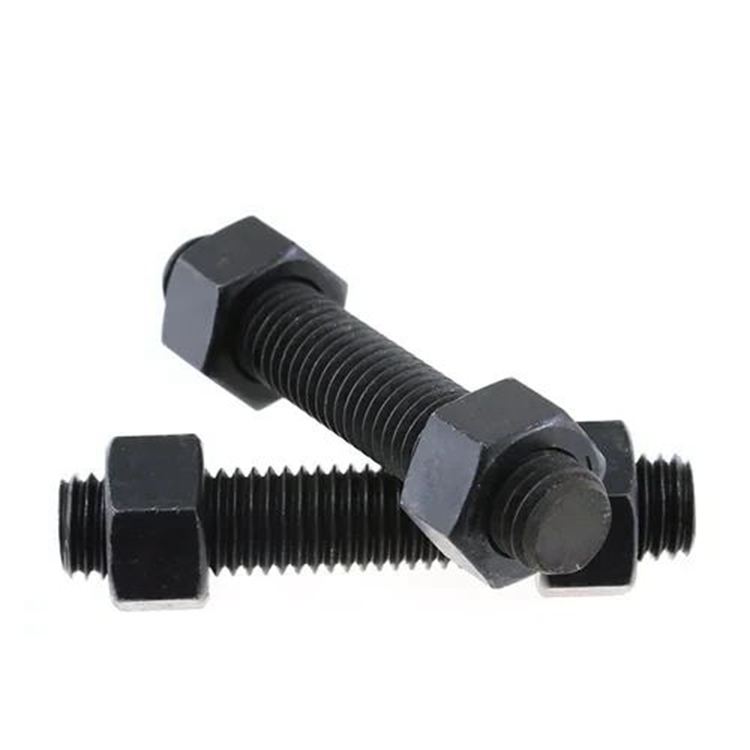
Truss bolts are high-strength fasteners critically employed in structural engineering, particularly within steel truss systems, bridges, and heavy machinery. Positioned as a primary load-bearing element, the truss bolt’s function extends beyond simple joining; it actively contributes to the structural integrity and load distribution of the assembled components. Core performance characteristics center around tensile strength, shear strength, fatigue resistance, and preload capability. These parameters dictate the bolt’s ability to withstand static and dynamic loads, prevent joint slippage, and ensure long-term reliability in demanding applications. A key pain point in the industry involves maintaining consistent preload during service, as preload loss can significantly reduce clamping force and accelerate fatigue failure. Furthermore, ensuring corrosion resistance in harsh environments, such as those found in marine or industrial settings, is paramount for extending the service life of critical structures.
Material Science & Manufacturing
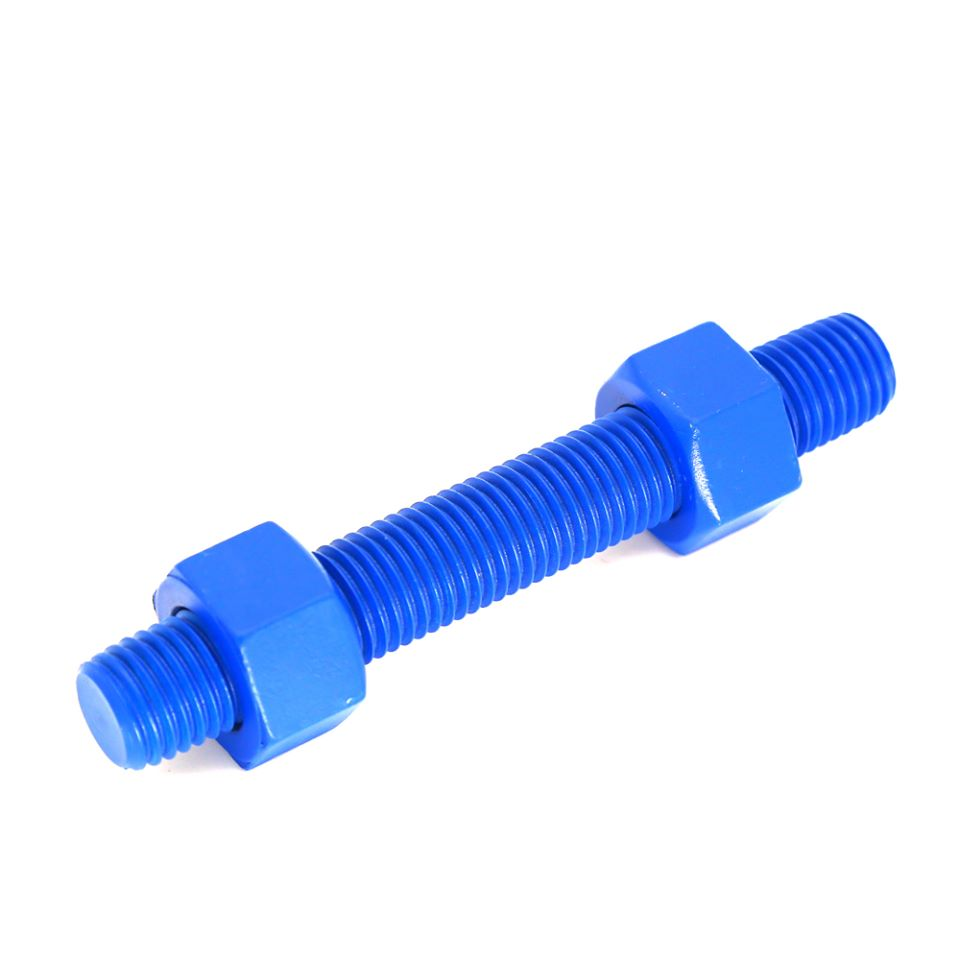
Truss bolts are predominantly manufactured from high-strength alloy steels, commonly adhering to standards like ASTM A307, A325, and A490 in North America, or equivalent ISO standards. The base material typically consists of medium carbon steel (e.g., 4140, 4340) alloyed with elements like manganese, silicon, chromium, and molybdenum to enhance strength, toughness, and hardenability. Heat treatment is a critical manufacturing step, involving quenching and tempering to achieve the desired mechanical properties. The quenching process transforms the austenite into martensite, a hard and brittle phase, while tempering reduces brittleness and increases ductility. Precise control of temperature and cooling rates is crucial to avoid cracking or distortion. Surface treatments, such as galvanizing, zinc plating, or epoxy coating, are frequently applied to improve corrosion resistance. Manufacturing processes include cold heading for smaller diameter bolts and hot forging for larger diameters. Threading is typically performed via rolling, which imparts compressive residual stresses, further enhancing fatigue resistance. Critical parameters monitored during manufacturing include chemical composition, hardness, tensile strength, yield strength, elongation, and thread form accuracy. Hydrogen embrittlement during electroplating must be carefully controlled through baking processes to prevent delayed cracking. The metallurgical structure, particularly grain size and inclusion content, directly impacts fatigue life and fracture toughness.
Performance & Engineering
The performance of truss bolts is fundamentally governed by their ability to withstand tensile, shear, and fatigue loads. Tensile strength, measured in MPa or PSI, represents the maximum stress the bolt can endure before fracturing under axial tension. Shear strength, likewise, defines the resistance to forces acting perpendicular to the bolt axis. However, fatigue resistance is often the limiting factor in structural applications subjected to cyclic loading. Fatigue failure initiates from stress concentrations, typically at the thread root or under the bolt head. Preload, the initial tension applied to the bolt during tightening, is a critical engineering parameter. Maintaining adequate preload ensures clamping force, prevents joint slippage, and minimizes stress fluctuations. Bolt preload is typically determined using torque control, turn-of-nut method, or direct tension indicators. Environmental resistance is also a significant performance consideration. Corrosion, particularly in chloride-rich environments, can lead to pitting corrosion, stress corrosion cracking, and ultimately, bolt failure. Finite element analysis (FEA) is routinely employed to model stress distributions within bolted joints under various loading conditions and to optimize bolt size and preload. Compliance requirements, such as those stipulated by AISC (American Institute of Steel Construction) and Eurocode 3, dictate minimum bolt strength grades and installation procedures. Proper detailing of bolted connections, including hole size and edge distances, is critical to avoid stress concentrations and ensure optimal performance.
Technical Specifications
| Grade | Tensile Strength (MPa) | Yield Strength (MPa) | Hardness (Rockwell C) | Typical Diameter (mm) | Corrosion Resistance |
|---|---|---|---|---|---|
| A307 Grade A | 400 | 250 | 70-80 | 6-25 | Limited (Zinc Plating) |
| A325 | 830 | 690 | 33-39 | 6-75 | Moderate (Zinc Plating/Galvanizing) |
| A490 | 1000 | 900 | 39-45 | 6-75 | Moderate (Zinc Plating/Galvanizing) |
| ISO 8.8 | 800 | 600 | 30-38 | 8-64 | Moderate (Zinc Plating) |
| ISO 10.9 | 1000 | 900 | 37-45 | 8-64 | Moderate (Zinc Plating/Galvanizing) |
| ISO 12.9 | 1200 | 1100 | 45-54 | 8-64 | Moderate (Zinc Plating/Galvanizing) |
Failure Mode & Maintenance
Truss bolts are susceptible to several failure modes. Fatigue cracking, initiated at stress concentrators (thread roots, bolt head), is common in cyclically loaded applications. Corrosion, particularly pitting corrosion and stress corrosion cracking, accelerates fatigue failure. Hydrogen embrittlement can lead to brittle fracture, especially in high-strength bolts subjected to electroplating. Thread stripping occurs when the load exceeds the shear strength of the threads. Overload failure results from exceeding the tensile strength of the bolt. Preload loss, due to creep, settlement of connected materials, or vibration, reduces clamping force and accelerates fatigue. Maintenance strategies include regular visual inspections to identify signs of corrosion, cracking, or thread damage. Torque checks are crucial to verify preload maintenance. Lubrication of threads reduces friction and prevents galling during tightening and loosening. Protective coatings, such as galvanizing or epoxy, enhance corrosion resistance. For critical applications, non-destructive testing (NDT) methods, such as ultrasonic testing or magnetic particle inspection, can detect subsurface cracks. If corrosion is severe, bolt replacement is necessary. Proper tightening procedures, using calibrated torque wrenches or direct tension indicators, are essential to ensure correct preload. Periodic re-tightening may be required to compensate for preload loss over time.
Industry FAQ
Q: What is the impact of thread form on fatigue life?
A: The thread form significantly influences fatigue life. Rounded thread roots, as opposed to sharp roots, reduce stress concentration and enhance fatigue resistance. Rolling thread forms induce compressive residual stresses, further improving fatigue performance. Coarser threads generally exhibit higher fatigue strength than finer threads for a given bolt size, due to a larger stress area.
Q: How does temperature affect the preload in truss bolts?
A: Temperature fluctuations can significantly impact preload. Thermal expansion and contraction of the connected materials and the bolt itself can lead to preload loss or gain. Heating the bolt causes it to expand, potentially increasing preload, while cooling causes contraction, potentially reducing preload. Designers must account for thermal effects in high-temperature applications.
Q: What are the advantages and disadvantages of different corrosion protection methods?
A: Zinc plating provides sacrificial protection, corroding preferentially to the steel. Galvanizing offers thicker zinc coating and superior corrosion resistance but can be more expensive. Epoxy coatings provide a barrier against corrosive agents but are susceptible to damage and loss of protection. Stainless steel bolts offer inherent corrosion resistance but are significantly more costly.
Q: What is the role of lubrication in bolted joint performance?
A: Lubrication reduces friction during tightening and loosening, ensuring accurate preload. It also prevents galling, a form of adhesive wear that can damage threads. The choice of lubricant depends on the application and operating temperature. However, some lubricants can degrade rubber or plastic components in the joint.
Q: What is the acceptable level of preload loss in a critical truss connection?
A: The acceptable level of preload loss depends on the application and safety factor. Generally, a preload loss exceeding 10-20% is considered unacceptable and requires re-tightening. Monitoring preload using direct tension indicators or ultrasonic methods can help identify preload loss early on.
Conclusion
Truss bolts are fundamental components in numerous critical infrastructure applications, demanding a thorough understanding of their material properties, manufacturing processes, and performance characteristics. Maintaining consistent preload, mitigating corrosion, and preventing fatigue failure are paramount to ensuring long-term structural integrity. The selection of appropriate bolt grade, surface treatment, and tightening procedure directly impacts the reliability and safety of the assembled structure.
Future advancements in bolted joint technology will likely focus on the development of self-tightening bolts, improved corrosion-resistant coatings, and advanced monitoring systems for real-time preload assessment. Adherence to industry standards and best practices in design, manufacturing, and installation is crucial for optimizing the performance and extending the service life of truss bolted connections.