
Introduction
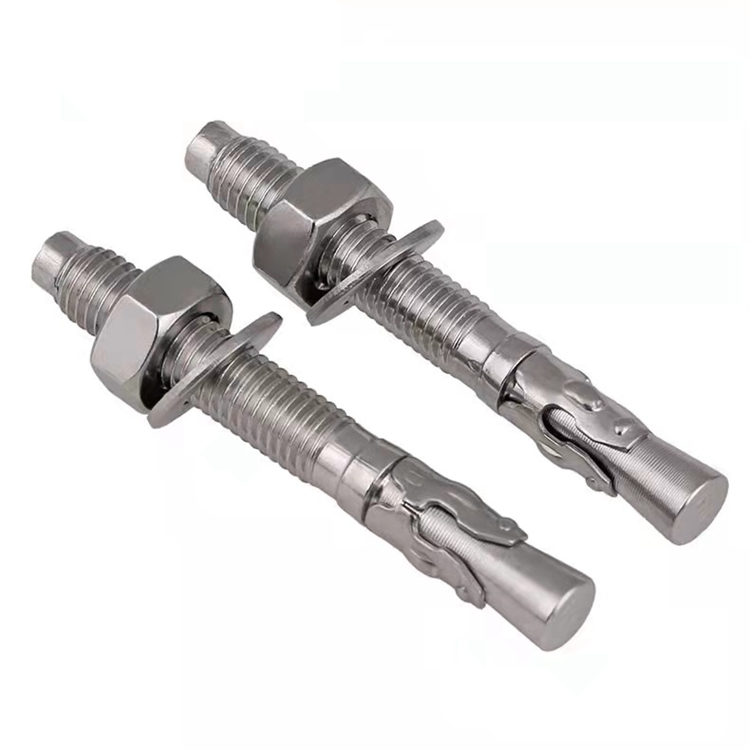
Security bolts are specialized fasteners designed to deter theft and unauthorized access by utilizing unique drive systems that require specific tools for installation and removal. Unlike standard bolts relying on common head types like hex or Phillips, security bolts incorporate features such as tamper-resistant profiles, breakaway heads, or concealed fastening mechanisms. These bolts occupy a critical position in the supply chain securing assets across a diverse range of industries including automotive, aerospace, defense, construction, and high-value electronics. Core performance characteristics center around shear strength, tensile strength, resistance to torque shear, and the effectiveness of the security feature in preventing removal without the designated tool. The increasing prevalence of theft and vandalism necessitates robust fastening solutions, driving demand for high-security bolts capable of withstanding significant destructive forces.
Material Science & Manufacturing
The predominant material used in security bolt manufacturing is alloy steel, specifically grades like 4140 and 8.8/10.9/12.9 steel, offering a balance of high tensile strength, ductility, and hardness. The chemical composition includes significant carbon content (0.35-0.45% for 4140) alongside alloying elements like chromium, molybdenum, and manganese to enhance mechanical properties. Stainless steel (304, 316) is also employed in corrosive environments, though generally exhibiting lower tensile strength than alloy steels. Manufacturing typically involves cold forging to create the bolt head and shank, followed by thread rolling to form the threads. Heat treatment – including hardening, tempering, and case hardening – is critical for achieving the desired mechanical properties. The security feature itself (e.g., pin-in-head, one-way drive) is often machined or cold-formed post-heat treatment. Critical parameters during manufacturing include precise control of forging pressures, die temperatures, and heat treatment cycles. Variations in these parameters directly affect grain size, hardness distribution, and ultimately, the bolt’s resistance to shear and torsional forces. Surface treatments such as zinc plating, black oxide, or phosphate coating are applied for corrosion resistance. The manufacturing process requires rigorous quality control, including dimensional inspection, hardness testing (Rockwell C scale), and non-destructive testing (NDT) such as magnetic particle inspection (MPI) to detect surface cracks.
Performance & Engineering
Performance of security bolts is evaluated based on several key engineering principles. Tensile strength, measured in MPa, indicates the bolt's resistance to axial pulling forces. Shear strength, also in MPa, determines resistance to forces applied perpendicular to the bolt axis. Torque shear resistance is paramount; it defines the amount of torque required to shear the bolt head or drive system. Finite element analysis (FEA) is frequently used to model stress distribution under various loading conditions, optimizing the design of the security feature to maximize resistance to tampering. Environmental resistance is critical; corrosion protection is assessed through salt spray testing (ASTM B117) and cyclic corrosion testing. Compliance with industry standards like RoHS and REACH ensures the absence of hazardous substances. The performance of the security feature itself is categorized by its "security grade" often determined by standardized testing protocols that simulate attempted removal using common tools. The geometry of the drive system is designed to create significant stress concentrations when inappropriate tools are applied, leading to bit slippage or damage to the drive, preventing removal. Proper preload (tightening torque) is crucial for achieving optimal clamping force and preventing loosening due to vibration or dynamic loads. Engineers must account for thermal expansion/contraction coefficients of the bolt material and the joined materials to ensure a secure connection across a range of temperatures.
Technical Specifications
| Material Grade | Tensile Strength (MPa) | Shear Strength (MPa) | Torque Shear Resistance (Nm) |
|---|---|---|---|
| 4140 Alloy Steel | 860 | 690 | 150-300 (depending on head size & drive type) |
| 8.8 Steel | 800 | 600 | 100-200 |
| 10.9 Steel | 1000 | 750 | 180-280 |
| 12.9 Steel | 1200 | 900 | 250-400 |
| 304 Stainless Steel | 500 | 350 | 80-150 |
| 316 Stainless Steel | 600 | 400 | 100-180 |
Failure Mode & Maintenance
Security bolts are susceptible to several failure modes. Shear failure occurs when the applied shear force exceeds the bolt’s shear strength, typically at the shear plane. Tensile failure results from excessive axial load exceeding the tensile strength, leading to bolt fracture. Fatigue cracking can initiate at stress concentration points (e.g., thread roots, drive recesses) due to cyclic loading, propagating until catastrophic failure. Torque shear occurs when excessive torque is applied, exceeding the torque shear resistance of the bolt head or drive system. Corrosion is a significant factor, especially in harsh environments, leading to pitting, crevice corrosion, and ultimately, reduced strength. Delamination can occur in coated bolts due to poor adhesion between the coating and the substrate. Maintenance primarily focuses on periodic inspection for signs of corrosion, loosening, or damage. Retorquing to the specified preload is essential to maintain clamping force. Damaged or corroded bolts should be replaced immediately. Lubrication of threads with an anti-seize compound can prevent galling and facilitate future removal. To mitigate fatigue failure, proper joint design and vibration damping measures should be implemented. When a security bolt has been compromised (e.g., attempted removal), it must be replaced, even if it appears intact, as the security feature may be weakened. Proper selection of the bolt material and finish based on the operating environment is crucial for long-term reliability.
Industry FAQ
Q: What differentiates a high-security bolt from a standard tamper-resistant bolt?
A: High-security bolts utilize more complex and robust drive systems, typically involving multiple interacting features and proprietary designs, making them significantly more difficult to defeat than standard tamper-resistant bolts. Standard tamper-resistant designs often offer minimal resistance to determined attacks with readily available tools, while high-security variants are engineered to withstand prolonged attempts using specialized equipment.
Q: How does the material selection impact the security of a bolt in a marine environment?
A: In marine environments, chloride-induced corrosion is a major concern. While alloy steels offer high strength, they are susceptible to corrosion. Therefore, high-alloy stainless steels like 316, or coated alloy steels with specialized corrosion-resistant coatings (e.g., hot-dip galvanizing, ceramic coatings) are essential to prevent degradation and maintain bolt integrity. The coating must be carefully selected to ensure compatibility with the marine environment.
Q: What are the implications of using an incorrect tightening torque on a security bolt?
A: Under-tightening can lead to loosening due to vibration or dynamic loads, compromising the security of the assembly. Over-tightening can exceed the bolt’s yield strength, causing plastic deformation and reducing its clamping force, or even shearing the bolt head. It’s critical to use a calibrated torque wrench and follow the manufacturer’s specified tightening torque recommendations.
Q: What non-destructive testing methods are commonly used to verify the integrity of security bolts post-manufacturing?
A: Magnetic Particle Inspection (MPI) is widely used to detect surface cracks and discontinuities in ferromagnetic materials. Dye Penetrant Inspection (DPI) is another common method for detecting surface flaws. Ultrasonic testing can detect internal defects. Radiographic testing (X-ray) provides a comprehensive view of the bolt’s internal structure, identifying voids, inclusions, or cracks. These NDT methods ensure that the bolts meet stringent quality standards.
Q: How do environmental factors like temperature fluctuations affect the performance of security bolts?
A: Temperature fluctuations cause thermal expansion and contraction of the bolt and the joined materials. This can lead to changes in preload, potentially causing loosening or stress on the bolt. In extreme temperatures, the material properties of the bolt can also change, affecting its strength and ductility. Selecting materials with appropriate thermal expansion coefficients and considering temperature-induced stresses during joint design are critical for maintaining performance.
Conclusion
Security bolts represent a critical component in safeguarding assets across diverse industries. Their efficacy hinges upon a complex interplay of material science, precise manufacturing processes, and robust engineering design. The selection of appropriate material grades, coupled with meticulous heat treatment and surface finishing, directly influences resistance to corrosion, shear, and tensile forces. Proper implementation, including correct tightening torque and regular inspection, is equally vital to ensure long-term security and prevent premature failure.
Future advancements in security bolt technology are likely to focus on the development of more sophisticated drive systems utilizing advanced materials and manufacturing techniques, incorporating smart features such as embedded sensors for monitoring preload and detecting tampering attempts. Standardization of security grades and testing protocols will further enhance the reliability and interoperability of these critical fasteners, reinforcing their role in protecting valuable assets from theft and unauthorized access.