
Introduction
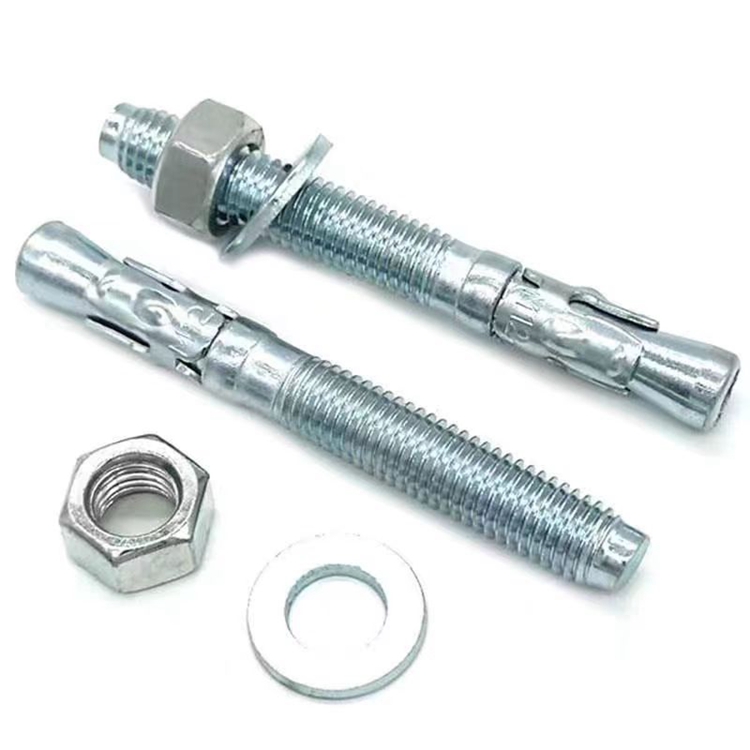
M10 bolts are standardized fasteners, defined by a 10mm nominal diameter, widely employed across numerous industrial sectors including automotive, construction, and machinery. Positioned as a critical component in mechanical assemblies, they function to create clamping force through threaded engagement with a nut or tapped hole, ensuring structural integrity. Their performance is dictated by material composition, manufacturing precision, and adherence to international standards. Core performance metrics include tensile strength, yield strength, proof load, and resistance to corrosion. The selection of an appropriate M10 bolt is paramount, influencing the reliability and longevity of the assembled product. A significant industry pain point revolves around ensuring consistent material quality and preventing premature failure due to factors like hydrogen embrittlement or fatigue loading.
Material Science & Manufacturing
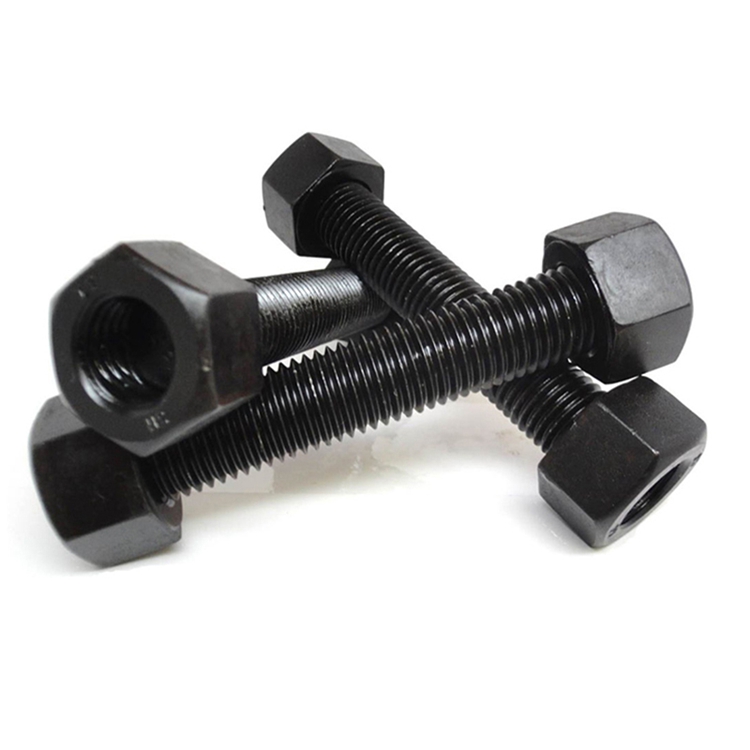
M10 bolts are predominantly manufactured from carbon steels, alloy steels, and stainless steels. Carbon steels, such as AISI 1045, offer good strength and ductility at a lower cost. Alloy steels, incorporating elements like chromium and molybdenum (e.g., 4140), enhance hardenability, tensile strength, and toughness. Stainless steels (e.g., 304, 316) provide superior corrosion resistance, crucial for outdoor or corrosive environments. The raw material's chemical composition directly influences the final mechanical properties. Manufacturing processes typically begin with hot forging or cold heading to create the bolt's shape. Hot forging, utilizing temperatures exceeding the recrystallization temperature of the steel, produces stronger parts with refined grain structure. Cold heading, performed at room temperature, offers higher dimensional accuracy and surface finish, but is limited to lower-strength materials. Following forming, bolts undergo thread rolling, a cold-forming process that imparts threads without material removal, improving thread strength compared to machining. Heat treatment (quenching and tempering) is critical for achieving desired hardness and strength. Precise control of heating rates, soaking times, and quenching media are vital to prevent distortion and cracking. Surface treatments like zinc plating, black oxide, or passivation are applied to enhance corrosion resistance and aesthetic appeal. Quality control involves rigorous inspection of dimensions, hardness, tensile strength, and surface finish, employing techniques like coordinate measuring machines (CMMs) and non-destructive testing (NDT) methods like magnetic particle inspection.
Performance & Engineering
The performance of an M10 bolt is governed by several engineering principles. Tensile strength, the maximum stress the bolt can withstand before fracturing, is a critical parameter. Yield strength represents the stress at which permanent deformation begins. Proof load, often defined as 90% of tensile strength, is the maximum load that can be applied without causing permanent deformation. Preload, the tension induced in the bolt when tightened, is vital for creating clamping force. The clamping force prevents slippage and distributes the load across the joined components. Fatigue performance is particularly important in applications subject to cyclic loading. Factors influencing fatigue life include stress concentration at thread roots, surface finish, and the presence of corrosion. Environmental resistance dictates the bolt's ability to withstand corrosion, oxidation, and other forms of degradation. Stainless steel bolts offer enhanced corrosion resistance compared to carbon steel bolts, but are susceptible to pitting corrosion in chloride-rich environments. Compliance requirements, such as those stipulated by automotive standards (e.g., IATF 16949) or construction codes (e.g., Eurocode), mandate specific material properties, testing procedures, and traceability requirements. Finite element analysis (FEA) is frequently employed to simulate bolt performance under various loading conditions, optimizing geometry and material selection to maximize strength and minimize stress concentration.
Technical Specifications
| Property | Grade 8.8 (Typical Carbon Steel) | Grade A2-70 (Typical Stainless Steel 304) | Grade A4-80 (Typical Stainless Steel 316) | Unit |
|---|---|---|---|---|
| Nominal Diameter | 10 | 10 | 10 | mm |
| Tensile Strength | 800 | 700 | 800 | MPa |
| Yield Strength | 640 | 210 | 560 | MPa |
| Proof Load | 640 | 440 | 640 | MPa |
| Hardness (Brinell) | 330-380 | 180-250 | 250-320 | HB |
| Corrosion Resistance | Limited (Requires Coating) | Good | Excellent | Qualitative |
Failure Mode & Maintenance
M10 bolts are susceptible to several failure modes. Tensile overload leads to fracture, often appearing as a brittle failure at the thread root. Fatigue failure occurs under cyclic loading, initiating at stress concentrators (e.g., thread roots, corrosion pits) and propagating until catastrophic failure. Corrosion, particularly in aggressive environments, weakens the bolt and promotes pitting corrosion, accelerating fatigue failure. Hydrogen embrittlement, prevalent in high-strength steels exposed to hydrogen-containing environments, reduces ductility and promotes brittle fracture. Thread stripping occurs when the threads are damaged due to excessive torque or improper alignment. Preload loss, caused by relaxation or creep, reduces clamping force and can lead to joint separation. Maintenance involves regular inspection for signs of corrosion, fatigue cracking, and thread damage. Torque wrenches should be used to ensure proper tightening, avoiding over-tightening which can lead to thread stripping or bolt stretch. Lubricants should be applied to threads to reduce friction and ensure accurate preload. In corrosive environments, protective coatings should be regularly inspected and reapplied as needed. For critical applications, periodic bolt replacement is recommended to prevent catastrophic failure.
Industry FAQ
Q: What is the impact of thread pitch on the bolt's performance and what are the common tolerances?
A: Thread pitch, the distance between adjacent thread crests, directly impacts the bolt's shear strength and resistance to stripping. A finer pitch generally provides higher shear strength but requires tighter manufacturing tolerances. Common tolerances for M10 bolts adhere to ISO 6H for external threads and 6g for internal threads, ensuring proper fit and engagement. Deviations from these tolerances can lead to increased stress concentration and reduced fatigue life.
Q: How does the choice of coating affect corrosion resistance and what are the limitations of zinc plating?
A: Coatings significantly enhance corrosion resistance. Zinc plating offers sacrificial protection, corroding preferentially to the steel. However, zinc plating has limitations; it's susceptible to white rust formation in humid environments and provides limited protection in acidic or alkaline conditions. Other coatings, like black oxide, offer minimal corrosion resistance but improve aesthetic appeal. More robust coatings include hot-dip galvanizing and specialized polymer coatings.
Q: What are the critical considerations when selecting a bolt material for high-temperature applications?
A: High-temperature applications demand materials that retain strength and creep resistance at elevated temperatures. Carbon steels lose strength rapidly above 400°C. Alloy steels, containing chromium and molybdenum, offer improved high-temperature performance. Austenitic stainless steels (e.g., 304, 316) maintain good strength up to around 800°C, but are susceptible to creep. Nickel-based alloys are often used for extreme high-temperature environments exceeding 800°C.
Q: What are the typical torque values for an M10 Grade 8.8 bolt, and how do they relate to achieved preload?
A: Typical torque values for an M10 Grade 8.8 bolt range from 29 Nm to 43 Nm, depending on the friction coefficient of the threads and the bearing surface. Torque control is an indirect method of achieving preload. More accurate methods, like angle-controlled tightening or direct preload measurement, are preferred for critical applications to ensure consistent clamping force and prevent joint failure.
Q: What non-destructive testing (NDT) methods are commonly used to assess the integrity of M10 bolts?
A: Magnetic Particle Inspection (MPI) is frequently used to detect surface and near-surface cracks, especially in ferromagnetic materials. Ultrasonic testing (UT) can detect internal flaws and assess material thickness. Dye penetrant inspection (DPI) identifies surface cracks and porosity. Radiographic testing (RT) provides a volumetric assessment of the bolt's internal structure, but is less common due to cost and safety concerns. Visual inspection, though basic, remains crucial for identifying obvious defects.
Conclusion
The M10 bolt, while seemingly simple, represents a critical component requiring careful consideration of material science, manufacturing processes, and engineering principles. Selection must be driven by the specific application requirements, including load, environment, and desired lifespan. Understanding failure modes and implementing appropriate maintenance practices are paramount to ensuring long-term reliability and preventing catastrophic failures.
Future advancements in bolt technology will likely focus on developing new materials with enhanced strength-to-weight ratios, improved corrosion resistance, and optimized fatigue performance. The increasing adoption of digital twins and predictive maintenance techniques will enable more accurate monitoring of bolt condition and proactive replacement strategies. Standardization efforts will continue to refine existing specifications and address emerging challenges in the fastener industry.