
Introduction
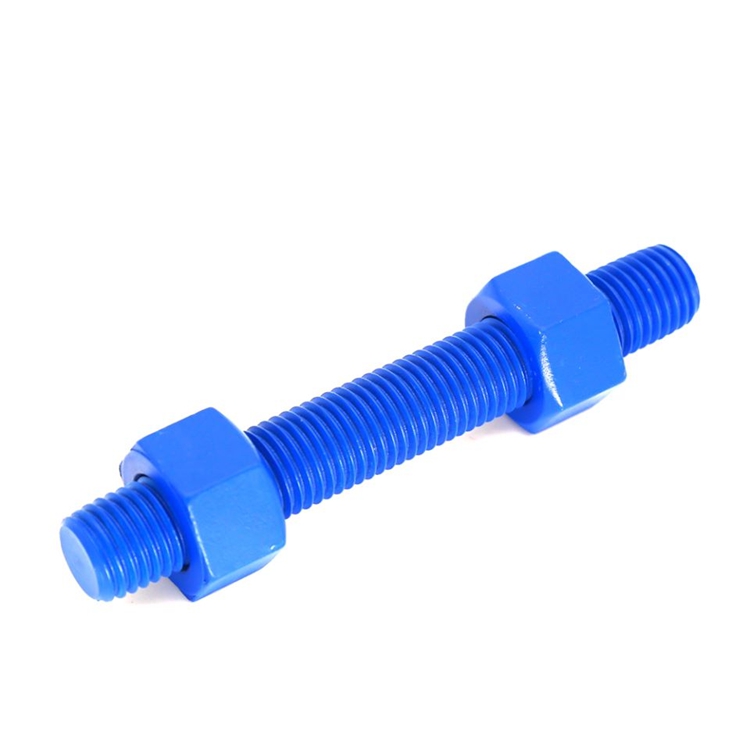
Leaf spring bolts are critical fastening components within leaf spring suspension systems, primarily utilized in heavy-duty vehicles, trucks, and trailers. Their primary function is to securely connect the leaf spring pack to the vehicle’s chassis, enabling proper load distribution and suspension articulation. Unlike general-purpose bolts, leaf spring bolts are engineered to withstand significant shear forces, cyclical loading, and corrosive environments. They typically feature a large diameter shank, a robust head design (often a large flat head or flanged configuration for increased clamping area), and are manufactured from high-strength alloy steels. Understanding the nuances of material selection, manufacturing processes, and failure modes is paramount for ensuring the longevity, safety, and performance of these essential components. The industry faces persistent challenges relating to fatigue failure, corrosion-induced loosening, and ensuring consistent preload during installation, all of which drive continuous improvement in bolt design and materials.
Material Science & Manufacturing
Leaf spring bolts are predominantly manufactured from medium carbon alloy steels (typically SAE 4140, 4340, or 8640) due to their optimal balance of strength, ductility, and hardenability. The steel composition dictates the achievable mechanical properties following heat treatment. Raw material undergoes stringent quality control, including chemical analysis to verify compliance with specified alloy percentages and ultrasonic testing to detect internal flaws. Manufacturing begins with cold forging or hot upsetting to form the bolt head and shank. Cold forging offers superior surface finish and material grain flow, enhancing fatigue resistance, while hot upsetting is suitable for larger bolt diameters. Following forming, the bolts are heat treated – typically quenched and tempered – to achieve the desired hardness and tensile strength (typically exceeding Grade 8 or 10.9). Thread rolling, a cold forming process, is then used to create the threads, resulting in improved thread strength compared to machining. Surface treatments such as phosphate coating or zinc plating are frequently applied to enhance corrosion resistance. Critical parameters during manufacturing include precise control of forging temperature, quenching medium composition, tempering temperature and time, and coating thickness. Deviations from these parameters can significantly compromise the bolt’s performance and lifespan. Hydrogen embrittlement is a notable concern during the plating process, requiring post-plating baking to mitigate the risk.
Performance & Engineering
The performance of leaf spring bolts is governed by several critical engineering principles. Shear strength is paramount, as the bolts are primarily subjected to shear forces transmitted through the leaf spring pack. Tensile strength is also important, particularly during initial tightening and under dynamic loading conditions. Fatigue resistance is a key design consideration, as the bolts experience cyclical loading due to suspension movement and road irregularities. Finite element analysis (FEA) is routinely employed to optimize bolt geometry and identify stress concentration points. Preload, or the clamping force exerted by the bolt, is crucial for maintaining joint integrity and preventing loosening. Insufficient preload can lead to fretting wear and eventual failure, while excessive preload can exceed the bolt’s yield strength, causing permanent deformation or fracture. The torque-tension relationship is critical during installation, and accurate torque control is essential. Environmental resistance, specifically corrosion protection, is vital, especially in regions with exposure to road salt or harsh weather conditions. Compliance requirements, dictated by industry standards (see footer), specify minimum material properties, dimensional tolerances, and performance criteria. Understanding the interplay between these factors is crucial for ensuring safe and reliable operation.
Technical Specifications
| Bolt Diameter (mm) | Material Grade | Tensile Strength (MPa) | Yield Strength (MPa) |
|---|---|---|---|
| 16 | SAE 4140 | 800 - 1000 | 640 - 860 |
| 20 | SAE 4340 | 950 - 1150 | 790 - 960 |
| 22 | SAE 4140 | 800 - 1000 | 640 - 860 |
| 25 | SAE 4340 | 950 - 1150 | 790 - 960 |
| 28 | SAE 8640 | 750 - 950 | 600 - 800 |
| 30 | SAE 4140 | 800 - 1000 | 640 - 860 |
Failure Mode & Maintenance
Leaf spring bolts are susceptible to several failure modes. Fatigue cracking, initiated at stress concentration points (typically the thread root or under the bolt head), is a common cause of failure, particularly in high-cycle loading applications. Corrosion, especially galvanic corrosion between dissimilar metals, can weaken the bolt and promote loosening. Hydrogen embrittlement, as previously mentioned, can lead to brittle fracture. Shear failure can occur if the applied shear load exceeds the bolt’s shear strength. Loosening, due to vibration or inadequate preload, is a significant concern, as it can exacerbate other failure modes. Maintenance practices include periodic visual inspections for signs of corrosion, cracking, or loosening. Torque checks should be performed regularly to ensure adequate preload. Lubrication of the bolt threads during installation and periodic re-application of thread locking compounds can help prevent loosening. In cases of severe corrosion or cracking, the bolts should be replaced immediately. Proper cleaning and coating of the mounting surfaces can also help prevent corrosion. Preventative maintenance schedules should be established based on vehicle operating conditions and duty cycle.
Industry FAQ
Q: What is the impact of using bolts with differing material properties within the same leaf spring assembly?
A: Utilizing bolts with dissimilar material properties introduces the risk of galvanic corrosion, particularly in the presence of electrolytes like road salt. This can lead to accelerated corrosion of the less noble metal, weakening the bolt and potentially causing failure. It's critical to maintain material consistency throughout the assembly or employ appropriate isolation techniques to mitigate galvanic effects.
Q: How does the thread form (e.g., coarse vs. fine) influence the fatigue life of the bolt?
A: Coarse threads generally exhibit higher fatigue strength compared to fine threads, as they have a larger stress area and a less severe stress concentration at the thread root. However, fine threads offer greater resistance to loosening under vibration. The optimal thread form depends on the specific application requirements, balancing fatigue life and loosening prevention.
Q: What are the best practices for ensuring accurate preload during bolt installation?
A: Accurate preload is achieved through controlled torque application using a calibrated torque wrench. However, torque alone doesn't guarantee accurate preload due to variations in friction. Torque-angle tightening, where a specific torque is applied followed by a defined angle of rotation, provides more precise preload control. Lubricating the bolt threads with a specified lubricant also helps to reduce friction and improve preload accuracy.
Q: What is the role of surface treatments in enhancing the performance of leaf spring bolts?
A: Surface treatments, such as phosphate coating, zinc plating, and powder coating, primarily enhance corrosion resistance. These coatings create a barrier between the bolt material and the corrosive environment, preventing oxidation and degradation. Some coatings, like phosphate, also provide a good base for applying thread locking compounds. Proper surface preparation is crucial for coating adhesion and effectiveness.
Q: What non-destructive testing (NDT) methods are commonly used for inspecting leaf spring bolts in service?
A: Common NDT methods include visual inspection for surface cracks and corrosion, magnetic particle inspection (MPI) to detect surface and near-surface cracks, and ultrasonic testing (UT) to detect internal flaws. Dye penetrant inspection (DPI) can also be used for surface crack detection. The choice of NDT method depends on the specific inspection requirements and the potential failure modes.
Conclusion
Leaf spring bolts represent a critical component in vehicular suspension systems, demanding a nuanced understanding of material science, manufacturing processes, and performance characteristics. Ensuring their reliability requires meticulous attention to detail throughout the entire lifecycle, from raw material selection and heat treatment to proper installation and ongoing maintenance. Addressing the inherent challenges of fatigue, corrosion, and preload control is paramount for preventing catastrophic failures and maximizing vehicle safety.
Future advancements in leaf spring bolt technology will likely focus on the development of new high-strength materials, improved surface treatments, and innovative fastening techniques. The integration of smart bolt technologies, incorporating sensors for real-time preload monitoring and corrosion detection, offers the potential for proactive maintenance and enhanced system reliability. Adherence to stringent industry standards and a commitment to continuous improvement will remain essential for ensuring the long-term performance and safety of leaf spring suspension systems.