
Introduction
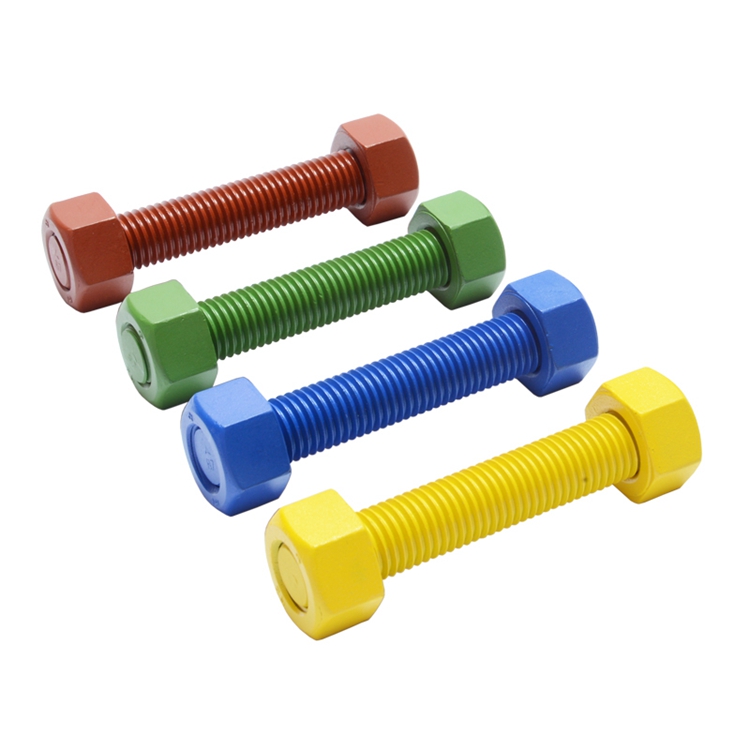
3/4-inch bolts represent a standardized fastener crucial across numerous industrial applications. Positioned as a fundamental component within the broader fastening industry chain, these bolts facilitate secure assembly in structures ranging from automotive chassis to heavy machinery and building frameworks. Their technical significance lies in their defined mechanical properties – tensile strength, yield strength, and shear strength – which dictate load-bearing capacity and structural integrity. A primary performance characteristic is their ability to withstand specified clamping forces without yielding or fracturing, ensuring reliable joint performance over extended periods. The selection of appropriate 3/4-inch bolts is fundamentally linked to achieving predictable and safe structural performance, addressing a core pain point in industries where failure can have catastrophic consequences. This guide will detail material science, manufacturing processes, performance parameters, potential failure modes, and relevant industry standards pertaining to 3/4-inch bolts.
Material Science & Manufacturing
The dominant material for 3/4-inch bolts is medium carbon steel, typically AISI 1045 or equivalent, owing to its balance of strength, ductility, and cost-effectiveness. The steel’s chemical composition, comprising primarily iron with controlled percentages of carbon (0.45-0.55%), manganese (0.60-0.90%), and silicon (0.15-0.40%), dictates its hardening response to heat treatment. Higher carbon content increases hardness and tensile strength but reduces ductility and weldability. Manufacturing generally begins with hot forging or cold heading to form the bolt blank. Hot forging, performed above the steel’s recrystallization temperature, yields a more uniform grain structure and improved mechanical properties. Cold heading, employed for higher production volumes, work-hardens the material. Subsequent thread rolling, a cold forming process, creates the threads without material removal, enhancing thread strength compared to machining. Heat treatment – typically quenching and tempering – is critical. Quenching rapidly cools the steel, creating martensite, a very hard but brittle phase. Tempering reduces brittleness and increases toughness. Surface treatments like zinc plating, black oxide, or hot-dip galvanizing provide corrosion resistance. Parameter control during heat treatment is paramount; precise temperature and time control during quenching and tempering directly impact the bolt's final mechanical properties, particularly hardness and tensile strength. Improper quenching can lead to cracking, while insufficient tempering can result in inadequate toughness.

Performance & Engineering
The performance of a 3/4-inch bolt is fundamentally governed by its ability to withstand applied loads. Force analysis focuses on tensile stress (resistance to pulling forces), shear stress (resistance to forces acting parallel to the bolt's axis), and torsional stress (resistance to twisting forces). The bolt’s preload – the tension applied to the bolt during tightening – is a critical parameter. Sufficient preload creates clamping force between the joined materials, preventing slippage and fatigue failure. Environmental resistance is also crucial. Corrosion, particularly in marine or chemically aggressive environments, significantly reduces bolt strength and can lead to catastrophic failure. Galvanic corrosion, occurring when dissimilar metals are in contact, is a common concern. Compliance requirements dictate specific performance standards based on the application. For example, structural bolts in building construction must meet stringent standards for load capacity and ductility as defined by building codes. Fatigue performance is another key engineering consideration, especially in applications subjected to cyclic loading. Factors influencing fatigue life include stress concentration at the thread root, surface finish, and the presence of corrosion. Finite element analysis (FEA) is frequently used to model bolt behavior under various loading conditions, optimizing bolt geometry and material selection to maximize performance and reliability.
Technical Specifications
| Grade | Tensile Strength (PSI) | Yield Strength (PSI) | Shear Strength (PSI) | Hardness (Rockwell C) | Diameter (in) |
|---|---|---|---|---|---|
| SAE Grade 2 | 60,000 | 36,000 | 24,000 | 25-35 | 0.75 |
| SAE Grade 5 | 85,000 | 60,000 | 40,000 | 30-45 | 0.75 |
| SAE Grade 8 | 150,000 | 110,000 | 75,000 | 45-60 | 0.75 |
| Metric 8.8 | 800 MPa (116,000 PSI) | 600 MPa (87,000 PSI) | 500 MPa (72,500 PSI) | 30-40 | 0.75 |
| Metric 10.9 | 1000 MPa (145,000 PSI) | 900 MPa (130,500 PSI) | 600 MPa (87,000 PSI) | 35-45 | 0.75 |
| Metric 12.9 | 1200 MPa (174,000 PSI) | 1100 MPa (160,000 PSI) | 700 MPa (101,500 PSI) | 45-60 | 0.75 |
Failure Mode & Maintenance
Common failure modes for 3/4-inch bolts include tensile failure (fracture under excessive pulling load), shear failure (fracture under excessive sideways load), thread stripping (damage to the threads preventing proper clamping), fatigue cracking (crack propagation due to cyclic loading), and corrosion-induced failure (weakening of the bolt due to rust or chemical attack). Tensile failure typically occurs due to exceeding the bolt’s ultimate tensile strength, often resulting from improper preload or overload. Shear failure is more common in applications with high shear forces. Thread stripping can occur from improper tightening, using the wrong torque, or material incompatibility. Fatigue cracking initiates at stress concentrations, typically at the thread root, and propagates over time. Corrosion accelerates fatigue cracking and reduces the bolt’s load-carrying capacity. Maintenance involves regular visual inspection for signs of corrosion, damage, or loosening. Torque checks should be performed periodically to ensure proper preload. Lubrication of threads during installation reduces friction and improves preload accuracy. For critical applications, non-destructive testing methods such as ultrasonic testing can detect internal cracks. Replacement of corroded or damaged bolts is essential to maintain structural integrity. The use of compatible washers and properly torqued fasteners are also crucial preventative measures. Consideration should be given to using corrosion-resistant alloys or coatings in harsh environments.
Industry FAQ
Q: What is the impact of thread engagement length on bolt strength?
A: Thread engagement length significantly impacts bolt strength, particularly in shear. Shorter engagement lengths reduce the shear area, decreasing the bolt's resistance to shear forces. A minimum engagement length of at least one diameter is generally recommended, with longer engagement lengths providing greater strength and preventing thread stripping. Insufficient thread engagement can lead to premature failure, especially under dynamic loading.
Q: How does bolt material affect its performance at elevated temperatures?
A: Bolt material significantly impacts performance at elevated temperatures. Carbon steel bolts lose strength and stiffness as temperature increases. Above approximately 500°F (260°C), creep (slow deformation under sustained load) becomes a concern. For high-temperature applications, alloy steels such as those containing chromium and molybdenum are preferred as they maintain strength at elevated temperatures. However, even alloy steels have temperature limitations.
Q: What torque should be applied to a 3/4-inch Grade 8 bolt?
A: Torque specifications vary depending on the bolt length, lubrication, and mating material. Generally, a torque value based on the bolt diameter and grade is recommended. For a 3/4-inch Grade 8 bolt, a typical torque range is 150-200 ft-lbs, but always consult the manufacturer's specifications or a torque chart for precise values. Using a calibrated torque wrench is essential for accurate tightening.
Q: What are the risks associated with using dissimilar metals in bolted joints?
A: Using dissimilar metals in bolted joints can lead to galvanic corrosion. When two different metals are in contact in the presence of an electrolyte (e.g., moisture, salt), a corrosion cell forms, with the more active metal corroding preferentially. To mitigate this risk, use compatible metals, apply a protective coating to isolate the metals, or use insulating washers. Proper selection of materials and coatings is critical to prevent premature joint failure.
Q: How important is proper bolt lubrication during installation, and what types of lubricants are suitable?
A: Proper bolt lubrication is crucial for achieving accurate preload and preventing thread galling. Lubrication reduces friction between the threads, allowing more of the applied torque to be converted into clamping force. Suitable lubricants include specialized anti-seize compounds, molybdenum disulfide-based greases, or even light oil. Avoid using lubricants that can degrade the bolt material or affect the joint's performance over time.
Conclusion
3/4-inch bolts are fundamental fastening elements with performance dictated by a complex interplay of material science, manufacturing precision, and engineering considerations. Successful implementation necessitates a thorough understanding of mechanical properties, load analysis, and potential failure modes. Accurate torque control, appropriate material selection based on the application environment, and regular maintenance are critical for ensuring long-term structural integrity and preventing catastrophic failures.
Future advancements in bolt technology are focusing on developing lighter, stronger materials like high-strength alloy steels and titanium alloys. Smart bolts with integrated sensors for monitoring preload and detecting corrosion are also emerging, providing real-time data for predictive maintenance. Continued research into corrosion-resistant coatings and improved manufacturing processes will further enhance the reliability and performance of these essential fastening components.