
Introduction
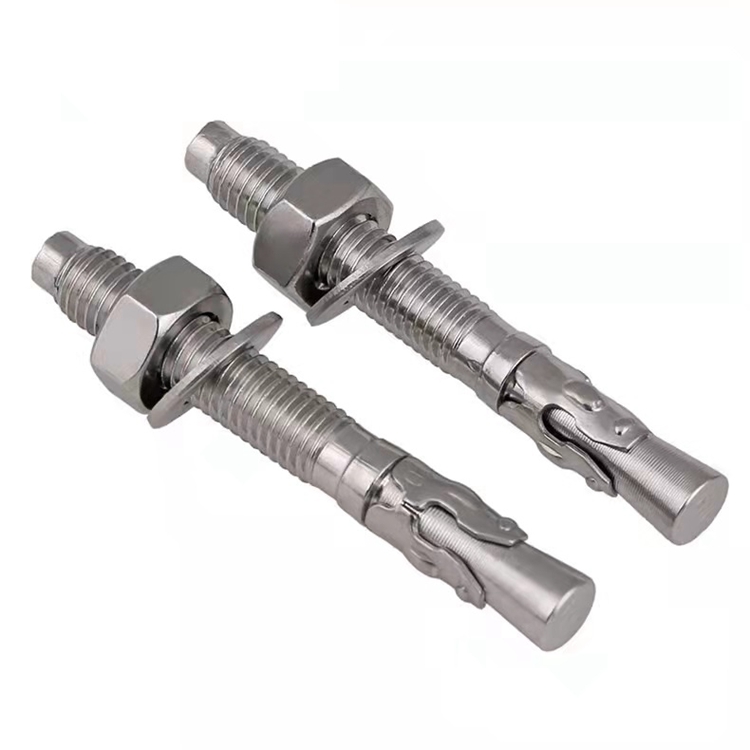
Header bolts, also known as flange bolts, are high-strength fasteners characterized by an integrated flange beneath the bolt head. This flange distributes the clamping load over a wider area, reducing stress on the joined materials and enhancing joint integrity. Positioned within the fastening component supply chain, header bolts are critical in applications demanding secure and reliable connections, particularly in heavy machinery, automotive systems, and structural steelwork. Their core performance characteristics revolve around high tensile strength, consistent torque retention, and resistance to loosening under dynamic loading conditions. The industry faces continual challenges in optimizing header bolt design for weight reduction, corrosion resistance in aggressive environments, and cost-effective high-volume production while maintaining stringent quality control.
Material Science & Manufacturing
The primary material for header bolt manufacturing is medium carbon steel, typically AISI 1045 or 4140, chosen for its balance of strength, ductility, and hardenability. Alloy steels, incorporating elements like chromium, molybdenum, and vanadium, are employed for applications requiring increased tensile strength, toughness, and corrosion resistance. The raw material undergoes stringent quality checks, including chemical composition analysis and ultrasonic testing for internal flaws. Manufacturing typically begins with hot forging to create the bolt’s shape, followed by machining operations – turning, drilling, and threading – to achieve precise dimensions. The flange is often formed through a secondary forging or machining process. Heat treatment is a critical step, involving hardening and tempering to achieve the desired Rockwell hardness (typically Rc 38-45) and optimize mechanical properties. Surface treatments, such as zinc plating, black oxide coating, or specialized corrosion-resistant coatings (e.g., Geomet), are applied to enhance durability and prevent corrosion. Key parameter control focuses on forging temperature, cooling rates during heat treatment, and coating thickness, all impacting the final bolt's performance. Material microstructure – grain size and inclusion distribution – is routinely analyzed to ensure consistency and prevent premature failure. The head-to-shank fillet radius is meticulously controlled to reduce stress concentration points and enhance fatigue life.
Performance & Engineering
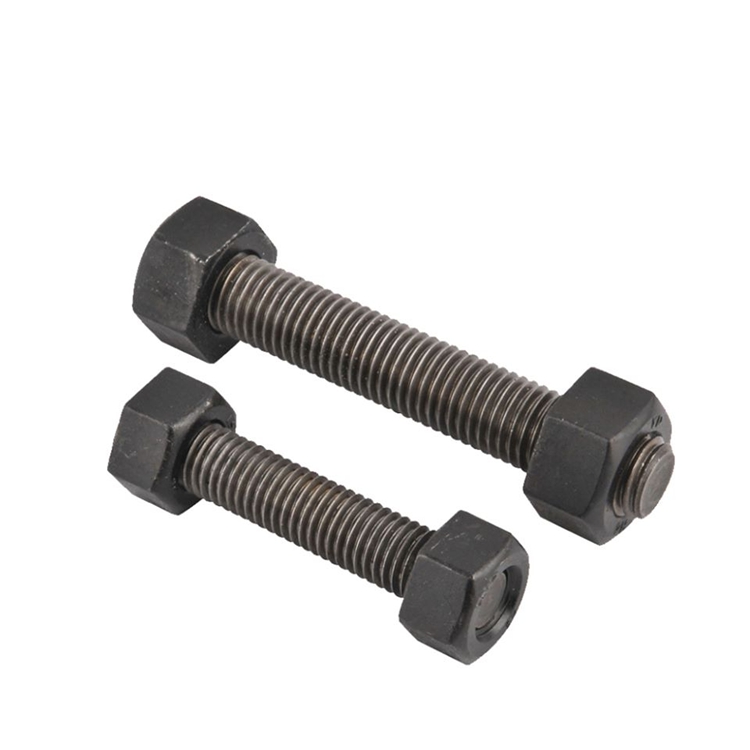
Header bolt performance is governed by several critical engineering parameters. Tensile strength, typically ranging from 170 ksi to 220 ksi depending on material and heat treatment, dictates the bolt’s ability to withstand axial loads. Yield strength, usually around 130 ksi, defines the point at which permanent deformation occurs. Shear strength is vital in applications involving lateral forces. The flange’s role is to distribute clamping force, reducing bearing stress on the joined materials and mitigating the risk of surface damage. Torque-tension relationship is precisely engineered, establishing the correlation between applied torque and achieved clamping force. Fatigue performance is a major consideration, particularly in dynamically loaded applications; fatigue life is assessed through S-N curves (stress vs. number of cycles to failure). Environmental resistance, including corrosion resistance and resistance to temperature extremes, is crucial. Finite element analysis (FEA) is routinely employed to optimize bolt geometry, predict stress distributions, and assess structural integrity under various loading scenarios. Compliance requirements include adherence to industry standards like SAE J429 (Grade 8 bolts) and ISO 898-1, dictating material properties, mechanical characteristics, and testing procedures. Prevailing torque requirements, often achieved through nylon inserts or deformed threads, are also carefully considered to prevent loosening due to vibration.
Technical Specifications
| Diameter (in) | Thread Pitch (in) | Tensile Strength (ksi) | Yield Strength (ksi) |
|---|---|---|---|
| 1/2 | 20 | 180 | 140 |
| 5/8 | 18 | 200 | 150 |
| 3/4 | 16 | 220 | 160 |
| 7/8 | 14 | 200 | 155 |
| 1 | 12 | 210 | 165 |
| 1 1/4 | 7 | 190 | 145 |
Failure Mode & Maintenance
Header bolt failure can manifest in several modes. Fatigue cracking, initiated at stress concentration points (e.g., the thread root or flange fillet), is common in dynamically loaded applications. Corrosion-induced failures, particularly in aggressive environments, involve pitting corrosion, stress corrosion cracking, and hydrogen embrittlement. Over-torqueing can lead to thread stripping or bolt fracture. Under-torqueing results in loosening due to vibration. Material defects, such as inclusions or porosity, can act as crack initiation sites. Hydrogen embrittlement, caused by the diffusion of hydrogen into the bolt material, can significantly reduce ductility and promote brittle fracture. Maintenance strategies include regular visual inspections to detect signs of corrosion or damage. Torque checks should be performed periodically, especially in critical applications. Lubrication of threads with appropriate anti-seize compounds can prevent galling and facilitate removal. For applications exposed to corrosive environments, consider using corrosion-resistant coatings or bolts made from stainless steel or other alloy materials. If fatigue cracking is suspected, non-destructive testing (NDT) methods, such as dye penetrant inspection or ultrasonic testing, should be employed to assess the extent of damage. Replace any bolts showing signs of significant corrosion, cracking, or deformation. Proper storage to prevent environmental exposure is also vital for maintaining bolt integrity.
Industry FAQ
Q: What is the advantage of a header bolt over a standard hex bolt in a high-vibration environment?
A: The integrated flange distributes the clamping load over a wider area, reducing bearing stress and the likelihood of loosening. The larger flange also increases the bolt’s resistance to bending forces, which is particularly beneficial in high-vibration applications. Furthermore, the flange provides a more stable seating surface for the washer, enhancing its effectiveness in maintaining clamping force.
Q: How do different surface treatments impact the corrosion resistance of header bolts?
A: Zinc plating offers moderate corrosion resistance, suitable for indoor or mildly corrosive environments. Black oxide provides minimal corrosion protection but enhances aesthetics. Specialized coatings like Geomet (a zinc-nickel alloy with an organic sealant) offer significantly improved corrosion resistance, exceeding 1000 hours of salt spray testing. Stainless steel offers the highest level of corrosion resistance but comes at a higher cost.
Q: What torque specifications should be considered when using header bolts?
A: Torque specifications depend on the bolt diameter, material, thread pitch, and lubrication. Always refer to the manufacturer's recommendations or relevant industry standards (e.g., SAE J429). Using a calibrated torque wrench is crucial to ensure accurate clamping force. Consider using torque-angle tightening for critical applications.
Q: What are the typical failure modes associated with hydrogen embrittlement in header bolts, and how can it be mitigated?
A: Hydrogen embrittlement typically leads to delayed cracking, often occurring under relatively low stress levels. It's more prevalent in high-strength bolts exposed to corrosive environments. Mitigation strategies include using corrosion-resistant coatings, selecting bolts made from materials less susceptible to hydrogen absorption, and employing baking processes to drive out absorbed hydrogen.
Q: How does heat treatment affect the mechanical properties of header bolts, and what quality control measures are essential?
A: Heat treatment—hardening and tempering—is crucial for achieving the desired tensile and yield strengths. Improper heat treatment can lead to insufficient hardness, reduced toughness, or residual stresses. Essential quality control measures include hardness testing (Rockwell or Vickers), microstructural analysis to verify grain size and phase distribution, and dimensional inspection to ensure adherence to specifications. Tensile testing is also routinely performed to validate mechanical properties.
Conclusion
Header bolts represent a critical fastening solution where high clamping force, load distribution, and fatigue resistance are paramount. Their performance is inextricably linked to material selection, manufacturing precision, and adherence to stringent industry standards. The evolution of header bolt technology focuses on optimizing designs for weight reduction, enhancing corrosion protection through advanced coatings, and implementing rigorous quality control measures throughout the production process.
The continuous demand for improved performance and reliability in critical applications will drive further innovations in header bolt materials, manufacturing techniques, and inspection methodologies. Selecting the appropriate header bolt for a specific application requires a thorough understanding of the operating environment, loading conditions, and relevant industry specifications, ensuring long-term joint integrity and system reliability.
