
Introduction
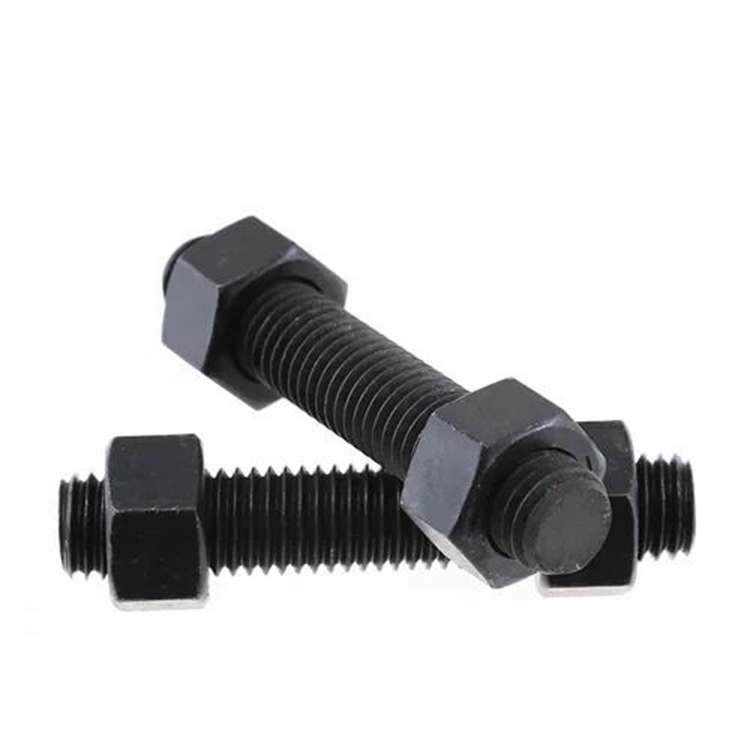
Galvanized flange nuts are specialized fasteners integrating the functionality of a nut and a flange washer. They are predominantly utilized in heavy-duty applications across diverse industries, including construction, automotive, and infrastructure, where a broad bearing surface and robust corrosion resistance are paramount. Their design distributes load over a wider area, minimizing stress on the connected material and enhancing joint stability. The galvanization process, typically hot-dip galvanization, provides a zinc coating for substantial corrosion protection, extending service life in harsh environments. The technical position of galvanized flange nuts within the industry chain resides between raw material production (steel, zinc), fastener manufacturing, and final assembly in end-use applications. Core performance characteristics include high clamping force, uniform load distribution, and long-term resistance to environmental degradation. A key pain point in industry is maintaining consistent galvanization thickness and adherence to ensure longevity and avoiding hydrogen embrittlement in high-strength steels.
Material Science & Manufacturing
Galvanized flange nuts are typically manufactured from medium carbon steel (e.g., SAE 1045, equivalent to S45C) due to its balance of strength, ductility, and cost-effectiveness. The steel's chemical composition dictates its mechanical properties, with carbon content influencing hardness and tensile strength. Zinc, the galvanizing material, exhibits a sacrificial anodic protection mechanism, corroding preferentially to the steel substrate. The manufacturing process begins with cold forming of the steel into the nut shape. Flange formation is achieved through a subsequent forging or machining operation. Key parameters during cold forming include die geometry, lubrication, and forming speed, impacting material flow and final dimensional accuracy. Following forming, heat treatment (hardening and tempering) is often applied to achieve the desired mechanical properties. The critical step is hot-dip galvanization. Steel is immersed in a molten zinc bath (typically 98% pure zinc) at around 450°C. The iron-zinc alloy layers formed during the process (Fe-Zn alloys, including Zeta, Delta, Gamma and Alpha phases) provide the corrosion protection. Controlling the immersion time, zinc bath composition (aluminum, silicon additions), and cooling rate are vital for achieving uniform coating thickness and metallurgical bonding. Post-galvanization passivation treatments can further enhance corrosion resistance. Hydrogen embrittlement is a concern with high-strength steels during galvanization; bake-off treatments are employed to mitigate this risk by diffusing hydrogen out of the metal lattice. Chemical compatibility with underlying substrates is also crucial to avoid intermetallic layer formation that can lead to coating defects.
Performance & Engineering
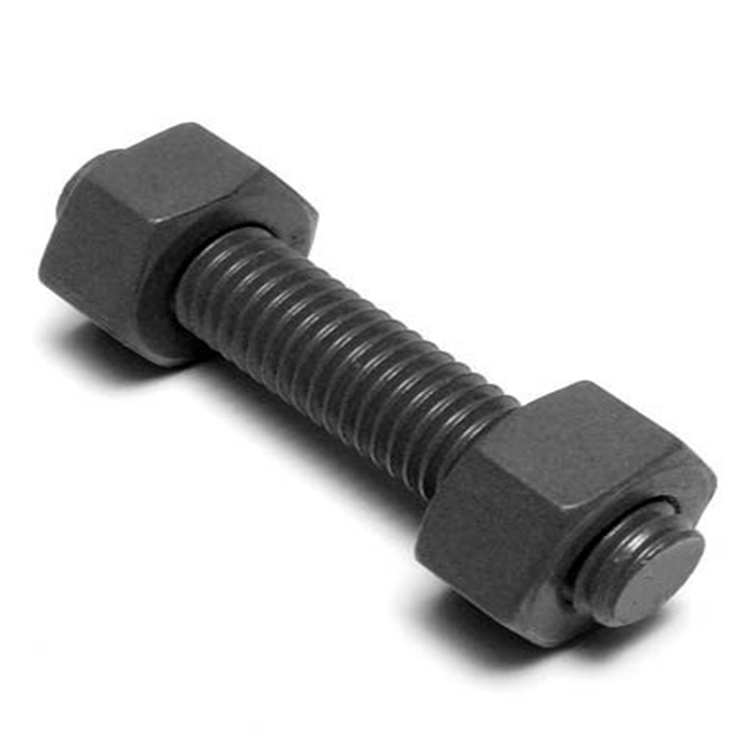
Performance of galvanized flange nuts is dictated by several engineering considerations. Force analysis involves calculating the clamping force generated by tightening the nut, considering the thread pitch, nut material strength, and applied torque. The flange provides a larger bearing area compared to standard nuts, reducing the bearing stress on the connected material, particularly crucial in softer materials like aluminum or composite. Environmental resistance is predominantly determined by the galvanization thickness and quality. Exposure to chloride-rich environments (marine applications, road salt) accelerates corrosion; thicker zinc coatings offer prolonged protection. Compliance requirements are stringent, demanding adherence to standards for mechanical properties, coating thickness, and hydrogen embrittlement susceptibility. Finite element analysis (FEA) is frequently used to model stress distribution within the nut and connected joint under load, optimizing the flange geometry and material selection. Fatigue performance is critical in dynamic loading applications. The fatigue life of the nut is influenced by the stress concentration around the threads and the quality of the galvanization, with potential defects serving as crack initiation sites. Galvanic corrosion can occur when galvanized steel is in contact with dissimilar metals in a conductive environment; this is mitigated through isolation techniques or utilizing compatible materials. Temperature extremes can also affect performance, with reduced ductility at low temperatures and potential coating degradation at elevated temperatures.
Technical Specifications
| Parameter | Metric Unit | Imperial Unit | Typical Value/Range |
|---|---|---|---|
| Material Grade | - | - | SAE 1045/S45C Carbon Steel |
| Zinc Coating Thickness | µm | µin | 50-85 µm (2.0-3.3 mils) |
| Tensile Strength | MPa | psi | 830-1000 MPa (120,000-145,000 psi) |
| Hardness (HRC) | - | - | 25-35 |
| Thread Size (Diameter) | mm | in | M8, M10, M12, M16, M20 (Various) |
| Flange Diameter | mm | in | 16-40 mm (0.63-1.57 in) (Dependent on thread size) |
| Hydrogen Embrittlement Resistance | - | - | Compliant with ASTM F143 / ISO 4042 (Bake-off treatment applied if required) |
Failure Mode & Maintenance
Galvanized flange nuts are susceptible to several failure modes. Corrosion is the most common, progressing from the exposed edges and defects in the galvanization. Crevice corrosion can occur under the flange, particularly in humid environments. Hydrogen embrittlement, as previously mentioned, leads to brittle fracture in high-strength steels. Thread stripping can occur due to over-tightening or repeated loading. Fatigue cracking initiates at stress concentrations around the threads or flange, propagating under cyclic loading. Galvanic corrosion, when in contact with dissimilar metals, results in accelerated corrosion of the less noble metal. Maintenance practices include regular inspection for signs of corrosion, particularly in exposed areas. Re-tightening nuts periodically helps maintain clamping force. Applying a protective coating (e.g., zinc-rich paint) over the galvanized surface can provide additional corrosion protection. If corrosion is detected, the nut should be replaced. Lubrication of threads during installation and periodic re-application reduces friction and prevents galling. Avoid using excessive torque during tightening to prevent thread stripping or deformation of the flange. Proper storage in a dry environment prevents premature corrosion before installation. Conducting routine non-destructive testing, such as visual inspection and dye penetrant testing, can identify surface cracks before they become critical.
Industry FAQ
Q: What is the significance of the galvanization thickness, and how does it relate to the service life of the nut?
A: Galvanization thickness is directly correlated with the service life. A thicker zinc coating provides greater sacrificial protection, slowing down the corrosion rate. Typically, a minimum coating thickness of 50 µm is specified for moderate environments, increasing to 85 µm or higher for harsh conditions (marine, industrial). The service life can be estimated based on corrosion rate data for the specific environment and zinc coating thickness. However, factors like temperature, humidity, and exposure to pollutants also influence corrosion rates.
Q: How do you mitigate the risk of hydrogen embrittlement in high-strength galvanized flange nuts?
A: Hydrogen embrittlement is addressed through a "bake-off" treatment. After galvanization, the nuts are heated to a specific temperature (typically 180-200°C) for a defined duration (several hours) to drive the diffused hydrogen out of the steel matrix. Controlling the zinc bath chemistry, minimizing pickling time before galvanization, and using appropriate cleaning procedures also reduce hydrogen absorption.
Q: What is the impact of thread lubricant on the performance and longevity of galvanized flange nuts?
A: Thread lubricant reduces friction during tightening, ensuring accurate clamping force and preventing galling or seizing of the threads. It also provides a barrier against corrosion. The lubricant should be compatible with the zinc coating and the connected materials. Excessive lubricant can trap dirt and debris, accelerating corrosion; therefore, a moderate application is recommended.
Q: What standards are relevant for ensuring the quality and performance of galvanized flange nuts?
A: Key standards include ASTM F323 (specifications for zinc coating), ISO 4042 (zinc coatings - electrodeposited), ASTM A563 (specifications for carbon and low alloy steel fasteners), and ISO 898-1 (mechanical properties of fasteners). Testing for hydrogen embrittlement should conform to ASTM F143 or ISO 4042. Dimensional requirements and tolerances are defined in ISO 2702.
Q: Can galvanized flange nuts be used in applications involving aluminum components? What precautions should be taken?
A: Yes, but precautions are crucial to avoid galvanic corrosion. Zinc is less noble than aluminum, meaning the zinc will corrode preferentially when in contact with aluminum in the presence of an electrolyte (e.g., moisture). To mitigate this, an isolating barrier (e.g., a plastic washer) should be placed between the nut and the aluminum surface. Alternatively, utilizing a zinc-nickel alloy coating provides superior corrosion resistance and reduces the potential for galvanic corrosion.
Conclusion
Galvanized flange nuts represent a critical fastening solution where robustness, corrosion resistance, and uniform load distribution are essential. Their manufacturing relies on a complex interplay of material science, forming processes, and galvanization techniques, demanding meticulous control of parameters to achieve optimal performance. Failure modes are diverse, ranging from corrosion and hydrogen embrittlement to thread stripping and fatigue cracking, requiring proactive maintenance strategies and appropriate material selection.
Looking ahead, advancements in coating technology, such as duplex systems (e.g., zinc-nickel plus a post-treatment) and optimized galvanization processes, will further enhance the durability and performance of these fasteners. Continued adherence to stringent quality control standards and the implementation of predictive maintenance programs will be critical in ensuring the long-term reliability of galvanized flange nut applications across various industries. The increasing demand for sustainable materials and corrosion-resistant solutions will solidify the role of galvanized flange nuts as a fundamental component in modern engineering designs.