
Introduction
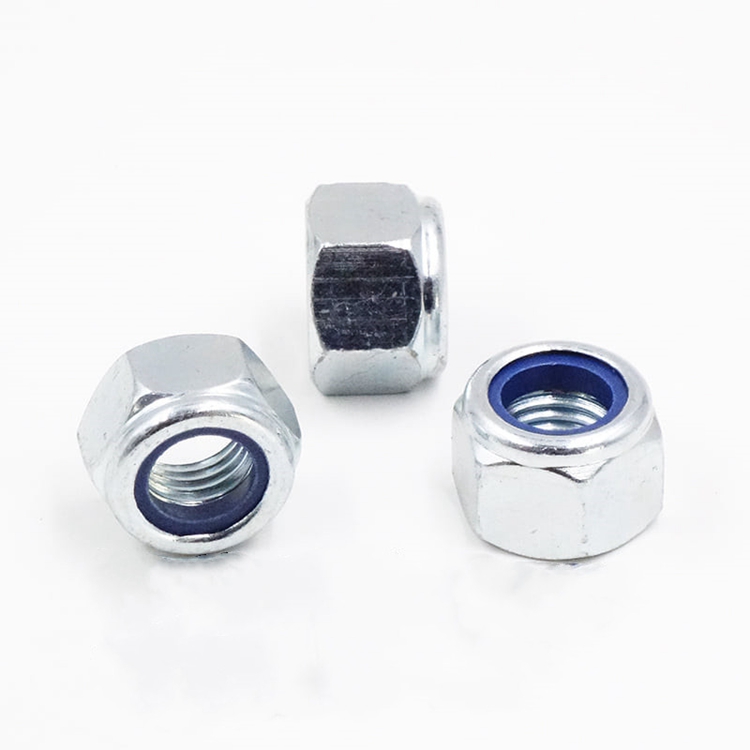
Titanium nuts and bolts represent a critical fastening solution in industries demanding high strength-to-weight ratios, corrosion resistance, and performance in extreme environments. Positioned within the broader realm of aerospace, automotive, marine, and chemical processing fasteners, these components are often specified where stainless steel or other alloys prove inadequate. Their core performance characteristics stem from the unique properties of titanium alloys – notably, their exceptional resistance to corrosion, high tensile strength, low density, and biocompatibility. This guide provides a comprehensive technical overview of titanium nuts and bolts, covering material science, manufacturing processes, performance engineering, failure modes, and relevant industry standards. A key industry pain point is the comparatively higher cost of titanium versus other fastener materials, necessitating careful engineering trade-offs and lifecycle cost analysis to justify their implementation. Maintaining precise torque specifications during installation is also critical to maximizing fastener performance and preventing premature failure.
Material Science & Manufacturing
Titanium nuts and bolts are typically manufactured from titanium alloys, primarily Grade 5 (Ti-6Al-4V) and Grade 2 commercially pure titanium. Grade 5 offers superior strength, while Grade 2 provides enhanced corrosion resistance and formability. The raw materials possess a hexagonal close-packed (HCP) crystal structure, contributing to their inherent strength and ductility. Manufacturing begins with alloy melting and ingot casting, followed by forging or rolling to achieve the desired pre-form shape. Cold working processes, such as drawing and heading, refine the grain structure and enhance mechanical properties. Threading is typically accomplished through machining or rolling. Heat treatment is crucial, particularly for Grade 5 alloys, involving solution treatment, quenching, and aging to optimize strength and toughness. Critical parameters during manufacturing include precise control of alloy composition, thermal cycles during heat treatment, and surface finish to minimize stress concentrations. Hydrogen embrittlement is a significant concern during machining; proper lubrication and process control are essential to prevent it. Quality control relies heavily on non-destructive testing (NDT) methods, including ultrasonic inspection and dye penetrant examination, to detect internal flaws and surface defects. The manufacturing process for titanium nuts and bolts requires specialized equipment and expertise due to the alloy’s reactivity with common tooling materials.
Performance & Engineering
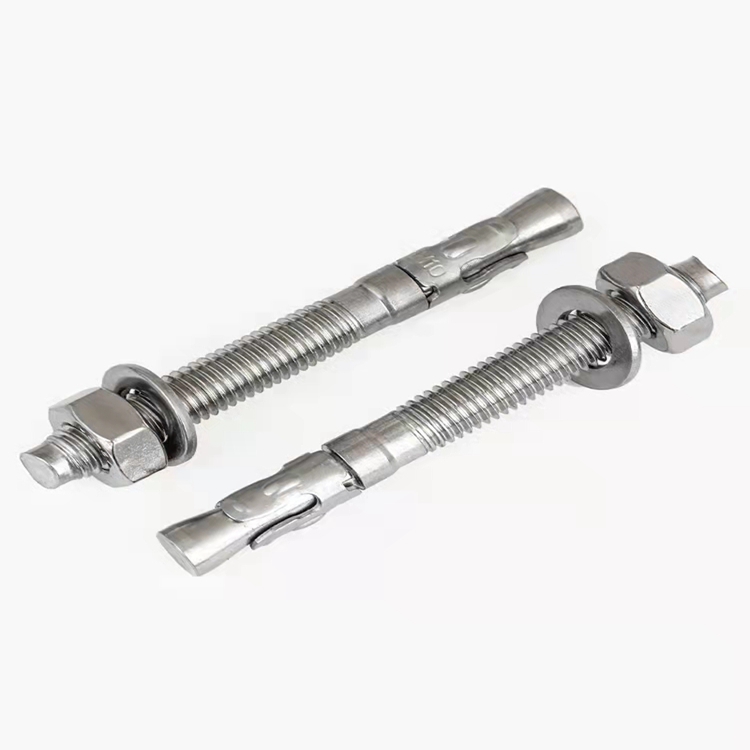
The performance of titanium nuts and bolts is dictated by their mechanical properties and environmental resistance. Tensile strength, yield strength, shear strength, and fatigue resistance are paramount, particularly in dynamic loading applications. Finite element analysis (FEA) is frequently employed to optimize fastener geometry and predict stress distribution under various load conditions. Corrosion resistance is a defining feature, making titanium ideal for marine, chemical processing, and medical applications. However, titanium is susceptible to galvanic corrosion when in contact with dissimilar metals; careful material selection and isolation techniques are required. Environmental resistance also extends to high and low-temperature performance. While titanium retains strength at elevated temperatures, creep can become a concern above 400°C. At cryogenic temperatures, titanium alloys generally exhibit good ductility but may experience a reduction in toughness. Compliance requirements often dictate specific testing protocols, such as those outlined in ASTM standards, to verify fastener performance under simulated operating conditions. Preload control is essential for ensuring joint integrity. Accurate torque application, coupled with the use of appropriate lubricants, is vital to achieving the desired clamping force and preventing loosening due to vibration or thermal cycling. Fastener design considerations include thread form, nut bearing area, and bolt head geometry to optimize load distribution and minimize stress concentrations.
Technical Specifications
| Property | Grade 5 (Ti-6Al-4V) | Grade 2 (Commercially Pure Titanium) | Standard Specification |
|---|---|---|---|
| Tensile Strength (MPa) | 895 - 1035 | 435 - 550 | ASTM B819 |
| Yield Strength (MPa) | 828 | 276 | ASTM B819 |
| Density (g/cm³) | 4.43 | 4.51 | ASTM B819 |
| Elongation (%) | 10 - 15 | 35 - 45 | ASTM B819 |
| Corrosion Resistance | Excellent | Superior | ASTM B928 (Pitting Resistance Equivalent Number - PREN) |
| Operating Temperature Range (°C) | -196 to 315 | -196 to 315 | Manufacturer Specifications |
Failure Mode & Maintenance
Titanium nuts and bolts, while exceptionally durable, are susceptible to several failure modes. Fatigue cracking, particularly under cyclic loading, is a common concern, originating at stress concentrations such as thread roots or bolt head shoulders. Hydrogen embrittlement, as previously mentioned, can lead to brittle fracture. Galvanic corrosion, when coupled with dissimilar metals, can cause localized degradation. Thread stripping can occur due to improper torque application or material incompatibility. Creep, at elevated temperatures, can result in fastener elongation and loss of clamping force. Fretting corrosion, induced by small amplitude oscillatory motion, can also lead to material degradation. Maintenance primarily involves regular visual inspection for signs of corrosion, cracking, or deformation. Torque checks should be performed periodically, especially in critical applications. Lubrication with compatible materials is essential to prevent galling and corrosion. When replacing fasteners, it's crucial to use the correct grade and size, adhering to the manufacturer’s recommendations. Non-destructive testing methods, such as dye penetrant inspection, can be used to detect surface cracks. In cases of severe corrosion or damage, fasteners should be replaced immediately. Proper storage in a dry, controlled environment is important to prevent corrosion.
Industry FAQ
Q: What are the key benefits of using titanium nuts and bolts over stainless steel in a marine environment?
A: Titanium offers significantly superior corrosion resistance to stainless steel in seawater, particularly in chloride-rich environments. Stainless steel can suffer from pitting and crevice corrosion, while titanium forms a passive oxide layer that effectively protects against corrosion. This translates to a longer service life and reduced maintenance costs in marine applications.
Q: Can titanium nuts and bolts be used with aluminum alloys? What precautions should be taken?
A: Yes, but careful consideration must be given to galvanic corrosion. Titanium is more noble than aluminum, meaning that if they are in electrical contact in the presence of an electrolyte (like saltwater), the aluminum will corrode preferentially. Isolation methods, such as using insulating washers or applying a protective coating to the aluminum, are essential to prevent this.
Q: What is the impact of thread galling on titanium fasteners, and how can it be prevented?
A: Thread galling is a form of adhesive wear that can occur when titanium fasteners are tightened or loosened, particularly without proper lubrication. It results in damaged threads and can lead to seizure. Preventing galling requires using appropriate anti-seize lubricants specifically formulated for titanium, and controlling the torque applied during installation.
Q: How does the heat treatment process affect the mechanical properties of Grade 5 titanium nuts and bolts?
A: Heat treatment is critical for achieving the desired mechanical properties of Grade 5 titanium. Solution treatment, quenching, and aging are used to precipitate strengthening phases within the alloy, increasing its tensile and yield strength. Improper heat treatment can result in reduced strength, ductility, and toughness.
Q: What non-destructive testing (NDT) methods are commonly used to inspect titanium fasteners for defects?
A: Common NDT methods include dye penetrant inspection (DPI) to detect surface cracks, ultrasonic inspection (UT) to detect internal flaws, and radiographic inspection (X-ray) for a comprehensive internal assessment. Visual inspection is also a crucial first step in identifying potential defects.
Conclusion
Titanium nuts and bolts offer a compelling combination of high strength, low weight, and exceptional corrosion resistance, making them invaluable in a wide range of demanding applications. However, their higher cost necessitates careful engineering analysis to justify their use, focusing on lifecycle cost benefits and performance requirements. Understanding the material science, manufacturing processes, and potential failure modes is crucial for ensuring reliable and long-lasting performance.
Future advancements in titanium alloy development and manufacturing techniques will likely lead to more cost-effective and higher-performing fasteners. Continued research into corrosion mitigation strategies and improved NDT methods will further enhance the reliability and longevity of titanium fastening systems. The ability to tailor titanium alloy compositions and manufacturing processes to specific application needs will remain a key driver of innovation in this field.