
Introduction
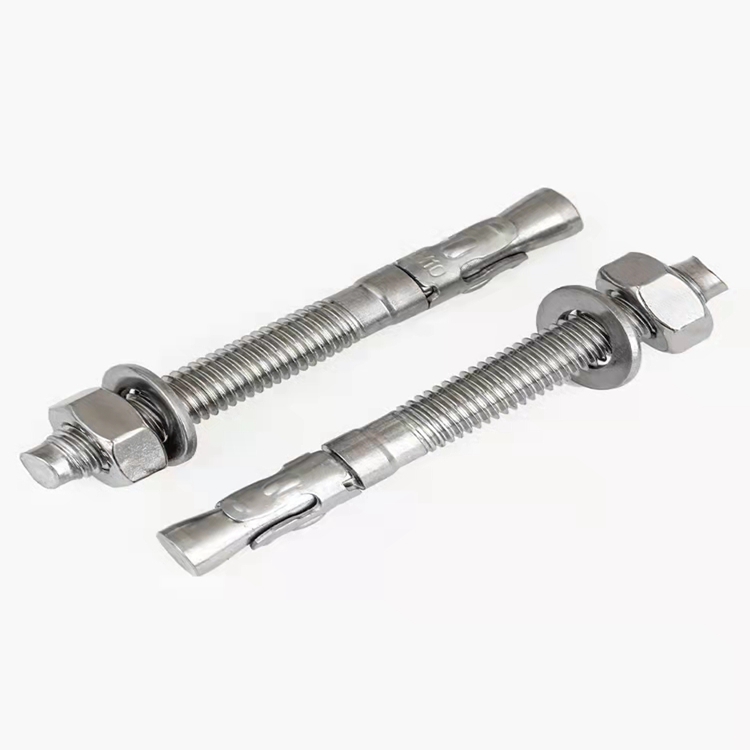
Step bolts, also known as foundation bolts or anchor bolts, are a crucial component in structural engineering, specifically designed to securely connect structural elements—such as columns, beams, and equipment bases—to concrete foundations. Unlike through bolts which pass completely through joined materials, step bolts are embedded within the concrete and feature a protruding threaded portion for connection. Their technical position within the construction industry chain is foundational; proper installation and performance directly impact the stability and longevity of the overall structure. Core performance characteristics center around tensile strength, shear resistance, and reliable anchoring in varying concrete densities and environmental conditions. The industry faces recurring challenges related to accurate placement during concrete pouring, corrosion protection, and ensuring adequate load-bearing capacity for dynamic and static loads. This guide provides an in-depth technical overview of step bolt design, material science, manufacturing, performance, failure modes, and maintenance, adhering to stringent industry standards.
Material Science & Manufacturing
Step bolts are predominantly manufactured from carbon steel, alloy steel, or stainless steel, with material selection dictated by the anticipated load, environmental exposure, and corrosion resistance requirements. Carbon steel (typically ASTM A36 or A572) offers high tensile strength and is cost-effective for interior applications. Alloy steels, incorporating elements like manganese, chromium, and molybdenum, enhance strength, toughness, and hardenability, suitable for more demanding applications. Stainless steels (304, 316, or duplex grades) provide exceptional corrosion resistance, essential for marine environments, chemical plants, or structures exposed to de-icing salts. The manufacturing process typically begins with hot rolling or cold drawing of steel rods to achieve the desired diameter. The threaded portion is created via either cutting or rolling processes. Roll-formed threads offer superior strength and fatigue resistance compared to cut threads due to the work hardening of the material. A critical parameter is the thread pitch and length, meticulously controlled to ensure proper engagement with mating components. Surface treatments like galvanization (hot-dip or electro-galvanization) or epoxy coatings are commonly applied to enhance corrosion protection. Welding of steel plates to the bolt body creates the 'step' or baseplate, requiring strict adherence to welding procedures (AWS D1.1) to prevent weld defects such as porosity and lack of fusion, which can compromise structural integrity. Precise dimensional control is paramount throughout the manufacturing process, verified through rigorous quality control inspections employing coordinate measuring machines (CMMs).
Performance & Engineering
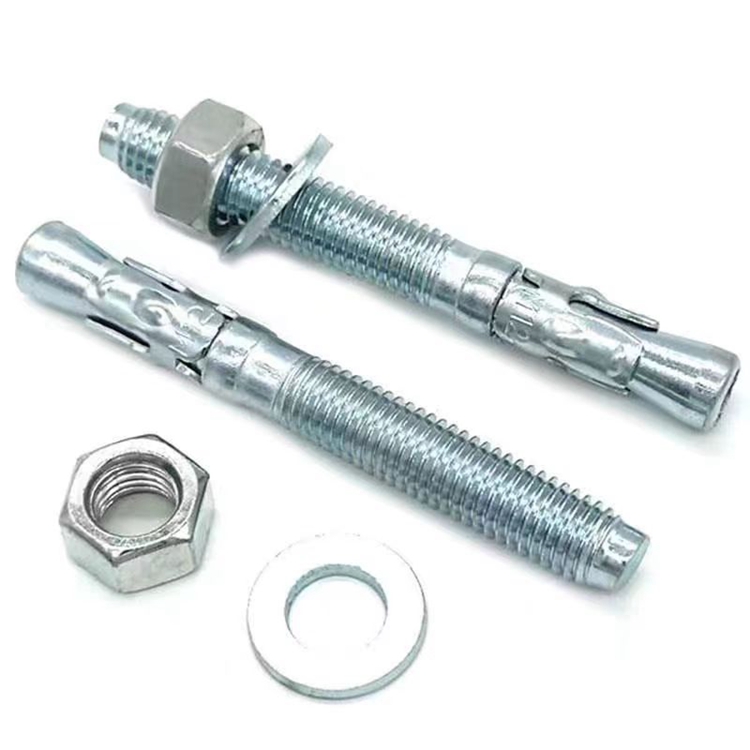
The performance of step bolts is fundamentally governed by their ability to resist tensile, shear, and bending forces. Tensile capacity is determined by the bolt's material strength (yield strength and ultimate tensile strength) and cross-sectional area. Shear capacity is influenced by the bolt's diameter, grade, and the concrete compressive strength. Engineering design calculations must account for dynamic loads, such as wind or seismic forces, utilizing appropriate safety factors as stipulated by building codes (ACI 318, Eurocode 2). Environmental resistance is a significant consideration. Corrosion can significantly reduce the effective cross-sectional area of the bolt, diminishing its load-bearing capacity. Galvanization provides sacrificial protection, but its effectiveness diminishes over time. Stainless steel offers superior long-term corrosion resistance but is more expensive. Concrete quality also plays a crucial role. Lower concrete compressive strengths reduce the pull-out resistance of the bolt. Embedment depth – the length of the bolt embedded within the concrete – directly correlates with pull-out resistance; insufficient embedment is a primary cause of failure. Compliance requirements, governed by regional building codes, dictate minimum bolt dimensions, spacing, and installation procedures. Functional implementation involves accurate placement within formwork prior to concrete pouring, ensuring correct orientation and alignment. Torque control during tightening of the connected structural elements is critical to achieve the desired clamping force without overstressing the bolt.
Technical Specifications
| Bolt Diameter (in) | Material Grade | Minimum Tensile Strength (psi) | Minimum Yield Strength (psi) |
|---|---|---|---|
| 1/2 | A36 Carbon Steel | 58,000 | 36,000 |
| 3/4 | A572 Grade 50 | 65,000 | 50,000 |
| 1 | 304 Stainless Steel | 75,000 | 30,000 |
| 1 1/4 | A36 Carbon Steel (Galvanized) | 58,000 | 36,000 |
| 1 1/2 | 316 Stainless Steel | 80,000 | 35,000 |
| 2 | A572 Grade 75 | 85,000 | 75,000 |
Failure Mode & Maintenance
Step bolt failures commonly manifest as tensile overload, shear failure, pull-out failure, or corrosion-induced weakening. Tensile overload occurs when the applied force exceeds the bolt’s ultimate tensile strength, resulting in fracture. Shear failure happens when the shear stress surpasses the bolt's shear capacity, typically at the thread root. Pull-out failure arises from insufficient embedment depth or low concrete strength, causing the bolt to be extracted from the concrete. Corrosion, particularly in chloride-rich environments, leads to pitting corrosion, reducing the effective cross-sectional area and accelerating fatigue cracking. Fatigue cracking, induced by cyclic loading, initiates at stress concentration points, such as thread roots or weld toes. Delamination of the concrete around the bolt baseplate can also reduce load transfer efficiency. Maintenance involves periodic visual inspections for signs of corrosion, cracking, or concrete degradation. Corrosion protection can be replenished through re-galvanization or application of protective coatings. If cracking is detected, the bolt should be replaced. For bolts in critical applications, non-destructive testing (NDT) methods like ultrasonic testing (UT) or magnetic particle inspection (MPI) can be employed to detect internal flaws. Regular tightening checks are recommended to maintain adequate clamping force, especially in structures subjected to vibration or thermal cycling. Proper drainage around the foundation is crucial to minimize moisture exposure and corrosion risk.
Industry FAQ
Q: What is the primary difference between a wedge anchor and a step bolt, and when would you choose one over the other?
A: Wedge anchors utilize a mechanical wedge system to expand within the concrete, providing anchoring force, while step bolts rely on the bond between the embedded portion and the concrete. Step bolts are generally preferred for higher static loads and situations where vibration is a concern, as the direct embedment provides superior resistance to pull-out. Wedge anchors are often used for retrofitting or applications where pre-drilled holes are necessary.
Q: How does the concrete mix design impact the performance of step bolts?
A: Concrete compressive strength is a critical factor. Higher compressive strength translates to increased pull-out resistance. The water-to-cement ratio influences concrete porosity and permeability; lower ratios result in denser, less permeable concrete, providing better corrosion resistance. Aggregate size and type also play a role, affecting the bond between the bolt and the concrete.
Q: What are the key considerations for specifying corrosion protection for step bolts in a marine environment?
A: In marine environments, 316 stainless steel is the preferred material due to its superior chloride resistance. Hot-dip galvanization alone is often insufficient. Epoxy coatings can provide an additional barrier layer, but require careful surface preparation. Cathodic protection systems, such as sacrificial anodes, can also be employed to mitigate corrosion.
Q: What is the recommended minimum embedment depth for a 1-inch diameter step bolt in 4000 psi concrete?
A: Based on ACI 318-19, the recommended minimum embedment depth for a 1-inch diameter step bolt in 4000 psi concrete is typically between 7 and 10 bolt diameters, translating to 7-10 inches. However, this can vary based on the specific application and code requirements. A structural engineer should always perform calculations.
Q: What is the impact of improper torque during installation on the long-term performance of connections utilizing step bolts?
A: Under-torqueing can lead to loosening of the connection and reduced clamping force, allowing for relative movement and potential fatigue failure. Over-torqueing can exceed the bolt’s yield strength, causing permanent deformation and reducing its load-carrying capacity. Proper torque specifications, based on bolt diameter, grade, and lubrication, must be strictly followed using calibrated torque wrenches.
Conclusion
Step bolts represent a vital, yet often understated, element within structural engineering. Their performance hinges on a complex interplay of material science, precise manufacturing, and adherence to rigorous engineering principles. Understanding the potential failure modes – encompassing tensile overload, shear failure, corrosion, and pull-out – is crucial for ensuring long-term structural integrity. The proper selection of materials, embedment depth, and corrosion protection strategies are paramount to mitigating risks and maximizing service life.
Future advancements in step bolt technology will likely focus on the development of self-corroding monitoring systems, more durable coating materials, and optimized thread designs to enhance fatigue resistance. Continued refinement of installation procedures and quality control measures will also be essential. By prioritizing these areas, the industry can further elevate the reliability and sustainability of structures relying on this foundational component.