
Introduction
Steel bolts represent a fundamental fastening component across a multitude of industries, including construction, automotive, aerospace, and machinery manufacturing. Positioned as a critical element within the mechanical power transmission chain, their primary function is to create a secure clamping force between components, resisting shear and tensile stresses. The performance of a steel bolt is characterized by its tensile strength, yield strength, hardness, fatigue resistance, and corrosion resistance. Modern steel bolt manufacturing encompasses a broad spectrum of grades, finishes, and sizes, meticulously engineered to meet the increasingly stringent demands of modern engineering applications. Failure in bolt systems can lead to catastrophic consequences, highlighting the importance of material selection, proper installation torque, and ongoing maintenance.
Material Science & Manufacturing
The predominant material for steel bolts is carbon steel, with varying percentages of carbon content determining specific mechanical properties. Low carbon steels (typically less than 0.25% C) offer good ductility and weldability, suitable for applications where high strength isn’t paramount. Medium carbon steels (0.25-0.6% C) balance strength and ductility, commonly used in structural applications. High carbon steels (0.6-1.0% C) provide excellent strength and wear resistance but are less ductile. Alloy steels, incorporating elements like manganese, chromium, nickel, and molybdenum, are employed to enhance specific characteristics – for example, chromium for corrosion resistance, and molybdenum for increased tensile strength and creep resistance.
Manufacturing processes typically begin with hot forging, where steel billets are shaped under high temperature and pressure to create the bolt’s basic form. This process orients the grain structure along the length of the bolt, maximizing tensile strength. Following forging, bolts undergo a machining process to achieve precise dimensions and thread formation via rolling or cutting. Thread rolling is preferred as it cold-works the material, increasing its strength and hardness compared to machining. Heat treatment – including hardening, tempering, and case hardening – is crucial for achieving desired mechanical properties. Surface treatments such as galvanizing, zinc plating, or black oxide coating are applied to enhance corrosion resistance. Critical parameters in manufacturing include precise control of forging temperature, cooling rates during heat treatment, and the accuracy of thread profiles. Improper control can lead to defects like voids, inclusions, or insufficient hardening, compromising bolt performance.
Performance & Engineering
The performance of a steel bolt is fundamentally governed by its ability to withstand applied loads without failure. Force analysis involves calculating tensile stress (force per unit area) and shear stress (force parallel to the area). Tensile stress is maximized along the bolt shank, while shear stress is concentrated at the thread interface. The bolt’s pre-load – the tightening torque applied during installation – is critical, as it creates an initial clamping force that resists external loads. Insufficient pre-load can lead to joint separation, while excessive pre-load can cause bolt yielding or fracture.
Environmental resistance is a major engineering consideration. Corrosion, particularly in marine or chemically aggressive environments, weakens the bolt material and reduces its load-carrying capacity. Different steel alloys and protective coatings are selected based on the anticipated operating environment. Fatigue resistance – the ability to withstand repeated loading and unloading – is paramount in applications subjected to dynamic stresses, such as those found in vehicle suspensions or rotating machinery. Compliance requirements are dictated by industry standards and application-specific regulations. For example, aerospace applications demand stringent material traceability and non-destructive testing procedures to ensure structural integrity. Proper bolt selection based on load calculations, environmental factors, and regulatory compliance is essential for long-term performance and safety.
Technical Specifications
| Grade | Tensile Strength (MPa) | Yield Strength (MPa) | Hardness (Rockwell C) | Typical Applications |
|---|---|---|---|---|
| 3.6 | 400-500 | 240-330 | 25-32 | General purpose fastening, low-stress applications |
| 5.8 | 500-600 | 360-480 | 30-38 | Structural bolts, machine parts, automotive components |
| 8.8 | 800-900 | 640-800 | 33-39 | High-strength applications, bridges, cranes, heavy machinery |
| 10.9 | 1000-1100 | 900-1000 | 37-45 | Critical structural connections, aerospace components, high-performance engines |
| A2-70 (Stainless Steel) | 700-800 | 210-310 | 25-32 | Corrosion-resistant applications, food processing, marine environments |
| A4-80 (Stainless Steel) | 800-1000 | 240-400 | 30-38 | Highly corrosive environments, chemical processing, offshore structures |
Failure Mode & Maintenance
Steel bolts are susceptible to several failure modes. Fatigue cracking, initiated by repeated stress cycles, often begins at thread roots or stress concentrators. Hydrogen embrittlement, caused by the ingress of hydrogen into the steel lattice, drastically reduces ductility and promotes brittle fracture, particularly in high-strength bolts. Corrosion – pitting, crevice corrosion, and galvanic corrosion – weakens the material and reduces its load-bearing capacity. Over-tightening can lead to yielding or thread stripping. Under-tightening can result in loosening and joint separation. Shear failure occurs when the applied shear stress exceeds the material’s shear strength, typically at the thread interface.
Preventive maintenance is crucial for ensuring long-term bolt performance. Regular inspection for signs of corrosion, cracking, or loosening is essential. Applying appropriate lubricants during installation and periodic re-tightening can maintain pre-load and prevent loosening. Protective coatings should be inspected and reapplied as needed. In critical applications, non-destructive testing methods like ultrasonic testing or magnetic particle inspection can detect subsurface cracks. If a bolt is found to be damaged or compromised, it should be replaced immediately with a bolt of the same grade and specification. Proper torque control during installation, utilizing calibrated torque wrenches, is paramount in preventing over-tightening or under-tightening.
Industry FAQ
Q: What is the difference between proof load and tensile strength, and why is it important for bolt selection?
A: Proof load represents the maximum tensile stress a bolt can withstand without permanent deformation (yielding). Tensile strength is the maximum stress the bolt can withstand before fracture. Selecting a bolt with a sufficient proof load relative to the anticipated service load is critical for preventing permanent set and maintaining clamping force. Tensile strength provides a safety margin, ensuring the bolt won't fracture under extreme conditions, but exceeding the proof load can compromise the joint's long-term performance.
Q: How does thread engagement length impact the strength of a bolted joint?
A: Greater thread engagement length increases the shear area resisting external loads, thereby enhancing the joint’s strength. It also allows for more accurate torque-tension relationship, improving pre-load control. Insufficient thread engagement can lead to thread stripping and premature joint failure. Minimum thread engagement length is typically specified in industry standards and should be carefully considered during design.
Q: What are the benefits of using flanged bolts versus hexagonal bolts in certain applications?
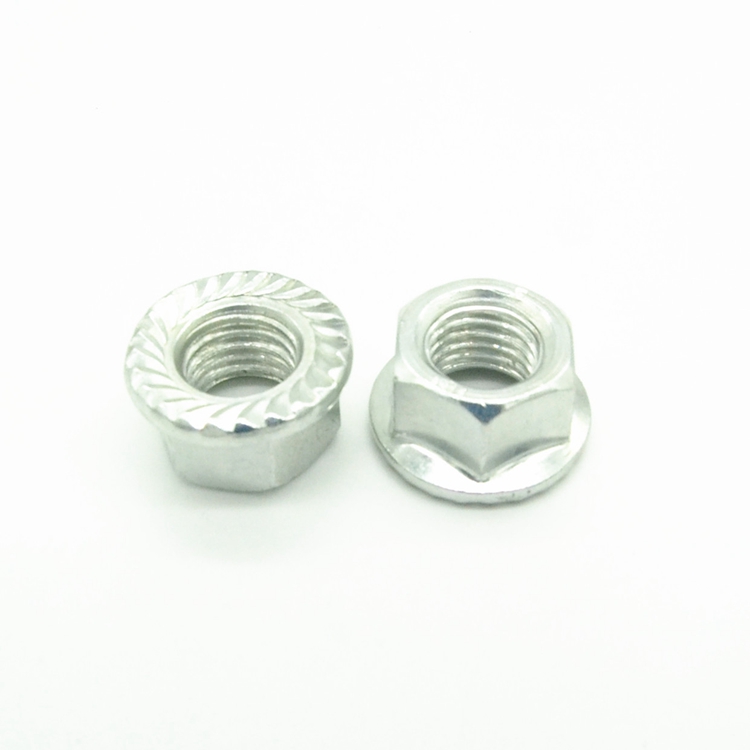
A: Flanged bolts provide a larger bearing surface, distributing the clamping force over a wider area. This is particularly beneficial when joining softer materials that are prone to indentation. They also offer increased resistance to loosening under vibration. Hexagonal bolts are more versatile and readily available, but may require washers to provide adequate bearing surface.
Q: What is the role of bolt coatings in preventing corrosion, and what are the common coating options?
A: Bolt coatings act as a barrier between the steel and the corrosive environment, inhibiting the electrochemical reactions that cause rust and degradation. Common coatings include zinc plating (sacrificial protection), galvanizing (hot-dip zinc coating for thicker protection), black oxide (mild corrosion resistance, often used as a base for other coatings), and specialized coatings like PTFE or ceramic for extreme environments.
Q: How does temperature affect the strength and performance of steel bolts?
A: Elevated temperatures generally reduce the yield strength and tensile strength of steel. At sufficiently high temperatures, creep – slow deformation under sustained stress – can become a significant concern. Low temperatures can increase the risk of brittle fracture, particularly in some steel alloys. Material selection must consider the operating temperature range and its impact on mechanical properties.
Conclusion
The selection and application of steel bolts require a comprehensive understanding of material science, manufacturing processes, and engineering principles. Achieving optimal performance necessitates careful consideration of load requirements, environmental factors, and relevant industry standards. The correct bolt grade, appropriate surface treatment, and precise installation torque are all critical elements in ensuring the long-term integrity and reliability of a bolted joint.
Future advancements in bolt technology will likely focus on developing new alloy compositions with enhanced strength, corrosion resistance, and fatigue life. Improved coating technologies and non-destructive testing methods will also play a vital role in enhancing bolt performance and safety. Furthermore, digital technologies, such as predictive maintenance algorithms based on sensor data, will enable proactive identification of potential failure points and optimization of bolt maintenance schedules.