
Introduction
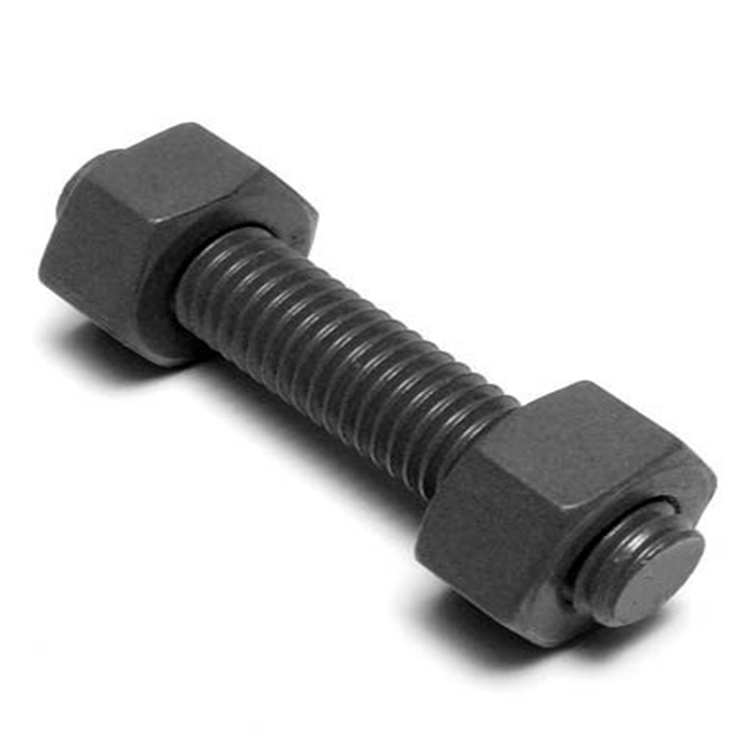
Standoff bolts, also known as spacers or mounting posts, are cylindrical fasteners used to create space between two surfaces. They are integral components in a wide range of industries, including electronics, aerospace, automotive, and industrial machinery. Positioned within the industry supply chain between raw material suppliers and final assembly manufacturers, standoff bolts serve a critical function in maintaining precise alignment, providing electrical insulation, and reducing stress on mounted components. Core performance characteristics include shear strength, tensile strength, corrosion resistance, and dimensional accuracy, all of which directly impact the reliability and longevity of the assembled product. The selection of appropriate standoff bolt materials and dimensions is paramount to preventing failures related to vibration, thermal expansion, and chemical exposure, representing a key pain point for design and procurement engineers.
Material Science & Manufacturing
Standoff bolts are commonly manufactured from a variety of materials, each offering distinct properties. Carbon steel (AISI 1018, 1045) provides high strength and is cost-effective, but is susceptible to corrosion. Stainless steel (304, 316) offers superior corrosion resistance, making it suitable for harsh environments. Aluminum (6061-T6) provides a lightweight solution with good conductivity, and is commonly used in electronics. Brass (C36000) offers excellent conductivity and machinability, often used in electrical applications. Plastics like nylon and Delrin are utilized for electrical insulation and vibration dampening. Titanium alloys (Grade 5) deliver an exceptional strength-to-weight ratio, ideal for aerospace applications.
Manufacturing processes vary based on material and quantity. Cold heading is prevalent for high-volume carbon and stainless steel production, offering speed and material efficiency. Machining from bar stock is employed for lower volumes and specialized geometries, particularly for aluminum, brass, and titanium. Plastic standoff bolts are typically manufactured via injection molding, enabling complex shapes and tight tolerances. Thread rolling forms the internal or external threads, providing high thread strength without material loss. Key parameter control during manufacturing includes material composition verification (spectrometry), dimensional inspection (coordinate measuring machines - CMM), thread gauge verification, and hardness testing (Rockwell or Vickers). Surface treatments like passivation (stainless steel), anodizing (aluminum), and plating (zinc, nickel) enhance corrosion resistance and wear properties. Control of material grain structure through heat treatment is critical for maximizing mechanical properties, particularly fatigue resistance.
Performance & Engineering
The performance of a standoff bolt is primarily determined by its ability to withstand applied loads without failure. Force analysis involves considering shear forces, tensile forces, and bending moments. Shear forces arise when the bolt is subjected to forces parallel to its axis, while tensile forces act perpendicular to the axis. Bending moments occur when the load is not perfectly aligned, creating stress concentrations. Finite element analysis (FEA) is commonly used to simulate these forces and optimize bolt geometry. Environmental resistance is another crucial factor. Exposure to corrosive environments (salt spray, humidity, chemicals) can lead to pitting corrosion and eventual failure. Temperature variations induce thermal expansion and contraction, which can loosen the bolt or damage mounted components. Compliance requirements often dictate specific material selections and surface treatments to meet industry standards. Functional implementation requires careful consideration of bolt length, diameter, and thread type to ensure proper spacing and secure attachment. Torque specifications must be adhered to during installation to prevent over-tightening or under-tightening, both of which can compromise performance.
Technical Specifications
| Material | Diameter (in) | Length (in) | Thread Size (UNC/UNF) |
|---|---|---|---|
| Stainless Steel 304 | 0.250 | 1.00 | 6-32 UNC |
| Aluminum 6061-T6 | 0.375 | 0.75 | 8-32 UNF |
| Carbon Steel 1045 | 0.500 | 1.50 | 10-24 UNC |
| Brass C36000 | 0.188 | 0.50 | 4-40 UNF |
| Nylon 6/6 | 0.250 | 0.875 | 6-32 UNC |
| Titanium Grade 5 | 0.3125 | 1.25 | 8-32 UNF |
Failure Mode & Maintenance
Common failure modes for standoff bolts include thread stripping, shear failure, tensile failure, corrosion, and fatigue cracking. Thread stripping occurs when the applied torque exceeds the thread’s shear strength, leading to deformation or breakage. Shear failure results from excessive shear loads, particularly in applications with high vibration. Tensile failure happens when the bolt is subjected to excessive tensile stress, causing it to stretch and eventually fracture. Corrosion, as previously discussed, weakens the material and reduces its load-carrying capacity. Fatigue cracking initiates from stress concentrations (e.g., thread roots, surface imperfections) and propagates under cyclic loading. Delamination can occur in plastic standoff bolts due to internal stresses or exposure to certain chemicals. Oxidation of metals can contribute to corrosion and reduced mechanical properties.
Preventative maintenance involves regular inspection for signs of corrosion, thread damage, and loosening. Lubrication with appropriate thread compounds reduces friction and prevents galling. Proper torque control during installation is critical. For applications in corrosive environments, protective coatings (e.g., zinc plating, powder coating) should be applied. Periodic retorquing may be necessary to compensate for settlement or thermal expansion. If a standoff bolt shows signs of failure, it should be replaced immediately with a bolt of the same material, dimensions, and specifications. A failure analysis should be conducted to determine the root cause of the failure and prevent recurrence.
Industry FAQ
Q: What is the primary difference between UNC and UNF threads in standoff bolts?
A: UNC (Unified National Coarse) threads have fewer threads per inch, making them faster to install and more tolerant of minor damage. They are generally preferred for applications where speed of assembly is important and high precision is not critical. UNF (Unified National Fine) threads have more threads per inch, providing greater strength and resistance to loosening, making them ideal for applications subject to vibration or high stress.
Q: How does material selection impact the lifespan of a standoff bolt in a saltwater environment?
A: In a saltwater environment, carbon steel will corrode rapidly. Aluminum, while initially resistant, will eventually pit and corrode. Stainless steel (316 is superior to 304) is the preferred choice due to its excellent corrosion resistance. Titanium alloys offer the highest level of resistance but are significantly more expensive. Surface treatments like passivation and coatings can further enhance corrosion protection.
Q: What torque specifications should be used for a stainless steel standoff bolt with an 8-32 UNF thread?
A: Torque specifications depend on the bolt diameter, material, and lubrication. For an 8-32 UNF stainless steel standoff bolt, a typical torque range is 30-40 inch-pounds. However, always refer to the manufacturer's recommendations or engineering drawings for specific torque values. Using a calibrated torque wrench is essential.
Q: How can I mitigate the risk of galvanic corrosion when using standoff bolts with dissimilar metals?
A: Galvanic corrosion occurs when two dissimilar metals are in contact in the presence of an electrolyte (e.g., moisture). To mitigate this risk, use compatible materials, apply a non-conductive coating to isolate the metals, or use a sacrificial anode to protect the more active metal. Proper sealing can also prevent electrolyte ingress.
Q: What are the advantages of using plastic standoff bolts in electronic applications?
A: Plastic standoff bolts offer several advantages in electronic applications, including electrical insulation, vibration dampening, and lightweight construction. They are also non-conductive, preventing short circuits. However, their mechanical strength is lower than metal standoff bolts, so they are best suited for applications with low loads.
Conclusion
Standoff bolts, despite their seemingly simple design, are critical fasteners demanding careful consideration of material science, manufacturing processes, and engineering principles. Proper selection and application are crucial to ensuring the reliability and longevity of assembled products. The interplay between load requirements, environmental conditions, and material compatibility dictates the optimal standoff bolt solution, addressing core pain points within industries reliant on precise and durable assemblies.
Looking forward, advancements in materials science will likely lead to the development of even more corrosion-resistant and high-strength standoff bolts. Further integration of FEA and predictive modeling will enable more accurate stress analysis and optimization of bolt designs. Emphasis on sustainable manufacturing practices will drive the development of eco-friendly materials and production processes. A continued focus on standardization and quality control will be essential for maintaining the integrity and performance of these vital components.