
Introduction
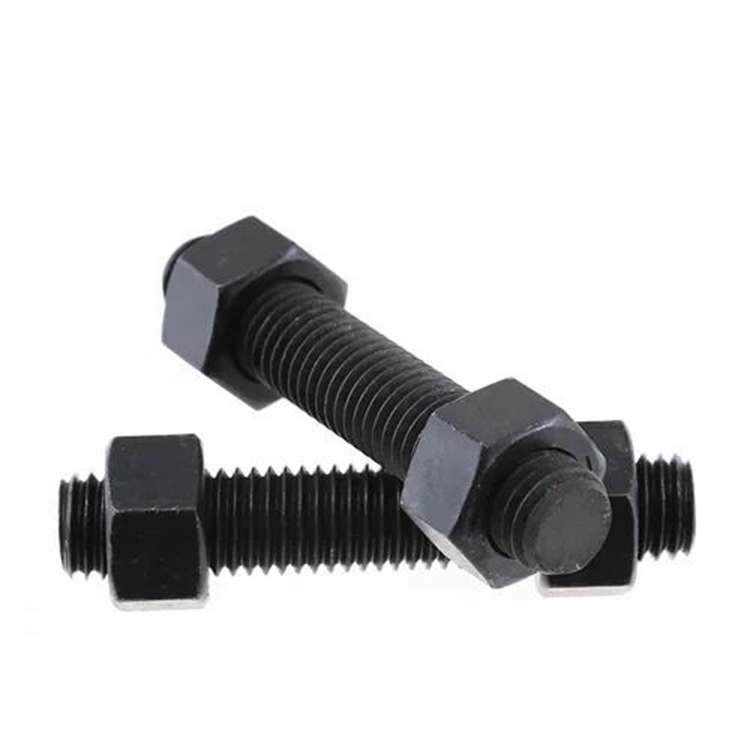
Square bolts, distinct from hexagonal bolts by their square head, represent a specific fastening solution prevalent in applications requiring resistance to turning. Their position in the industry chain falls between raw material production (steel, alloys, stainless steel) and final assembly within larger mechanical systems, architectural structures, and specialized equipment. While often superseded by hexagonal bolts due to ease of tightening, square bolts retain usage in areas demanding a specific aesthetic or where the limited rotational freedom afforded by a square head is advantageous, such as antique restoration or certain woodworking applications. Core performance characteristics encompass tensile strength, shear strength, yield strength, and resistance to corrosion, all determined by material composition, heat treatment, and surface finish. The fundamental pain point in utilizing square bolts arises from the increased difficulty in tightening compared to hexagonal variants, requiring specialized sockets or wrenches and often resulting in slower assembly times. Furthermore, achieving consistent and adequate clamping force is more challenging due to the limited contact area of the square head.
Material Science & Manufacturing
Square bolts are predominantly manufactured from carbon steel (grades 2, 5, and 8 being common), alloy steels offering enhanced strength and toughness, and stainless steels for corrosion resistance. The raw material properties are crucial. Carbon steel’s tensile strength varies with carbon content, generally ranging from 400 to 800 MPa. Alloy steel, incorporating elements like manganese, chromium, and molybdenum, can achieve tensile strengths exceeding 1000 MPa. Stainless steel (304, 316) prioritizes corrosion resistance, with tensile strengths typically between 500-700 MPa. Manufacturing typically involves cold heading, where a wire stock is fed into a die and formed into the bolt shape. Heat treatment, including hardening and tempering, is critical for achieving desired mechanical properties. The hardening process increases strength and hardness, while tempering reduces brittleness. Precise control of temperature and cooling rates during heat treatment is vital to prevent cracking or distortion. Thread rolling, not cutting, is favored to maintain material grain flow and maximize thread strength. Surface treatments, such as galvanization, zinc plating, or black oxide, provide corrosion protection. Quality control emphasizes dimensional accuracy of the head and threads, as well as verification of mechanical properties through tensile testing and hardness measurements. A significant manufacturing challenge is preventing stress concentrations at the corners of the square head, requiring optimized die design and controlled forming speeds.
Performance & Engineering
The performance of a square bolt is fundamentally governed by force analysis under tensile and shear loading. Tensile strength determines the maximum load the bolt can withstand before fracturing when subjected to a pulling force. Shear strength defines the bolt’s resistance to a force applied perpendicularly to its axis. Yield strength indicates the point at which the bolt begins to deform permanently. These properties are directly correlated to the material composition and manufacturing processes outlined previously. Environmental resistance is a key engineering consideration. Exposure to corrosive environments (humidity, salt spray, chemicals) can lead to degradation of the bolt material, reducing its strength and service life. Stainless steel bolts are favored in such applications. Compliance requirements vary depending on the industry and application. For example, in structural applications, bolts must meet standards specified by building codes and engineering regulations. Fatigue loading, where the bolt is subjected to repeated stress cycles, is a critical failure mechanism. The fatigue life is influenced by the stress amplitude, mean stress, and material properties. Finite element analysis (FEA) is often employed to simulate stress distribution within the bolt and optimize its design for improved fatigue performance. Clamping force, the axial force exerted by the bolt when tightened, is paramount. Insufficient clamping force can lead to joint loosening and failure. Over-tightening can exceed the bolt's yield strength, causing permanent deformation or fracture. Torque-controlled tightening is essential to achieve consistent and accurate clamping force.
Technical Specifications
| Grade | Material | Tensile Strength (MPa) | Shear Strength (MPa) | Hardness (Rockwell C) |
|---|---|---|---|---|
| 2 | Low Carbon Steel | 400-500 | 200-250 | 30-40 |
| 5 | Medium Carbon Steel | 600-700 | 300-350 | 40-50 |
| 8 | High Carbon Alloy Steel | 800-1000 | 400-500 | 50-60 |
| 304 | Stainless Steel | 500-600 | 250-300 | 20-30 |
| 316 | Stainless Steel | 550-700 | 280-350 | 20-30 |
| A4-80 | Austenitic Stainless Steel | 800-1000 | 500-700 | 30-40 |
Failure Mode & Maintenance
Square bolts are susceptible to several failure modes. Fatigue cracking, initiated by repeated stress cycles, commonly occurs at the corners of the square head or at the thread root. Shear failure can occur when the applied shear force exceeds the bolt’s shear strength. Tensile failure results from exceeding the bolt’s tensile strength. Corrosion, particularly in harsh environments, leads to material degradation and reduced strength. Hydrogen embrittlement, a concern with high-strength steels, can cause delayed cracking due to the diffusion of hydrogen atoms into the metal lattice. Thread stripping, where the threads are damaged or worn, results in loss of clamping force. Maintenance involves regular inspection for signs of corrosion, cracking, or deformation. Torque checks are crucial to ensure adequate clamping force. Lubrication of the threads prevents galling and facilitates tightening. In corrosive environments, protective coatings should be maintained or reapplied. If a bolt shows signs of significant corrosion or damage, it should be replaced immediately. Preventative maintenance includes selecting appropriate bolt materials for the application environment and implementing proper tightening procedures. Proper surface preparation and coating application contribute to long-term durability. Analysis of failed bolts, including metallographic examination and fracture surface analysis, can identify the root cause of failure and inform preventative measures.
Industry FAQ
Q: What are the primary limitations of using square bolts compared to hexagonal bolts in modern industrial applications?
A: The main limitations are the increased difficulty and time required for tightening due to the limited contact area for wrenches, and the consequent potential for inconsistent clamping force. Hexagonal bolts offer greater surface area for wrench engagement, allowing for easier and more precise torque application. This makes square bolts less efficient in high-volume assembly operations.
Q: How does the material choice affect the corrosion resistance of a square bolt, and what surface treatments are commonly used?
A: Material choice is paramount. Stainless steels (304, 316) offer significantly higher corrosion resistance than carbon steels. Surface treatments, such as galvanization (zinc coating), zinc plating, black oxide, and PTFE coatings, provide an additional barrier against corrosion. The effectiveness of these treatments depends on the environment and the quality of application.
Q: What is the significance of heat treatment in the manufacturing process of square bolts, and how does it impact mechanical properties?
A: Heat treatment – specifically hardening and tempering – is critical for achieving the desired mechanical properties. Hardening increases strength and hardness, but also increases brittleness. Tempering reduces brittleness while maintaining strength. Proper control of temperature and cooling rates is essential to prevent distortion or cracking and to achieve the specified tensile and yield strengths.
Q: How can fatigue failure be mitigated in square bolts subjected to cyclic loading?
A: Mitigating fatigue failure involves several strategies. Selecting high-quality materials with good fatigue strength, optimizing the bolt’s geometry to minimize stress concentrations (especially at the square head corners), applying surface treatments to enhance fatigue resistance, and ensuring proper tightening torque to achieve consistent clamping force are all crucial. Regularly inspecting bolts for signs of cracking is also important.
Q: What are the key considerations when selecting a square bolt for a structural application, and which standards typically govern their use?
A: Key considerations include the required tensile strength, shear strength, yield strength, corrosion resistance, and compatibility with the materials being joined. The application’s operating temperature and potential for dynamic loading are also important. Standards governing their use include ASTM A307, ASTM A325, ASTM A576, and relevant building codes which often reference these ASTM standards. ISO 898-1 is also frequently referenced internationally.
Conclusion
Square bolts, while less common than their hexagonal counterparts in contemporary engineering applications, remain relevant in niche areas where their unique characteristics—primarily resistance to rotation—are advantageous. Understanding the interplay between material science, manufacturing processes, and engineering principles is crucial for selecting and utilizing these fasteners effectively. Precise control of heat treatment, surface finish, and tightening torque is essential to ensure optimal performance and longevity.
The continued, though diminished, utilization of square bolts necessitates a thorough understanding of their potential failure modes and appropriate maintenance procedures. Future developments may focus on advanced materials and coatings to enhance corrosion resistance and fatigue life, potentially expanding their applicability in demanding environments. Ultimately, a considered approach based on robust technical analysis will ensure the reliable and safe implementation of square bolts in appropriate applications.