
Introduction
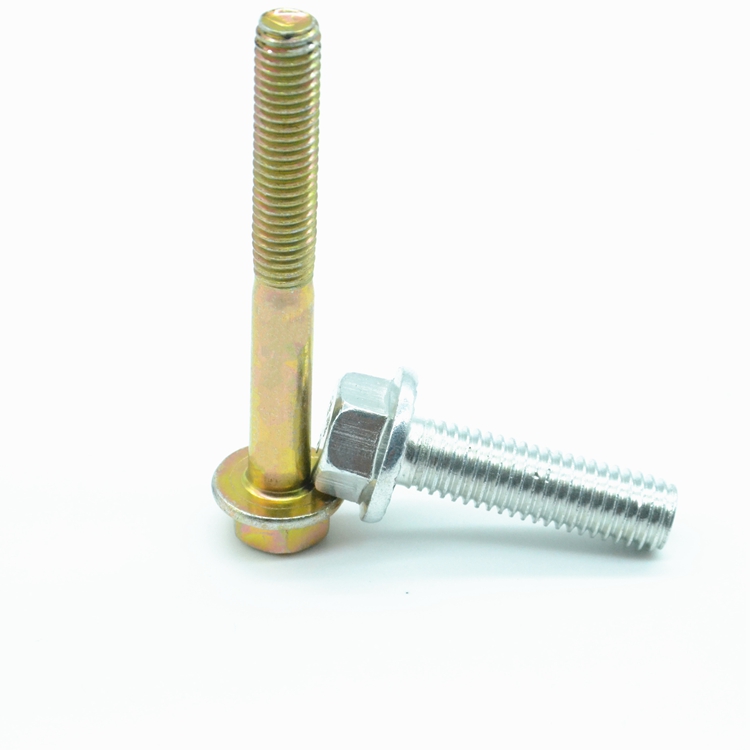
SPC camber bolts are specialized fasteners utilized in vehicle suspension systems to facilitate precise alignment adjustments, specifically camber angle correction. These bolts are critical components in maintaining optimal tire contact patch, influencing vehicle handling, tire wear, and overall driving safety. Unlike standard bolts, SPC camber bolts incorporate a cam washer and often a hardened steel stud, enabling controlled and incremental adjustments to the suspension geometry. Their application extends across a broad spectrum of vehicle types, encompassing passenger cars, light trucks, and performance vehicles, frequently employed after modifications such as lowering springs or lift kits where suspension geometry is altered. The primary function is to address camber deviation caused by ride height changes or manufacturing tolerances, mitigating uneven tire wear and enhancing handling performance. The industry faces challenges concerning corrosion resistance in diverse road conditions, maintaining precise adjustment tolerance over extended use, and ensuring compatibility across varying vehicle architectures.
Material Science & Manufacturing
SPC camber bolts are typically manufactured from medium carbon steel alloys (e.g., AISI 1045, 4140) for the bolt body and stud, chosen for their high tensile strength and fatigue resistance. The cam washer is often constructed from high-carbon bearing steel (e.g., 52100) for wear resistance. Manufacturing begins with cold forming of the steel billet to approximate the bolt shape, followed by precision machining to achieve the final dimensions and thread specifications. Heat treatment, including hardening and tempering, is crucial to achieve the desired mechanical properties: typically, a Rockwell C hardness of 30-40 for the bolt body and stud, and 58-62 for the cam washer. Surface treatments are then applied; zinc plating is common for corrosion resistance, but more advanced coatings like Geomet or phosphate coatings are increasingly utilized for enhanced protection, especially in road salt environments. The cam washer is typically manufactured via stamping and subsequent surface hardening. Critical parameters during manufacturing include thread pitch accuracy, stud straightness, cam washer concentricity, and coating thickness. Failure to maintain tight tolerances in these parameters can result in imprecise adjustments, premature wear, or bolt failure. Quality control measures include dimensional inspection using coordinate measuring machines (CMMs), tensile testing to verify strength, and salt spray testing to assess corrosion resistance. Manufacturing inconsistencies can lead to stress concentrations at thread roots, initiating fatigue cracks under dynamic loading.
Performance & Engineering
The performance of SPC camber bolts is dictated by their ability to withstand cyclical loading and maintain precise adjustment over the vehicle’s lifespan. Force analysis focuses on tensile stress along the bolt shank, shear stress at the thread interface, and bending stress induced during camber adjustment. The cam washer introduces a localized stress concentration during adjustment, requiring careful material selection and geometry optimization. Environmental resistance is critical, particularly resistance to corrosion from road salt, moisture, and temperature fluctuations. Finite element analysis (FEA) is routinely employed to optimize bolt geometry and material selection for minimizing stress concentrations and maximizing fatigue life. Compliance requirements involve adherence to SAE J429 (Fastener Quality Assurance) and ASTM F880 (Corrosion Testing of Fasteners). The adjustment mechanism relies on the controlled deformation of the cam washer, which alters the suspension component’s position. Precise alignment is maintained via the friction between the cam washer and the mating surface. The coefficient of friction is influenced by surface finish, lubrication (if any), and the applied clamping force. Proper installation torque is paramount; insufficient torque can lead to loosening and misalignment, while excessive torque can induce bolt stretch and potential failure. The operational temperature range significantly impacts bolt performance; extreme temperatures can alter material properties and affect the adjustment mechanism’s accuracy.
Technical Specifications
| Bolt Diameter (mm) | Thread Pitch (mm) | Minimum Tensile Strength (MPa) | Cam Washer Material |
|---|---|---|---|
| M8 | 1.25 | 800 | 52100 Bearing Steel |
| M10 | 1.5 | 900 | 52100 Bearing Steel |
| M12 | 1.75 | 1000 | 52100 Bearing Steel |
| M14 | 2.0 | 1050 | 52100 Bearing Steel |
| M16 | 2.5 | 1100 | 52100 Bearing Steel |
| Surface Treatment | Zinc Plating Thickness (µm) | Salt Spray Resistance (hours) | Hardness (HRC) - Cam Washer |
Failure Mode & Maintenance
Failure modes for SPC camber bolts typically fall into several categories. Fatigue cracking is common, initiating at thread roots or under the cam washer due to cyclical loading. Corrosion, particularly pitting corrosion induced by road salt, weakens the bolt material and accelerates fatigue failure. Stripping of the threads can occur due to excessive torque or improper installation. Cam washer deformation or wear can compromise the adjustment mechanism's accuracy and lead to misalignment. Creep, or slow plastic deformation under sustained load, can also affect adjustment precision. Failure analysis involves microscopic examination of fracture surfaces to identify the crack initiation site and failure mechanism. Maintenance recommendations include periodic inspection for corrosion, thread damage, and cam washer wear. Lubrication of the threads (using anti-seize compound) during installation can prevent galling and facilitate future adjustments. Regular torque checks are essential, especially after initial installation and after exposure to harsh driving conditions. If corrosion is detected, the bolt should be replaced. Preventative maintenance also includes washing the undercarriage regularly to remove road salt and other corrosive contaminants. Replacing bolts in pairs is recommended to ensure even suspension loading and avoid introducing new imbalances. Incorrect installation, specifically over-torquing, represents a significant contributing factor to premature failure.
Industry FAQ
Q: What is the primary difference between an SPC camber bolt and a standard suspension bolt?
A: SPC camber bolts incorporate a cam washer design that allows for controlled and incremental adjustments to the camber angle. Standard suspension bolts are fixed in position and do not offer this adjustability. The SPC design facilitates precise alignment correction after suspension modifications or to compensate for manufacturing tolerances.
Q: How does surface coating affect the longevity of the camber bolt?
A: Surface coating, such as zinc plating or Geomet, significantly impacts corrosion resistance. Higher quality coatings provide greater protection against road salt, moisture, and other corrosive elements, extending the bolt's service life and preventing premature failure. The thickness and uniformity of the coating are critical parameters.
Q: What torque specification should be used during installation?
A: Torque specifications vary depending on the bolt size and vehicle manufacturer. It is crucial to consult the vehicle's service manual for the correct torque value. Over-torquing can stretch the bolt and lead to failure, while under-torquing can result in loosening and misalignment.
Q: What are the signs of a failing camber bolt?
A: Signs of a failing camber bolt include difficulty adjusting the camber angle, clicking or popping noises during suspension movement, uneven tire wear, and visible corrosion or damage to the bolt or cam washer. Any of these symptoms warrant immediate inspection and potential replacement.
Q: Is it necessary to replace camber bolts in pairs?
A: Yes, it is highly recommended to replace camber bolts in pairs on the same axle. Replacing only one bolt can create an imbalance in suspension loading and potentially compromise handling and tire wear. Replacing both ensures symmetrical adjustment and optimal performance.
Conclusion
SPC camber bolts are critical components in maintaining vehicle suspension geometry and ensuring optimal tire performance. Their design, material selection, and manufacturing processes are governed by stringent engineering principles and industry standards to withstand demanding operational conditions. Careful attention to installation torque, regular inspection, and preventative maintenance are essential for maximizing bolt longevity and preventing premature failure.
Future developments will likely focus on advanced materials and coating technologies to further enhance corrosion resistance and fatigue life. Integration with digital alignment systems and predictive maintenance strategies will also become increasingly prevalent, enabling proactive monitoring of bolt condition and minimizing downtime. Ultimately, the continued evolution of SPC camber bolt technology will contribute to safer, more reliable, and higher-performing vehicles.