
Introduction
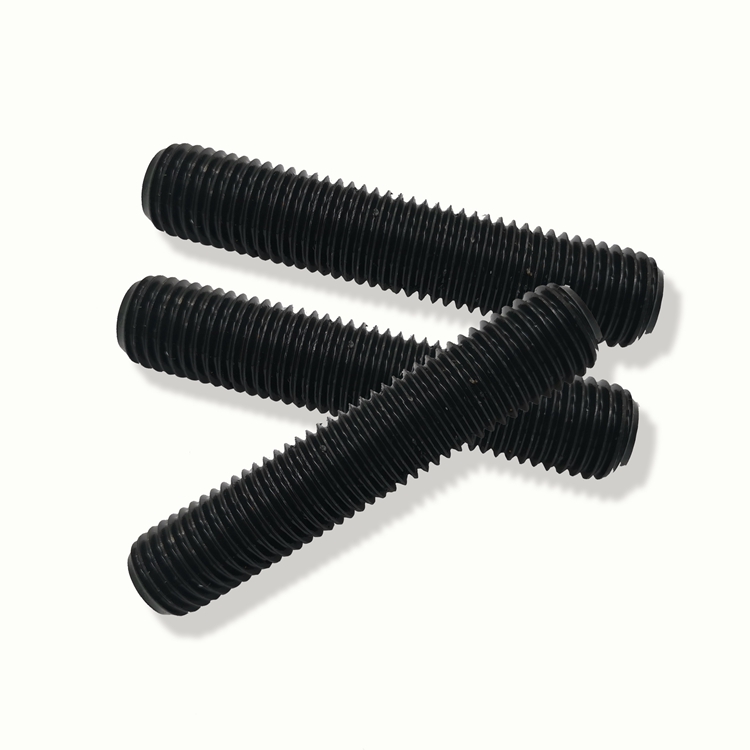
Spacers for bolts are cylindrical or shaped components installed between a bolt head or nut and the fastened surface. They serve to maintain proper bolt tension, provide clearance for component assembly, prevent crushing of delicate materials, and distribute load effectively. Within the broader fastening industry, spacers represent a critical, yet often overlooked, element ensuring the integrity and longevity of bolted joints. Their selection and application directly influence the performance of assembled structures across diverse sectors, including automotive, aerospace, construction, and industrial machinery. Core performance characteristics encompass load distribution capability, dimensional stability under varying environmental conditions, and material compatibility with both the bolt/nut and the fastened components. Incorrect spacer selection or improper installation can lead to premature joint failure, vibrational loosening, and compromised structural integrity.
Material Science & Manufacturing
Spacers are commonly manufactured from a range of materials, each offering distinct properties. Low carbon steel (AISI 1010-1020) provides high strength and cost-effectiveness, frequently utilized in general industrial applications. However, susceptibility to corrosion necessitates protective coatings like zinc plating or powder coating. Stainless steel (304, 316) offers superior corrosion resistance, crucial for outdoor or harsh environments, but typically exhibits lower strength compared to high-strength alloy steels. Aluminum alloys (6061-T6) are valued for their lightweight nature and corrosion resistance, often employed in aerospace and automotive applications where weight reduction is paramount. Engineering plastics, such as nylon 6/6, Delrin (POM), and PTFE, are selected for electrical insulation, vibration dampening, and chemical resistance. The manufacturing process heavily depends on the material and desired spacer geometry. Steel spacers are frequently produced via cold heading, offering high production rates and good material utilization. CNC machining is employed for precision spacers with tight tolerances or complex shapes. Plastic spacers are typically injection molded, enabling intricate designs and large-scale production. Critical parameters during manufacturing include dimensional accuracy (tolerances on inner diameter, outer diameter, and height), surface finish (influencing friction and wear), and material hardness (affecting compressive strength). Heat treatment processes, such as hardening and tempering, are applied to steel spacers to achieve desired mechanical properties. Post-processing operations, like deburring and cleaning, are vital to ensure smooth assembly and prevent component damage.
Performance & Engineering
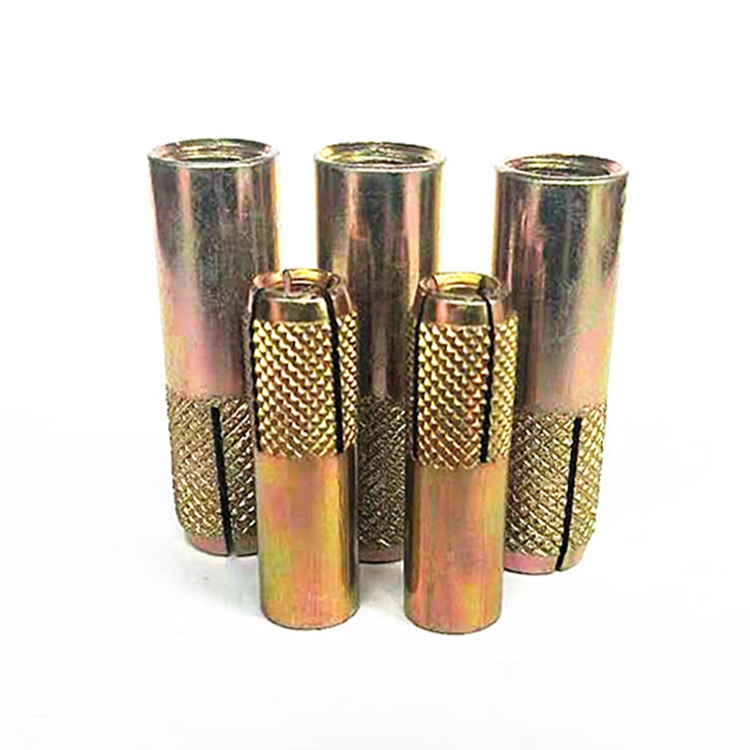
The performance of a spacer is fundamentally linked to its ability to withstand compressive loads and maintain dimensional stability. Force analysis involves calculating the compressive stress on the spacer based on bolt preload, external forces, and the area resisting compression. The spacer’s height and material properties directly influence its ability to distribute load evenly and prevent localized stress concentrations. Environmental resistance is a critical consideration. Temperature fluctuations can cause thermal expansion and contraction, potentially affecting bolt preload and joint tightness. Chemical exposure, particularly in corrosive environments, can lead to material degradation and failure. Compliance requirements often dictate specific material selection and performance testing. For example, aerospace applications may require spacers meeting stringent AMS (Aerospace Material Specification) standards, while automotive applications may necessitate compliance with IATF 16949 quality management system requirements. Functional implementation details include considerations for proper spacer stack-up to achieve desired component alignment and clearance. The interaction between the spacer, bolt, nut, and fastened components must be analyzed to prevent interference or binding. Finite Element Analysis (FEA) is commonly employed to simulate stress distribution and predict performance under various loading conditions. Consideration should also be given to potential galvanic corrosion if dissimilar metals are used in the assembly; insulating spacers or coatings may be necessary.
Technical Specifications
| Material | Inner Diameter (ID) Range (mm) | Outer Diameter (OD) Range (mm) | Height Range (mm) |
|---|---|---|---|
| Carbon Steel (AISI 1018) | 3 – 50 | 6 – 60 | 1 – 100 |
| Stainless Steel (304) | 3 – 50 | 6 – 60 | 1 – 100 |
| Aluminum Alloy (6061-T6) | 4 – 40 | 8 – 50 | 1 – 50 |
| Nylon 6/6 | 3 – 30 | 6 – 40 | 1 – 30 |
| Delrin (POM) | 3 – 30 | 6 – 40 | 1 – 30 |
| PTFE | 3 – 25 | 6 – 35 | 1 – 20 |
Failure Mode & Maintenance
Spacers are susceptible to several failure modes depending on the application and material. Compressive yielding or plastic deformation can occur if the applied load exceeds the material’s yield strength, leading to loss of preload and joint loosening. Fatigue cracking can initiate from stress concentrations at the spacer’s edges or internal defects, particularly under cyclic loading. Corrosion, especially in marine or industrial environments, can degrade the material, reducing its strength and causing premature failure. Delamination, primarily in plastic spacers, can result from improper molding or exposure to aggressive chemicals. Oxidation of metal spacers at elevated temperatures can lead to material loss and reduced cross-sectional area. Maintenance strategies include periodic inspections to detect signs of corrosion, cracking, or deformation. Bolt preload should be periodically checked and adjusted as necessary to maintain joint integrity. Lubrication of the bolt threads and spacer surfaces can reduce friction and prevent galling. For applications involving corrosive environments, protective coatings or the use of corrosion-resistant materials are essential. If a spacer is found to be damaged or degraded, it should be replaced immediately with a component meeting the original specifications. Proper storage conditions, such as protecting spacers from moisture and extreme temperatures, can also extend their service life.
Industry FAQ
Q: What is the impact of spacer material on galvanic corrosion in a mixed-metal bolted joint?
A: Galvanic corrosion occurs when dissimilar metals are in electrical contact in the presence of an electrolyte. If a spacer material is less noble than the bolt or nut, it can act as the anode and corrode preferentially. To mitigate this, use compatible materials (similar electrochemical potential), apply insulating coatings to the spacer, or utilize sacrificial anodes to protect the more critical components.
Q: How do dimensional tolerances on spacer height affect bolt preload and joint stiffness?
A: Tighter tolerances on spacer height ensure more accurate control of bolt preload. Excessive variations in spacer height can lead to either under-tightening (insufficient preload) or over-tightening (potential bolt yielding). Precise spacer height also influences joint stiffness, affecting the system's dynamic response to external loads.
Q: What considerations should be made when selecting a plastic spacer for an application involving high temperatures?
A: Plastic spacers have limited temperature resistance. Nylon 6/6 typically has a continuous use temperature around 85°C, while Delrin can withstand higher temperatures (around 100°C). PTFE offers excellent high-temperature resistance (up to 260°C). Select a plastic material with a suitable glass transition temperature (Tg) and consider its potential for creep and dimensional instability at elevated temperatures.
Q: How does the surface finish of a spacer impact the friction in a bolted joint?
A: Rougher surface finishes increase friction, requiring higher tightening torque to achieve the desired preload. Smoother surface finishes reduce friction, improving preload accuracy and reducing the risk of galling. Surface treatments like polishing or coating can be used to optimize the surface finish for specific applications.
Q: What are the advantages of using cold-headed steel spacers versus machined spacers?
A: Cold heading is a cost-effective, high-volume manufacturing process suitable for producing steel spacers with good strength and dimensional accuracy. Machined spacers offer greater precision and the ability to create complex geometries but are generally more expensive and have longer lead times.
Conclusion
Spacers for bolts, despite their seemingly simple function, are integral components in ensuring the reliability and longevity of bolted joints. Material selection, manufacturing process control, and adherence to relevant industry standards are crucial for achieving optimal performance. Understanding the potential failure modes and implementing appropriate maintenance strategies further safeguards the integrity of assembled structures.
The increasing demand for lightweighting, corrosion resistance, and high-performance materials will continue to drive innovation in spacer technology. Future developments may focus on advanced materials like composite spacers, self-locking designs to prevent loosening, and smart spacers incorporating sensors for real-time preload monitoring. Continued research and development will play a vital role in optimizing spacer design and performance for evolving industrial applications.