
Introduction
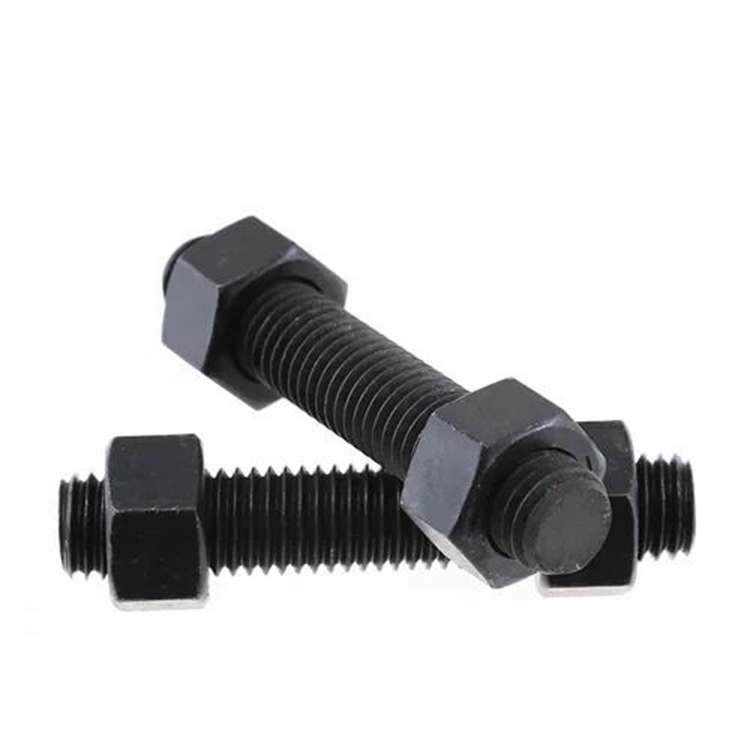
Round headed bolts are externally threaded fasteners distinguished by their hemispherical head. Positioned within the broader fastener industry, they represent a critical component in mechanical engineering, construction, and manufacturing. Unlike hexagonal head bolts which prioritize torque application, round head bolts are typically specified for applications where a flush or finished appearance is paramount, or where reduced head height is required. Their load-bearing capacity is dependent on material grade, thread pitch, and bolt diameter, aligning with standardized tensile strength classifications. Core performance characteristics include shear strength, tensile strength, proof load, and resistance to loosening under vibration. The industry faces challenges in ensuring consistent material quality, precise thread forming, and reliable corrosion protection, impacting long-term structural integrity and necessitating rigorous quality control measures throughout the manufacturing process.
Material Science & Manufacturing
Round headed bolts are commonly manufactured from carbon steels (grades 2, 5, 8), alloy steels (4140, 8640), and stainless steels (304, 316). The choice of material dictates mechanical properties and corrosion resistance. Carbon steels offer high strength at lower costs but are susceptible to corrosion. Alloy steels provide enhanced strength, toughness, and hardenability. Stainless steels deliver superior corrosion resistance, essential for outdoor or harsh environments. Raw material selection is crucial, verifying chemical composition through spectroscopic analysis and mechanical properties through tensile testing. Manufacturing typically involves cold heading, where a wire rod is upset into the desired shape under high pressure. This process improves grain structure and strength. Subsequent machining operations refine the head geometry and create the thread using rolling or cutting techniques. Thread rolling is preferred due to its superior surface finish and increased fatigue strength compared to thread cutting. Critical parameters include die angle, feed rate, and lubrication during thread formation. Heat treatment (quenching and tempering) is often applied to achieve the required hardness and ductility. Surface treatments like zinc plating, hot-dip galvanization, or passivation are used to enhance corrosion resistance, each impacting the long-term performance and lifespan of the fastener. Hydrogen embrittlement is a common concern during plating, requiring post-plating baking to remove residual hydrogen.
Performance & Engineering
The performance of round headed bolts is governed by several engineering principles. Force analysis involves calculating tensile stress (force/area) and shear stress (force/shear area) under load. Preload, the initial tension applied to the bolt during tightening, is critical for preventing loosening under vibration and ensuring joint integrity. The preload is determined by the bolt's proof load and influenced by tightening torque and friction between the bolt and nut. Environmental resistance is paramount, particularly in corrosive environments. Stainless steel grades are selected based on chloride content and temperature. Coatings provide a barrier against corrosion, but their effectiveness diminishes over time due to scratching or degradation. Finite Element Analysis (FEA) is frequently used to model stress distribution within the bolt and connected components, optimizing bolt size and material selection. Compliance requirements vary depending on the application. For structural applications, building codes (IBC, Eurocode) dictate bolt grades and installation procedures. Automotive applications require adherence to standards like IATF 16949, emphasizing quality control and traceability. The fatigue life of a round headed bolt is significantly impacted by cyclic loading, surface finish, and residual stress. Proper tightening procedures and regular inspection are crucial for mitigating fatigue failure.
Technical Specifications
| Diameter (mm) | Thread Pitch (mm) | Material Grade | Tensile Strength (MPa) |
|---|---|---|---|
| M6 | 1.0 | 8.8 | 800 |
| M8 | 1.25 | 10.9 | 1000 |
| M10 | 1.5 | A2-70 (304 SS) | 700 |
| M12 | 1.75 | A4-80 (316 SS) | 800 |
| M16 | 2.0 | 8.8 | 800 |
| M20 | 2.5 | 12.9 | 1200 |
Failure Mode & Maintenance
Round headed bolts are susceptible to several failure modes. Fatigue cracking initiates at stress concentrations, often at the thread root or under the head. Hydrogen embrittlement, particularly in high-strength bolts, can lead to brittle fracture. Corrosion, especially galvanic corrosion between dissimilar metals, weakens the bolt and connected components. Shear failure occurs when the shear stress exceeds the material's shear strength. Loosening under vibration is a common issue, exacerbated by insufficient preload or improper locking mechanisms. Failure analysis typically involves visual inspection for cracks, microscopic examination of fracture surfaces (using SEM), and chemical analysis to identify material defects. Maintenance procedures include regular visual inspection for corrosion, tightness checks using torque wrenches, and lubrication of threads to prevent galling. Replacement of corroded or damaged bolts is essential. The use of locking washers or thread-locking compounds can mitigate loosening under vibration. Implementing a preventative maintenance schedule based on operating conditions and criticality of the application is crucial for ensuring long-term reliability and preventing catastrophic failures.
Industry FAQ
Q: What is the impact of thread form on the fatigue life of a round headed bolt?
A: The thread form significantly influences fatigue life. A smoother thread surface, achieved through thread rolling, reduces stress concentrations and improves fatigue resistance compared to thread cutting. Additionally, the thread angle and root radius play a role; a larger root radius minimizes stress concentration at the thread root, enhancing fatigue performance.
Q: How does material ductility affect the performance of a round headed bolt in a dynamic loading scenario?
A: Higher material ductility allows the bolt to deform plastically under stress, absorbing energy and resisting crack propagation. This is particularly important in dynamic loading scenarios where the bolt is subjected to cyclic stress. Brittle materials, with low ductility, are more prone to sudden fracture.
Q: What are the key considerations when selecting a coating for a round headed bolt used in a marine environment?
A: In marine environments, resistance to saltwater corrosion is paramount. Hot-dip galvanization offers excellent protection but can be susceptible to white rust. Stainless steel (316) is a superior option, providing inherent corrosion resistance. Consider also the potential for galvanic corrosion if the bolt is used with dissimilar metals; sacrificial anodes may be necessary.
Q: How do tightening torque specifications relate to preload and clamp load?
A: Tightening torque is directly related to preload, but the relationship isn't linear due to friction between the bolt, nut, and bearing surfaces. Tightening torque specifications are typically calculated based on a target preload, considering the bolt's material, thread pitch, and coefficient of friction. Clamp load is the force exerted by the bolt on the connected components and is directly proportional to the preload.
Q: What is the role of non-destructive testing (NDT) in ensuring the quality of round headed bolts?
A: NDT methods, such as magnetic particle inspection (MPI) and ultrasonic testing (UT), are used to detect surface and subsurface defects (cracks, voids) without damaging the bolt. This is crucial for ensuring the structural integrity of critical applications, particularly in aerospace and automotive industries.
Conclusion
Round headed bolts, while seemingly simple fasteners, are critical components requiring careful consideration of material science, manufacturing processes, and engineering principles. Selecting the appropriate material grade, ensuring precise thread formation, and applying effective corrosion protection are essential for maximizing performance and longevity. The ongoing challenges of maintaining consistent quality, mitigating fatigue failure, and adapting to increasingly demanding application requirements necessitate continuous improvement in manufacturing techniques and quality control measures.
Ultimately, the successful application of round headed bolts hinges on a thorough understanding of their limitations and a commitment to proper installation and maintenance procedures. Adherence to relevant industry standards and the implementation of robust quality assurance protocols are vital for ensuring structural integrity and preventing catastrophic failures. Further research into advanced materials and coating technologies will continue to enhance the performance and durability of these essential fasteners.