
Introduction
Nuts and bolts are fundamental fastening components utilized across virtually all engineering disciplines. They represent a threaded fastener combination – the bolt possessing external threads and the nut possessing internal threads – that secures materials together through clamping force. Their technical position within the industrial chain is foundational; they enable the assembly of larger components and systems across automotive, aerospace, construction, machinery, and infrastructure sectors. Core performance characteristics encompass tensile strength, shear strength, proof load, yield strength, and fatigue resistance. A critical pain point in industry revolves around material traceability, ensuring consistency in mechanical properties, and preventing failures due to corrosion or material defects. The selection of appropriate nut and bolt materials and grades is paramount for structural integrity and long-term reliability, and frequently dictated by stringent industry regulations and application-specific demands.
Material Science & Manufacturing
Nuts and bolts are commonly manufactured from carbon steels, alloy steels, stainless steels, and brass. Carbon steel, particularly medium carbon steel (e.g., AISI 1045), is frequently used due to its balance of strength and cost-effectiveness. Alloy steels (e.g., 4140, 8640) offer enhanced strength, toughness, and hardenability, crucial for high-stress applications. Stainless steels (e.g., 304, 316) provide excellent corrosion resistance, vital in outdoor or chemically aggressive environments. Brass is used where corrosion resistance and ease of machining are priorities, albeit with lower strength.
Manufacturing processes typically begin with raw material selection and cold forming (heading) to create the initial bolt shape. This is followed by thread rolling, a process that cold-forms threads onto the bolt shank, improving strength by work hardening the material. Heat treatment – including hardening, tempering, and case hardening – is then applied to achieve the desired mechanical properties. Nuts are typically formed through cold heading and then threaded using a tapping process. Critical parameters include die and roll thread geometry, cooling rates during heat treatment (influencing martensite formation and retained austenite), and the control of surface finish (affecting friction coefficient and fatigue life). Surface treatments like zinc plating, black oxide, or phosphate coating are applied to enhance corrosion resistance. Quality control throughout each stage, involving dimensional checks, hardness testing (Rockwell, Vickers), and material composition analysis (spectroscopy), is essential.
Performance & Engineering
The performance of nuts and bolts is governed by several engineering principles. Force analysis focuses on tensile loading (pulling force), shear loading (sliding force), and combined loading. The clamping force generated by tightening a nut and bolt is crucial; it relies on the bolt's tensile strength and the nut's ability to resist loosening. Preload, the initial tension applied to the bolt, significantly impacts fatigue life and joint reliability. Environmental resistance is a key concern, particularly corrosion. Galvanic corrosion can occur when dissimilar metals are in contact in a corrosive environment. Fatigue failure is a common mode of failure in cyclically loaded applications.
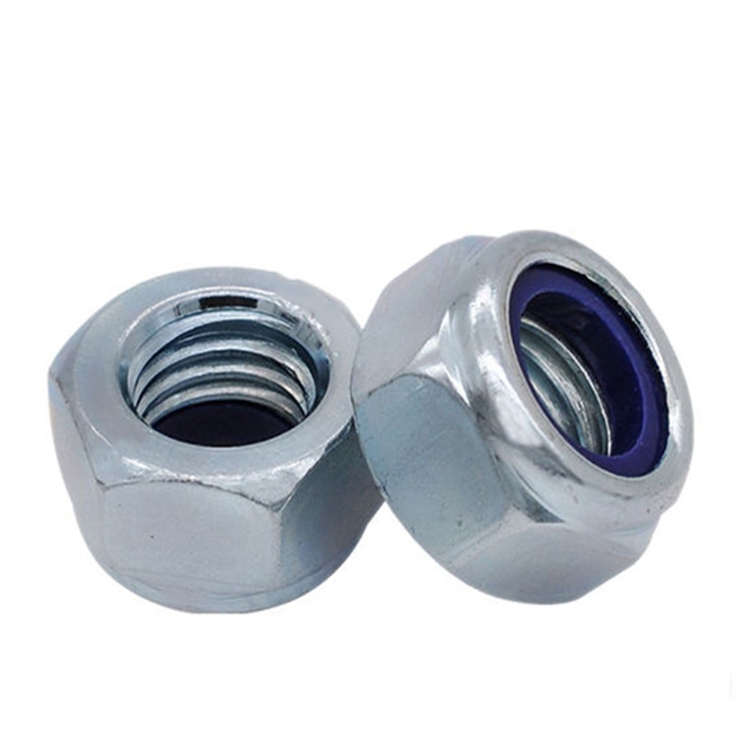
Compliance requirements vary depending on the industry and application. Aerospace applications demand adherence to standards like NASM (National Aerospace Standards) and AMS (Aerospace Material Specifications). Automotive applications follow standards set by SAE International and relevant OEM specifications. Construction applications are governed by ASTM standards and building codes. Detailed Finite Element Analysis (FEA) is often employed during the design phase to predict stress distribution, identify potential failure points, and optimize bolt and nut geometry for specific load scenarios. The selection of appropriate locking mechanisms (e.g., nylon insert lock nuts, castellated nuts with cotter pins) is crucial for preventing self-loosening, especially in vibration-prone environments.
Technical Specifications
| Grade | Tensile Strength (MPa) | Proof Load (MPa) | Hardness (Rockwell C) | Typical Material | Corrosion Resistance |
|---|---|---|---|---|---|
| 2 | 400-570 | 240 | 30-34 | Low Carbon Steel | Limited |
| 5 | 600-800 | 360 | 34-38 | Medium Carbon Steel | Moderate (with coating) |
| 8.8 | 800-1000 | 640 | 33-39 | Alloy Steel | Good (with coating) |
| 10.9 | 980-1200 | 830 | 37-41 | High Strength Alloy Steel | Good (with coating) |
| A2-70 | 700-800 | 500 | 25-31 | 304 Stainless Steel | Excellent |
| A4-80 | 800-1000 | 600 | 28-32 | 316 Stainless Steel | Superior |
Failure Mode & Maintenance
Common failure modes for nuts and bolts include stripping of threads, shear failure, tensile overload, fatigue cracking, and corrosion-induced failure. Stripping occurs when the threads are worn or deformed, reducing clamping force. Shear failure results from exceeding the bolt’s shear strength. Tensile overload happens when the applied tensile force surpasses the bolt’s ultimate tensile strength. Fatigue cracking initiates from stress concentrations (e.g., thread roots, bolt head) and propagates under cyclic loading. Corrosion, particularly galvanic corrosion or pitting corrosion, weakens the material and reduces its load-carrying capacity. Hydrogen embrittlement, caused by hydrogen diffusion into the steel lattice, can significantly reduce ductility and promote brittle fracture.
Maintenance strategies include regular visual inspections for signs of corrosion, loosening, or damage. Torque checks should be performed periodically to ensure adequate clamping force. Lubrication of threads reduces friction and prevents galling. In corrosive environments, protective coatings should be inspected and reapplied as needed. For critical applications, non-destructive testing methods like ultrasonic testing or magnetic particle inspection can be used to detect internal flaws. When replacing bolts or nuts, it's crucial to use components of the same grade and material to maintain joint integrity. Proper installation procedures, including correct torque application and the use of calibrated torque wrenches, are essential for preventing premature failure.
Industry FAQ
Q: What is the significance of bolt grade markings and how do I interpret them?
A: Bolt grade markings (e.g., 8.8, 10.9, A2-70) indicate the material’s tensile strength and yield strength. The first two or three digits represent the ultimate tensile strength in MPa divided by 100. The second digit (or the last two in the case of A2-70, A4-80) represents the percentage of the tensile strength that constitutes the proof load (yield strength). Higher grade markings denote stronger materials and greater load-carrying capacity.
Q: How does thread form impact the performance of a bolted joint?
A: Thread form significantly influences stress distribution and load-carrying capacity. Unified National Coarse (UNC) and Unified National Fine (UNF) are common thread standards. Finer threads generally offer greater strength and are less prone to loosening due to vibration, while coarser threads are more tolerant of damage and easier to assemble. The thread angle and pitch are also critical parameters affecting joint performance.
Q: What are the best practices for preventing corrosion in bolted joints exposed to saltwater?
A: For saltwater environments, stainless steel (316 is preferable to 304) is the most effective material. If carbon steel bolts are used, robust corrosion protection is essential. This includes hot-dip galvanizing, specialized coatings (e.g., zinc-nickel), and the use of corrosion inhibitors. Avoid using dissimilar metals in contact. Regular inspections and the application of protective greases are also critical.
Q: What is the role of preload in bolted joint design and how is it achieved?
A: Preload creates initial tension in the bolt, increasing the clamping force and improving joint resistance to vibration and fatigue. Achieving the correct preload is crucial. This is typically done using torque wrenches, calibrated to apply a specific torque value. Alternatively, methods like turn-of-nut tightening or ultrasonic bolt stretch measurement can be employed for more precise preload control.
Q: What should I consider when selecting a locking mechanism to prevent self-loosening?
A: The selection of a locking mechanism depends on the severity of the vibration environment and the criticality of the joint. Options include nylon insert lock nuts (prevents loosening through friction), castellated nuts with cotter pins (provides a positive lock), prevailing torque nuts (creates a frictional resistance to turning), and chemical locking compounds (bonds the threads together). The intended application and environmental factors will influence the best choice.
Conclusion
The selection and application of nuts and bolts are critical to the integrity and longevity of countless engineered systems. Understanding the interplay of material science, manufacturing processes, performance characteristics, and potential failure modes is paramount for engineers and procurement professionals alike. Proper material selection, appropriate heat treatment, and careful consideration of environmental factors are crucial for maximizing the performance and reliability of these fundamental fasteners.
Future advancements in nut and bolt technology focus on developing lighter-weight materials (e.g., titanium alloys, composites), incorporating smart fasteners with integrated sensors for real-time monitoring of preload and structural health, and exploring novel coating technologies for enhanced corrosion resistance. Continuous improvement in manufacturing processes and quality control procedures will further enhance the consistency and reliability of these essential components.