
Introduction
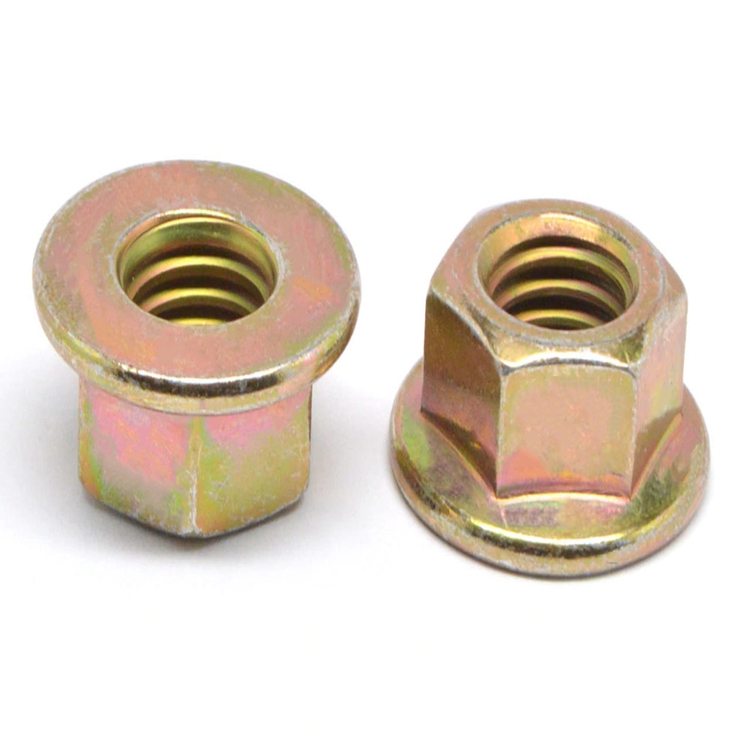
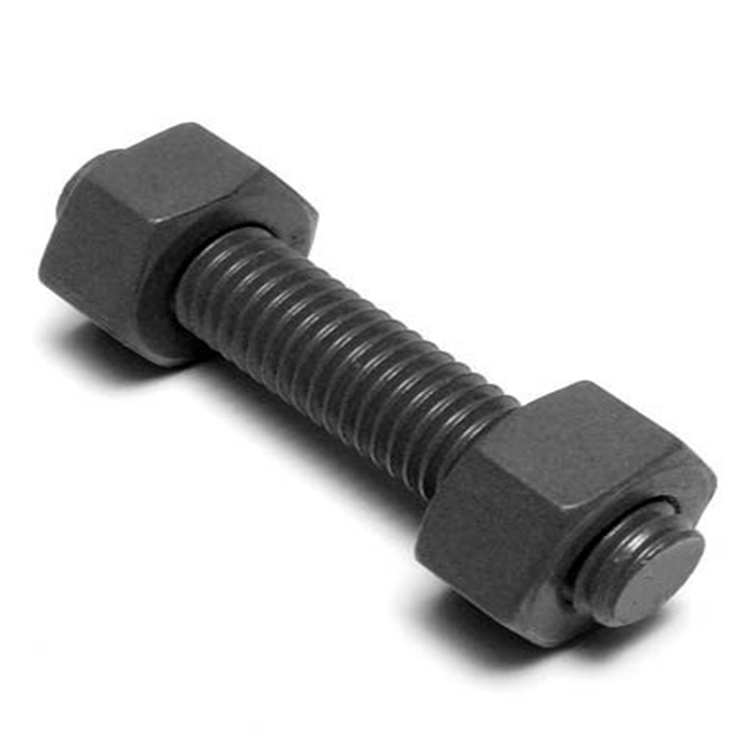
Metal spacers for bolts are cylindrical components positioned between a bolt head or nut and a surface to maintain precise spacing, distribute load, or prevent damage to the fastened materials. Serving as a critical element within bolted joint assemblies, these spacers are prevalent across diverse industries including automotive, aerospace, construction, and industrial machinery. Their function extends beyond simple gap filling; they contribute significantly to the overall integrity and longevity of mechanical connections. This guide provides a comprehensive technical overview of metal spacers for bolts, encompassing material science, manufacturing processes, performance characteristics, failure modes, and relevant industry standards. The core performance characteristics revolve around maintaining dimensional stability under load, resisting corrosion, and possessing appropriate mechanical properties to prevent deformation or failure during service.
Material Science & Manufacturing
The selection of materials for metal spacers is dictated by the application’s specific requirements, particularly concerning load bearing capacity, environmental resistance, and cost considerations. Common materials include carbon steel (ASTM A36, 1018), alloy steel (4140, 4340), stainless steel (304, 316), aluminum (6061-T6, 7075-T6), and brass. Carbon steel provides high strength at a relatively low cost but is susceptible to corrosion. Alloy steels offer increased strength and toughness. Stainless steels provide excellent corrosion resistance, critical in harsh environments. Aluminum offers a favorable strength-to-weight ratio, suitable for aerospace applications, while brass provides good conductivity and corrosion resistance.
Manufacturing processes vary depending on the spacer’s geometry, quantity, and material. Common methods include: Machining: Turning, milling, and drilling are employed for producing spacers with tight tolerances. Parameter control centers on cutting speed, feed rate, and coolant application to minimize dimensional errors and surface finish imperfections. Stamping: For high-volume production of simple spacer designs, stamping offers a cost-effective solution. Die design and material thickness are critical parameters. Cold Heading: Primarily used for steel spacers, cold heading involves plastically deforming a wire to the desired shape. Lubrication and forming pressure are key controls. Investment Casting: Enables the production of complex geometries and tight tolerances, particularly for stainless steel and alloy steel spacers. Shell material selection and burnout cycles are crucial. Extrusion: Used for producing spacers with constant cross-sections, particularly aluminum spacers. Extrusion ratio and die temperature are key control parameters.
Performance & Engineering
The performance of metal spacers is fundamentally linked to their ability to withstand compressive loads without deformation or failure. Force analysis focuses on determining the maximum allowable compressive stress based on the material’s yield strength and a suitable factor of safety. Buckling is a critical consideration for long, slender spacers; Euler’s buckling formula is used to assess stability under compressive load. Environmental resistance is paramount. Corrosion resistance is assessed using salt spray testing (ASTM B117) and electrochemical impedance spectroscopy (EIS). For elevated temperature applications, creep resistance and oxidation resistance are evaluated.
Compliance requirements often dictate material selection and manufacturing processes. For aerospace applications (FAA, EASA), material traceability and non-destructive testing (NDT) – such as ultrasonic inspection and radiography – are mandatory. Automotive applications (IATF 16949) demand stringent quality control and statistical process control (SPC). In industries dealing with corrosive environments (oil & gas, chemical processing), materials meeting NACE MR0175/ISO 15156 standards are often required. Finite element analysis (FEA) is used extensively to model the stress distribution within the spacer under various loading conditions, optimizing geometry and material selection.
Technical Specifications
| Material | Tensile Strength (MPa) | Yield Strength (MPa) | Hardness (Rockwell C) | Corrosion Resistance | Typical Applications |
|---|---|---|---|---|---|
| Carbon Steel (ASTM A36) | 400-550 | 250 | 60-70 | Low (requires coating) | General industrial machinery |
| Stainless Steel (304) | 500-700 | 205 | 60-85 | Excellent | Food processing, chemical environments |
| Aluminum (6061-T6) | 276-355 | 276 | 60-75 | Good | Aerospace, lightweight structures |
| Alloy Steel (4140) | 655-860 | 414 | 30-45 HRC | Moderate (requires coating) | High-strength fasteners, gears |
| Brass (C36000) | 400-450 | 250 | 70-85 | Good | Electrical connectors, decorative applications |
| Stainless Steel (316) | 585-790 | 248 | 85-100 | Superior (chloride resistance) | Marine applications, chemical processing |
Failure Mode & Maintenance
Common failure modes for metal spacers include: Fatigue Cracking: Repeated loading can initiate cracks, particularly at stress concentrations (e.g., edges, surface imperfections). Fatigue life is dependent on stress amplitude, material properties, and surface finish. Corrosion: Exposure to corrosive environments can lead to pitting, crevice corrosion, or galvanic corrosion, weakening the spacer. Yielding/Plastic Deformation: Exceeding the yield strength results in permanent deformation, compromising the spacer’s function. Buckling: Slender spacers under compressive load can buckle, leading to instability and failure. Thread Stripping (if threaded): If the spacer has threaded features, thread stripping can occur due to excessive torque or improper installation.
Maintenance strategies involve: Regular Inspection: Visual inspection for signs of corrosion, cracking, or deformation. Torque Verification: Ensuring that bolted joints are tightened to the correct torque specification. Protective Coatings: Applying coatings (e.g., zinc plating, powder coating) to enhance corrosion resistance. Lubrication: Applying lubricant to reduce friction and prevent galling. Replacement: Replacing spacers showing signs of significant damage or corrosion. NDT methods (e.g., dye penetrant testing, magnetic particle inspection) can be used to detect subsurface cracks.
Industry FAQ
Q: What material is best suited for a metal spacer in a high-temperature, corrosive environment?
A: For high-temperature corrosive environments, stainless steel 316 is generally the most suitable material. It offers superior resistance to oxidation and chloride-induced pitting compared to 304 stainless steel or carbon steel. Nickel-based alloys like Inconel may be considered for extremely severe conditions, but come at a significantly higher cost.
Q: How does the length-to-diameter ratio affect the buckling resistance of a metal spacer?
A: A higher length-to-diameter ratio significantly reduces the buckling resistance. As the spacer becomes longer and thinner, it becomes more susceptible to buckling under compressive load. Engineering calculations using Euler’s buckling formula are crucial to determine a safe length-to-diameter ratio for a given application and material.
Q: What is the role of surface finish on the fatigue life of a metal spacer?
A: Surface finish plays a critical role in fatigue life. Rough surfaces contain stress concentrations that act as initiation sites for fatigue cracks. Polishing or shot peening can improve surface finish and increase fatigue resistance by introducing compressive residual stresses.
Q: What non-destructive testing (NDT) methods are commonly used to inspect metal spacers?
A: Common NDT methods include dye penetrant testing (PT) to detect surface cracks, magnetic particle inspection (MPI) for ferromagnetic materials, and ultrasonic testing (UT) to detect subsurface flaws. Radiographic testing (RT) may be used for critical applications requiring a thorough inspection of the entire spacer volume.
Q: How important is material traceability for metal spacers used in aerospace applications?
A: Material traceability is of paramount importance in aerospace applications. Regulations require complete documentation of the material’s origin, manufacturing process, and quality control data to ensure compliance with stringent safety standards. This traceability allows for identification and resolution of any potential material-related issues.
Conclusion
Metal spacers for bolts are deceptively simple components with a critical role in ensuring the reliability and longevity of bolted joint assemblies. The appropriate selection of material, manufacturing process, and dimensional specifications is crucial to meet the demands of the specific application, considering factors such as load-bearing capacity, environmental resistance, and compliance requirements. Understanding the potential failure modes and implementing appropriate maintenance strategies is essential for preventing premature failure and maintaining structural integrity.
Future advancements in spacer technology may focus on the development of self-lubricating materials, advanced coatings with enhanced corrosion resistance, and the integration of sensors for real-time monitoring of stress and deformation. These innovations will further enhance the performance and reliability of bolted connections across various industries.