
Introduction
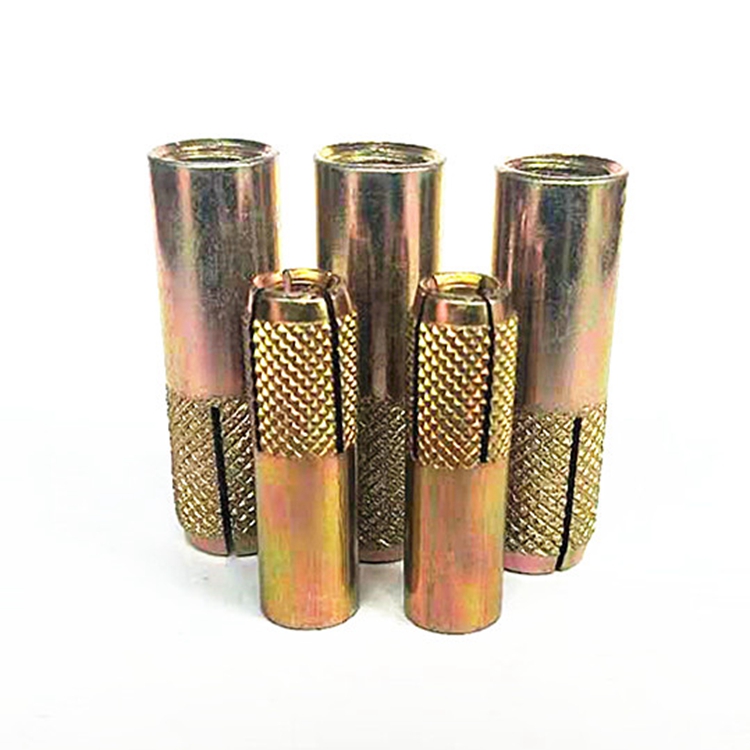
Metal anchor bolts are critical fastening components utilized extensively in construction, civil engineering, and industrial applications to securely attach structural and non-structural elements to concrete, brick, or other base materials. Their technical position lies within the broader realm of structural connectors, functioning as a key interface between applied loads and the substrate. These bolts transfer tensile, shear, and bending forces, ensuring the stability and integrity of assembled structures. Core performance metrics center around tensile strength, shear strength, embedment depth, and corrosion resistance. The selection of the appropriate anchor bolt type – expansion, undercut, chemical, or cast-in-place – is dependent upon specific load requirements, substrate conditions, and environmental exposure. The industry frequently faces challenges related to accurate load assessment, ensuring proper installation torque, and mitigating the risk of concrete cracking or spalling. A thorough understanding of material properties and installation procedures is paramount for safe and reliable performance.
Material Science & Manufacturing
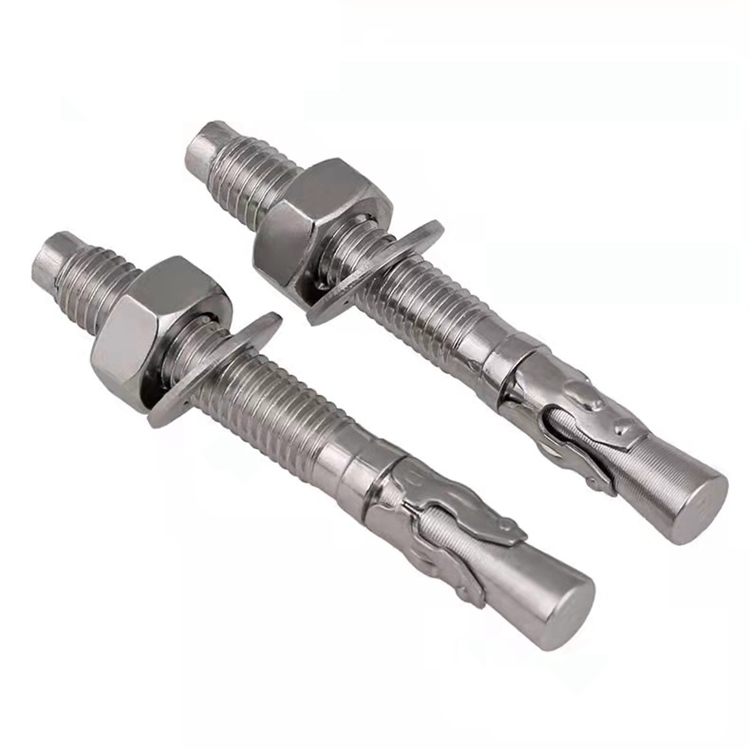
Anchor bolts are commonly manufactured from carbon steel (grades A36, A572), alloy steel, stainless steel (304, 316), and occasionally galvanized steel for corrosion protection. Carbon steel offers high tensile strength at a relatively low cost but is susceptible to corrosion. Stainless steel provides superior corrosion resistance, particularly in harsh environments, but is more expensive and may exhibit lower yield strength compared to some high-strength carbon steels. Alloy steels offer a balance of strength and corrosion resistance tailored to specific applications. The manufacturing process typically involves cold heading, machining, and threading. Cold heading increases the strength of the bolt through work hardening. Thread rolling, rather than cutting threads, maintains the grain structure of the metal, resulting in a stronger thread form. Critical parameters during manufacturing include precise dimensional control of the bolt diameter, thread pitch, and embedment length. Heat treatment, such as quenching and tempering, is employed to achieve desired mechanical properties. Galvanization involves immersing the steel in molten zinc, providing a sacrificial coating that protects against corrosion. Failure to maintain precise control over these parameters can lead to reduced load-carrying capacity and premature failure. The quality of the raw material, specifically the steel’s chemical composition and microstructure, directly impacts the anchor bolt’s performance and long-term durability. Furthermore, hydrogen embrittlement can be a concern during galvanization, requiring post-treatment processes like baking to remove residual hydrogen.
Performance & Engineering
The performance of metal anchor bolts is fundamentally governed by force analysis, specifically tensile, shear, and combined loading conditions. Tensile capacity is determined by the bolt’s material strength, thread area, and embedment depth. Shear capacity depends on the bolt diameter, steel grade, and the concrete breakout strength. Combined loading, accounting for both tension and shear, requires utilizing interaction equations specified in governing building codes (ACI 318 in the US, Eurocode 2 in Europe). Environmental resistance is paramount, particularly concerning corrosion. Chloride exposure, prevalent in marine environments or de-icing salt applications, accelerates corrosion of carbon steel anchor bolts. Stainless steel alloys, particularly 316, offer improved resistance to chloride-induced corrosion. Compliance requirements are dictated by building codes and industry standards, mandating specific testing protocols and quality control measures. Engineering considerations include determining the appropriate anchor bolt spacing to prevent concrete cone failure, accounting for edge distances to minimize splitting, and specifying appropriate installation torque to ensure adequate clamping force without damaging the concrete. Finite element analysis (FEA) is frequently employed to model the behavior of anchor bolts under complex loading conditions and to optimize their design. Consideration must be given to dynamic loads, such as those induced by wind or seismic events, which can significantly increase stress on the anchor bolts.
Technical Specifications
| Anchor Bolt Type | Material Grade | Tensile Strength (MPa) | Shear Strength (MPa) |
|---|---|---|---|
| Expansion Anchor | Grade A36 Carbon Steel | 400 | 250 |
| Chemical Anchor | Grade 5.8 Alloy Steel | 600 | 350 |
| Undercut Anchor | 304 Stainless Steel | 500 | 200 |
| Cast-in-Place Anchor | Grade A572 Carbon Steel | 550 | 300 |
| Galvanized Wedge Anchor | Grade A36 Carbon Steel | 400 | 250 |
| Sleeve Anchor | Grade 8.8 Alloy Steel | 800 | 500 |
Failure Mode & Maintenance
Metal anchor bolts are susceptible to several failure modes. Fatigue cracking can occur under cyclic loading, initiated by stress concentrations at the threads or embedment interface. Corrosion is a significant contributor to failure, particularly in aggressive environments, leading to a reduction in cross-sectional area and ultimately, tensile failure. Concrete cracking or spalling around the anchor bolt can reduce its effective embedment depth and load-carrying capacity. Hydrogen embrittlement, as previously mentioned, can lead to brittle fracture in high-strength steel bolts. Thread stripping can occur if the installation torque is excessive, damaging the threads of either the bolt or the embedded nut. Delamination of concrete cover can expose the anchor bolt to corrosive elements, accelerating the degradation process. Oxidation of the steel surface leads to a gradual loss of material. Preventive maintenance involves regular inspection for signs of corrosion, cracking, or concrete deterioration. Corrosion protection measures, such as applying protective coatings or using stainless steel anchors in corrosive environments, are essential. Proper installation, adhering to manufacturer’s specifications for torque and embedment depth, is crucial. If cracking or spalling is detected, the anchor bolt may need to be replaced or supplemented with additional anchors. Periodic re-tightening of the bolt, if possible, can maintain clamping force and prevent loosening. A comprehensive failure analysis, including metallographic examination and chemical analysis, may be necessary to determine the root cause of a failure and prevent recurrence.
Industry FAQ
Q: What is the impact of concrete compressive strength on anchor bolt capacity?
A: Concrete compressive strength (f'c) directly influences the concrete breakout strength in shear and tension. Higher f'c values generally result in increased anchor bolt capacity, as the concrete can withstand greater stress before fracturing. However, this relationship is not linear, and building codes specify equations that account for the non-linear behavior. Lower f'c values require larger embedment depths or the use of chemical anchors to achieve the same load capacity.
Q: How does the embedment depth affect the tensile capacity of an anchor bolt?
A: Increased embedment depth generally increases the tensile capacity of an anchor bolt, up to a certain point. This is because a longer embedment length provides a larger steel area resisting tension and increases the friction between the bolt and the concrete. However, excessively deep embedment can lead to splitting of the concrete, especially near edges. Building codes specify minimum and maximum embedment depths to ensure optimal performance and prevent concrete failure.
Q: What are the advantages and disadvantages of chemical anchors versus mechanical expansion anchors?
A: Chemical anchors offer higher load-carrying capacity and are suitable for applications with reduced edge distances or cracked concrete. They distribute the load over a larger area of the concrete. However, they have a longer installation time and are sensitive to temperature and humidity during curing. Mechanical expansion anchors are faster to install and less sensitive to environmental conditions but offer lower load capacity and can induce tensile stresses in the concrete, potentially causing cracking.
Q: What is the importance of proper installation torque for anchor bolts?
A: Proper installation torque is critical for achieving the specified clamping force between the anchor bolt and the substrate. Insufficient torque can lead to loosening of the bolt and reduced load-carrying capacity. Excessive torque can strip the threads or damage the concrete. Manufacturers provide torque specifications that must be strictly adhered to. Torque wrenches and calibrated installation tools should be used to ensure accurate torque application.
Q: How can I prevent corrosion of carbon steel anchor bolts in a marine environment?
A: In marine environments, using stainless steel (316) anchor bolts is highly recommended due to their superior corrosion resistance. Alternatively, carbon steel bolts can be hot-dip galvanized with a thick coating, followed by a supplemental coating such as epoxy or polyurethane. Regularly inspecting the anchor bolts for signs of corrosion and applying protective coatings as needed is also crucial. Sacrificial anodes can be used to provide cathodic protection in highly corrosive environments.
Conclusion
Metal anchor bolts remain a foundational element in modern construction and industrial infrastructure. Their proper selection, installation, and maintenance are critical for ensuring structural integrity and long-term performance. A deep understanding of material science, manufacturing processes, and engineering principles is paramount for mitigating failure risks and maximizing the reliability of these essential fastening components. The inherent challenges of load assessment, environmental degradation, and concrete interaction necessitate a rigorous approach to design and quality control.
Future advancements in anchor bolt technology are likely to focus on developing corrosion-resistant materials, improving installation techniques, and incorporating smart monitoring systems for real-time performance assessment. The adoption of digital twins and predictive maintenance strategies will further enhance the safety and efficiency of structures relying on these critical fasteners. Continued research into concrete-anchor interactions and the development of more accurate analysis tools will be essential for optimizing anchor bolt designs and ensuring their long-term durability.