
Introduction
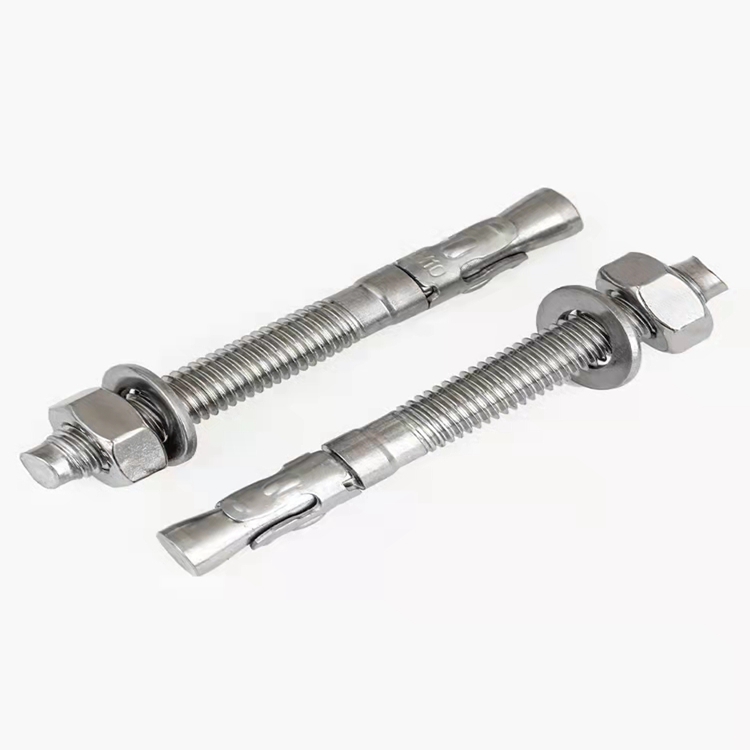
M7 bolts represent a standardized fastener commonly employed in a diverse range of industrial applications, spanning automotive assembly, machinery construction, and structural engineering. Classified under the metric fastener system, the ‘M7’ designation indicates a nominal diameter of 7 millimeters. Their primary function is to securely join materials by creating a clamping force when tightened. This technical guide provides an in-depth examination of M7 bolts, covering material science, manufacturing processes, performance characteristics, potential failure modes, and relevant industry standards. The increasing demand for lightweighting and high-strength joining solutions drives continuous optimization of M7 bolt design and material selection, particularly within the automotive and aerospace sectors. A core industry pain point lies in ensuring consistent quality control to prevent premature failure due to factors like hydrogen embrittlement, thread stripping, and fatigue cracking, impacting both operational safety and long-term maintenance costs.
Material Science & Manufacturing
M7 bolts are typically manufactured from carbon steel, alloy steel, or stainless steel, with material selection dictated by the intended application and environmental conditions. Carbon steel (e.g., SAE 1045) offers a balance of strength and cost-effectiveness, frequently utilized in general-purpose applications. Alloy steels, such as 4140 or 8.8/10.9 grade steels, incorporate alloying elements like chromium, molybdenum, and manganese to enhance mechanical properties, including tensile strength, yield strength, and toughness. Stainless steels (e.g., 304, 316) provide superior corrosion resistance, making them ideal for outdoor or corrosive environments. The manufacturing process commonly involves cold heading, a process where a wire rod is fed into a die and shaped by compressive forces. This process improves the grain structure, increasing the bolt's strength. Following cold heading, bolts undergo thread rolling, a process that forms the threads without material removal, further enhancing strength and surface finish. Heat treatment, including quenching and tempering, is crucial for achieving the desired mechanical properties. Precise control of temperature and cooling rates is essential to avoid distortion and ensure consistent hardness. Surface treatments like zinc plating or black oxide coating are often applied to enhance corrosion resistance. Key parameter control during manufacturing includes die geometry, rolling pressure, heat treatment temperatures, and coating thickness, all directly influencing the final product's performance and reliability.
Performance & Engineering
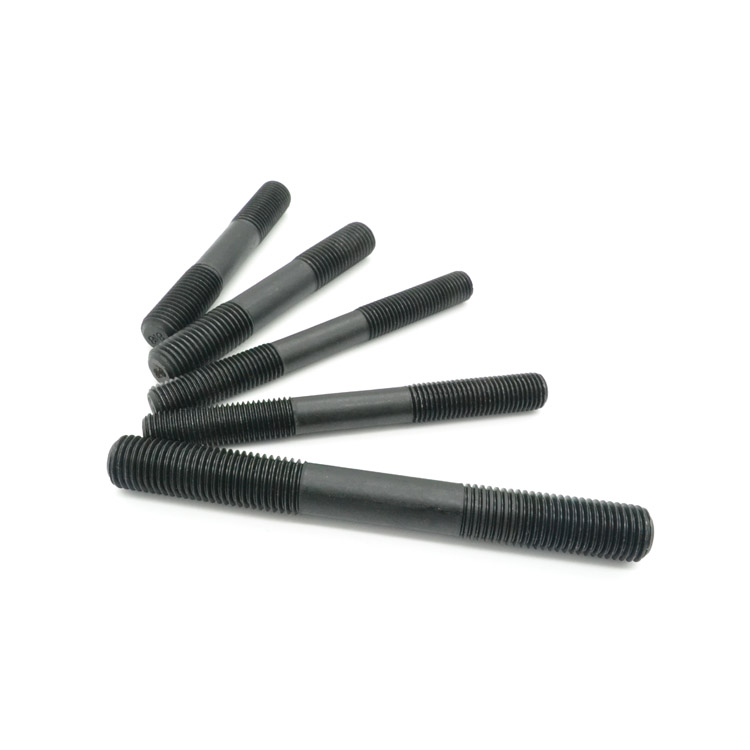
The performance of an M7 bolt is fundamentally governed by its tensile strength, yield strength, shear strength, and fatigue resistance. Tensile strength, the maximum stress the bolt can withstand before fracturing, is typically in the range of 800-1200 MPa depending on the material grade. Yield strength, the stress at which the bolt begins to deform permanently, is a critical parameter for maintaining clamping force under load. Shear strength, the bolt's resistance to forces acting parallel to its axis, is vital in applications involving sliding or angular loads. Fatigue resistance, the bolt’s ability to withstand repeated loading cycles, is particularly important in dynamic applications like automotive engines or vibrating machinery. Force analysis involves calculating the clamping force generated by tightening the bolt, considering factors such as bolt tension, friction coefficient between threads, and applied torque. Environmental resistance is a significant concern, particularly in corrosive environments. Galvanic corrosion can occur when dissimilar metals are in contact, requiring careful material selection and the use of compatible coatings. Compliance requirements are often dictated by industry-specific standards, such as ISO 898-1 for mechanical properties of fasteners, and RoHS (Restriction of Hazardous Substances) for material composition. Functional implementation necessitates selecting the appropriate bolt length, considering the thickness of the materials being joined and the need for adequate thread engagement. Proper tightening torque is critical to achieve the desired clamping force without exceeding the bolt's yield strength.
Technical Specifications
| Property | Grade 8.8 (Typical) | Grade 10.9 (Typical) | A2 Stainless Steel (Typical) | Unit |
|---|---|---|---|---|
| Tensile Strength | 800 | 1000 | 700 | MPa |
| Yield Strength | 640 | 900 | 210 | MPa |
| Hardness (HV) | 300-340 | 330-380 | 190-250 | |
| Nominal Diameter | 7 | 7 | 7 | mm |
| Thread Pitch | 1.0 | 1.0 | 1.0 | mm |
| Material | Medium Carbon Steel | High-Strength Alloy Steel | Austenitic Stainless Steel |
Failure Mode & Maintenance
M7 bolts are susceptible to various failure modes, including fatigue cracking, thread stripping, hydrogen embrittlement, and corrosion. Fatigue cracking occurs under cyclic loading, initiating at stress concentrations such as thread roots or bolt head corners. Thread stripping results from exceeding the shear stress capacity of the threads, often due to improper tightening or excessive load. Hydrogen embrittlement, particularly prevalent in high-strength steels, occurs when hydrogen atoms diffuse into the metal lattice, reducing ductility and promoting brittle fracture. Corrosion, whether uniform or localized (pitting, crevice corrosion), weakens the bolt material and reduces its load-carrying capacity. Failure analysis involves examining the fracture surface using techniques like scanning electron microscopy (SEM) to identify the failure mechanism. Maintenance strategies include regular inspection for signs of corrosion or damage, proper lubrication of threads to reduce friction and prevent galling, and adherence to recommended tightening torques. Preventative measures involve selecting appropriate materials for the operating environment, applying protective coatings, and implementing a torque control program. Periodic re-tightening may be necessary to compensate for stress relaxation and maintain clamping force. In critical applications, non-destructive testing methods such as ultrasonic testing or magnetic particle inspection can be employed to detect internal flaws or cracks.
Industry FAQ
Q: What is the impact of thread engagement length on the shear strength of an M7 bolt?
A: Thread engagement length is directly proportional to shear strength. Greater engagement provides a larger shear area, increasing the bolt’s resistance to shear forces. Insufficient engagement can lead to thread stripping, particularly under dynamic loading. A minimum engagement length of at least one diameter is generally recommended, but ideally, 1.5 to 2 diameters for critical applications.
Q: How does heat treatment affect the fatigue life of an M7 bolt?
A: Heat treatment significantly influences fatigue life. Proper quenching and tempering create compressive residual stresses near the surface, which inhibit crack initiation and propagation. Inadequate heat treatment can result in residual tensile stresses, reducing fatigue resistance. Careful control of heat treatment parameters is crucial for optimizing fatigue performance.
Q: What are the considerations for selecting an M7 bolt material in a saltwater environment?
A: In saltwater environments, corrosion resistance is paramount. Austenitic stainless steels (e.g., 316) are preferred due to their superior resistance to chloride attack. Alternatively, carbon steel bolts can be used with robust protective coatings such as hot-dip galvanizing or specialized marine-grade coatings. Regular inspection and maintenance are essential to prevent corrosion-related failure.
Q: What torque control methods are most effective for ensuring consistent clamping force in M7 bolts?
A: Torque control methods include using calibrated torque wrenches, torque multipliers, and controlled tightening systems. Torque-angle tightening, where the bolt is tightened to a specific torque and then rotated by a specified angle, is a more precise method that accounts for variations in friction and thread condition. Digital torque wrenches with data logging capabilities provide traceability and facilitate quality control.
Q: What are the potential consequences of using an M7 bolt with an incorrect material grade for a specific application?
A: Using an incorrect material grade can have severe consequences. An under-graded bolt may fail prematurely due to insufficient strength, leading to structural failure or component malfunction. An over-graded bolt may be unnecessarily expensive and could potentially lead to galvanic corrosion if used with dissimilar metals. Always verify the material grade against the application requirements.
Conclusion
M7 bolts represent a fundamental fastening element, critically reliant on precise material selection, manufacturing control, and appropriate application engineering. Understanding the interplay between material properties, mechanical stresses, and environmental factors is essential for ensuring long-term reliability and preventing premature failure. Consistent quality control throughout the manufacturing process, coupled with adherence to industry standards, is paramount for mitigating the risks associated with fatigue, corrosion, and thread stripping.
The continued drive towards lightweighting and increased performance in various industries necessitates ongoing research and development in M7 bolt technology, focusing on advanced materials, innovative coating techniques, and optimized tightening strategies. Implementing comprehensive preventative maintenance programs, including regular inspections and torque verification, will further enhance the safety and longevity of bolted joints.