
Introduction
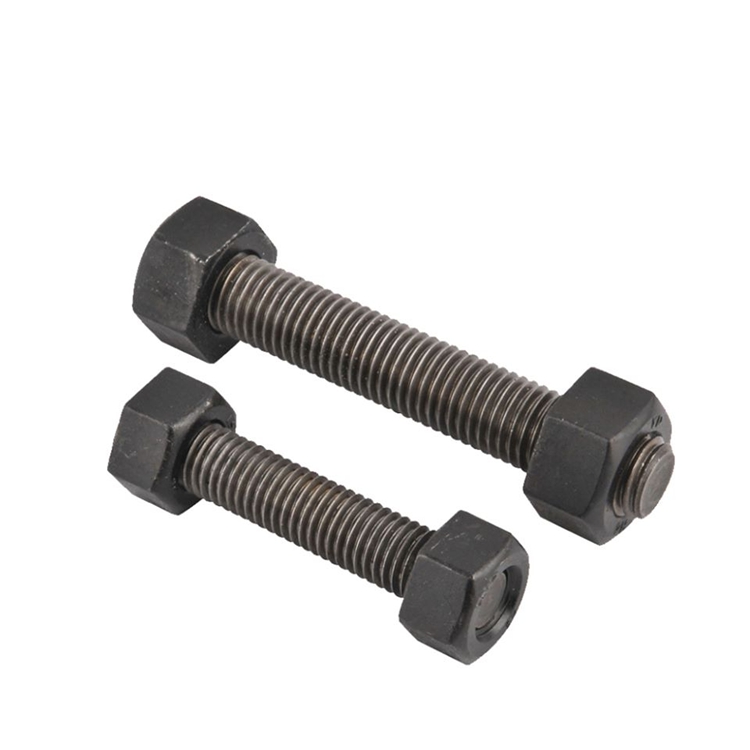
Long U-bolts are a fundamental fastening component utilized across a diverse range of industrial applications, primarily for securing pipes, tubing, and other cylindrical objects to supports. Their inherent design, characterized by a U-shaped bolt with threaded ends, provides a robust and reliable clamping force. Within the broader fastener industry, long U-bolts represent a specialized subset, often engineered for heavier-duty applications demanding increased tensile strength and resistance to environmental factors. Their core performance attributes – load capacity, corrosion resistance, and dimensional accuracy – directly impact the structural integrity and operational lifespan of the systems they support. This guide provides a comprehensive technical overview of long U-bolts, encompassing material science, manufacturing processes, performance characteristics, failure modes, and relevant industry standards.
Material Science & Manufacturing
Long U-bolts are typically manufactured from medium to high carbon steel alloys (e.g., ASTM A490, Grade 8), alloy steels (e.g., 4140, 4340), or stainless steel (e.g., 304, 316) depending on the application's environmental and load requirements. Carbon steel offers high strength and is cost-effective but susceptible to corrosion. Alloy steels provide enhanced strength, toughness, and hardenability. Stainless steel delivers superior corrosion resistance but generally lower tensile strength compared to carbon or alloy steels. The manufacturing process typically begins with hot forging or cold heading to form the U-shape. Hot forging is preferred for larger diameter bolts, enabling better grain flow and improved strength. Cold heading is suitable for smaller sizes and provides higher dimensional accuracy and surface finish. Following forming, the bolt undergoes threading, usually via a rolling process to enhance thread strength and reduce stress concentrations. Heat treatment – quenching and tempering – is crucial to achieving the desired mechanical properties, controlling hardness, ductility, and tensile strength. Plating (e.g., zinc, cadmium, PTFE) or coating (e.g., epoxy, Xylan) is often applied to enhance corrosion resistance. Critical parameters controlled during manufacturing include alloy composition, forging temperature, quenching medium, tempering temperature, thread pitch, and coating thickness. Material traceability and non-destructive testing (NDT) – such as magnetic particle inspection (MPI) or ultrasonic testing – are essential for ensuring product quality and identifying potential defects like cracks or inclusions.
Performance & Engineering
The performance of a long U-bolt is primarily governed by its tensile strength, yield strength, shear strength, and fatigue resistance. Tensile strength represents the maximum stress the bolt can withstand before fracturing under a pulling force. Yield strength defines the stress at which permanent deformation begins. Shear strength indicates the bolt’s resistance to forces acting parallel to its cross-section. Fatigue resistance determines its ability to withstand repeated cyclic loading without failure. Engineering calculations for U-bolt applications must consider the applied load, the diameter of the secured object, the center-to-center distance between support points, and the bolt material’s properties. Finite Element Analysis (FEA) is frequently employed to simulate stress distribution and optimize bolt design for specific applications. Environmental factors – temperature, humidity, and exposure to corrosive substances – significantly impact performance. Higher temperatures generally reduce tensile strength and yield strength. Corrosion can lead to pitting, stress corrosion cracking, and eventual failure. U-bolts used in critical applications, such as those supporting pressurized pipelines or structural components, must adhere to stringent compliance requirements specified by governing codes and standards (e.g., ASME, API). Proper installation torque is vital; over-tightening can induce stress concentrations and lead to premature failure, while under-tightening can compromise the clamping force and result in loosening. Creep, the time-dependent deformation under sustained load, is a potential concern in high-temperature applications and should be accounted for in the design process.
Technical Specifications
| Material Grade | Tensile Strength (MPa) | Yield Strength (MPa) | Hardness (Rockwell C) |
|---|---|---|---|
| ASTM A490 | 860-1000 | 720-890 | 32-38 |
| 4140 Alloy Steel | 750-950 | 650-800 | 28-36 |
| 304 Stainless Steel | 517-724 | 276-414 | 20-30 |
| 316 Stainless Steel | 586-862 | 310-517 | 25-35 |
| UNC 2A Thread Class | N/A | N/A | N/A |
| Coating (Zinc Plating) | N/A | N/A | N/A |
Failure Mode & Maintenance
Long U-bolts are susceptible to several failure modes. Fatigue cracking, induced by cyclical loading, is a common occurrence, initiating at stress concentration points such as thread roots or under the bolt head. Corrosion, particularly in marine or industrial environments, can lead to pitting, crevice corrosion, and stress corrosion cracking, weakening the bolt and reducing its load-carrying capacity. Hydrogen embrittlement, a phenomenon where hydrogen atoms diffuse into the steel, can drastically reduce ductility and cause brittle fracture. Overloading, exceeding the bolt’s tensile or shear strength, results in immediate fracture. Improper installation, such as cross-threading or insufficient torque, can damage the threads and compromise the clamping force. Maintenance involves regular visual inspection for signs of corrosion, cracking, or deformation. Torque checks should be performed periodically to ensure adequate clamping force. Lubrication of threads, using anti-seize compounds, can prevent galling and facilitate disassembly. If corrosion is detected, the bolt should be replaced. For critical applications, non-destructive testing (NDT) – such as dye penetrant inspection or ultrasonic testing – can identify subsurface cracks and defects. When replacing a U-bolt, it is essential to use a bolt of the same material grade and dimensions to maintain the original design safety factor. Preventative maintenance schedules should be established based on the operating environment and application severity.
Industry FAQ
Q: What is the impact of thread quality on the overall performance of a long U-bolt?
A: Thread quality is paramount. Poorly formed or damaged threads significantly reduce the effective load-bearing area, increasing stress concentration and promoting fatigue failure. Using the correct thread class (e.g., UNC 2A) and ensuring proper thread engagement are critical. Rolling threads are preferred over cut threads, as they exhibit higher tensile strength and fatigue resistance due to work hardening.
Q: How do you select the appropriate material for a long U-bolt in a corrosive environment?
A: Material selection depends on the specific corrosive agent and its concentration. For mild corrosion, zinc plating or epoxy coating may suffice. However, in highly corrosive environments (e.g., saltwater, chemical processing), stainless steel (316 is preferred over 304 due to its molybdenum content, which enhances corrosion resistance) or specialty alloys like Hastelloy are necessary. Consider galvanic corrosion when using dissimilar metals – a sacrificial anode may be required.
Q: What is the role of heat treatment in improving the mechanical properties of a long U-bolt?
A: Heat treatment – specifically quenching and tempering – is crucial for achieving the desired hardness, tensile strength, and ductility. Quenching hardens the steel, while tempering reduces brittleness and improves toughness. Proper control of temperature and cooling rates is essential to avoid distortion or cracking. Heat treatment also relieves internal stresses induced during forging or cold heading.
Q: What are the considerations when specifying a long U-bolt for a dynamic application involving vibration?
A: Dynamic applications require careful consideration of fatigue resistance and locking mechanisms. U-bolts with prevailing torque nuts (e.g., nylon insert lock nuts) or locking washers should be used to prevent loosening due to vibration. The material should have high fatigue strength. Regular inspection and re-torqueing are also essential.
Q: What is the significance of dimensional tolerances on long U-bolts?
A: Dimensional tolerances directly impact the clamping force and fit within the assembly. Tight tolerances ensure proper alignment and prevent stress concentrations. Looser tolerances can lead to uneven loading and premature failure. Critical dimensions, such as the inside diameter of the U-shape and the length of the threaded portion, require precise control.
Conclusion
Long U-bolts, while seemingly simple fasteners, are critical components demanding careful consideration of material selection, manufacturing processes, and engineering principles. Their performance is inextricably linked to the integrity of the systems they support, making a thorough understanding of their properties and potential failure modes essential for engineers and procurement professionals. Appropriate material grades, heat treatment, and surface coatings are crucial for ensuring adequate strength and corrosion resistance.
Future trends in long U-bolt technology will likely focus on advanced materials – such as high-strength low-alloy steels and titanium alloys – to further enhance performance and reduce weight. The integration of smart fasteners with embedded sensors to monitor load and detect corrosion is also a promising area of development. Adherence to established industry standards and rigorous quality control procedures remain paramount for ensuring the long-term reliability and safety of these vital fastening components.