
Introduction
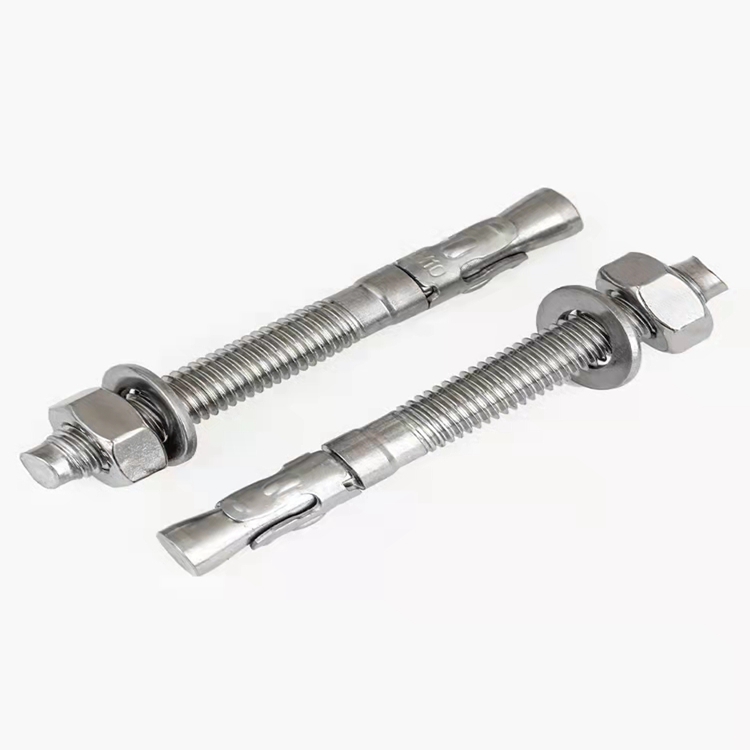
Long nuts and bolts are externally threaded fasteners distinguished by their extended length relative to diameter. They represent a fundamental component in mechanical engineering, utilized across diverse industrial sectors, including construction, automotive, aerospace, and manufacturing. Their primary function is to securely join materials, resisting tensile, shear, and vibrational forces. Within the fastening industry chain, they occupy a critical position, often specifying the load-bearing capacity and overall structural integrity of assembled systems. Core performance characteristics encompass tensile strength, yield strength, proof load, and corrosion resistance, directly impacting the reliability and longevity of the fastened joint. The selection criteria frequently center on material compatibility, applied load, and operational environment.
Material Science & Manufacturing
The dominant material for long nuts and bolts is carbon steel, offering a balance of strength and cost-effectiveness. Specific steel alloys, such as AISI 1045, 4140, and 8.8/10.9/12.9 grade steels are common, each exhibiting differing mechanical properties. Stainless steels (304, 316) are employed in corrosive environments, leveraging their chromium content to form a passive oxide layer. Alloy steels incorporating molybdenum, chromium, and nickel enhance strength, toughness, and resistance to creep at elevated temperatures. The manufacturing process typically begins with raw material in the form of wire rod. This undergoes cold heading or hot forging to form the bolt and nut blanks. Cold heading provides superior surface finish and dimensional accuracy, while hot forging is suitable for larger sizes and higher strength grades. Subsequent thread rolling creates the helical threads, inducing compressive stresses that enhance fatigue life. Heat treatment, including hardening, tempering, and case hardening, is crucial for achieving the desired mechanical properties. Surface treatments like zinc plating, hot-dip galvanization, and black oxide provide corrosion protection. Critical parameters during manufacturing include die alignment during thread rolling, quenching media and temperature control during heat treatment, and coating thickness uniformity. Chemical composition is verified through spectroscopic analysis, while mechanical properties are assessed via tensile testing, hardness testing, and microstructural examination.
Performance & Engineering
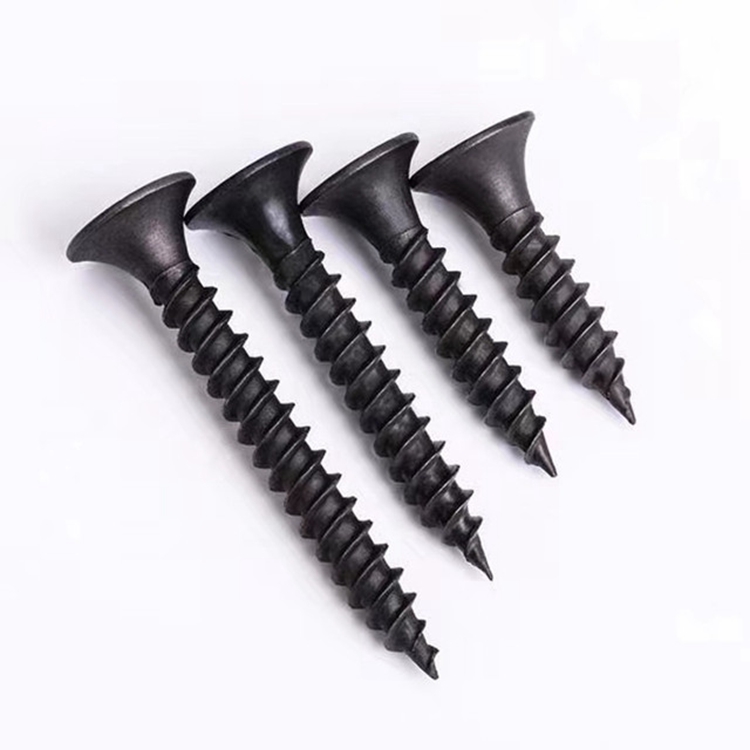
The performance of long nuts and bolts is fundamentally governed by force analysis, specifically tensile, shear, and torsional loading. Tensile strength represents the maximum stress the fastener can withstand before fracture. Yield strength defines the point at which permanent deformation occurs. Proof load indicates the maximum tensile load that can be applied without causing permanent deformation. Preload, the initial tension applied to the bolt during tightening, significantly influences joint fatigue life and load-carrying capacity. Environmental resistance is crucial, especially in applications exposed to corrosive media. Galvanic corrosion, resulting from dissimilar metal contact, must be mitigated through appropriate material selection or protective coatings. Fatigue performance is highly sensitive to surface finish, thread quality, and preload. Thread form (e.g., Unified National Coarse (UNC), Unified National Fine (UNF)) affects stress concentration and stripping resistance. Compliance requirements vary depending on the industry and application. For instance, aerospace applications demand adherence to stringent standards like AMS (Aerospace Material Specification) and NAS (National Aerospace Standard). Automotive applications often require compliance with IATF 16949, focusing on quality management systems. Accurate torque control during installation is paramount to achieve the correct preload and prevent loosening or fastener failure. Finite element analysis (FEA) is frequently employed to optimize bolt geometry and predict stress distribution under various loading conditions.
Technical Specifications
| Grade | Tensile Strength (MPa) | Yield Strength (MPa) | Hardness (HRC) | Typical Material | Common Applications |
|---|---|---|---|---|---|
| 4.8 | 400 | 240 | 24-32 | Carbon Steel | General purpose fastening, low-stress applications |
| 8.8 | 800 | 600 | 32-38 | Medium Carbon Steel | Automotive, machinery, construction |
| 10.9 | 1000 | 900 | 36-42 | Alloy Steel | High-stress applications, structural components |
| 12.9 | 1200 | 1100 | 40-46 | Chrome Molybdenum Steel | Critical fasteners, aerospace, demanding environments |
| 304 Stainless Steel | 500-700 | 205-310 | 20-25 | Austenitic Stainless Steel | Corrosion-resistant applications, food processing, chemical industries |
| 316 Stainless Steel | 600-800 | 220-350 | 20-25 | Austenitic Stainless Steel with Molybdenum | Marine environments, highly corrosive applications |
Failure Mode & Maintenance
Long nuts and bolts are susceptible to several failure modes. Fatigue cracking, initiated by cyclic loading, often originates at stress concentration points such as thread roots or under head bearing surfaces. Shear failure occurs when the applied shear stress exceeds the material's shear strength. Stripping, the loss of thread engagement, can result from excessive torque, improper material compatibility, or corrosion. Corrosion, particularly galvanic corrosion, weakens the fastener and reduces its load-carrying capacity. Hydrogen embrittlement, induced by exposure to hydrogen-containing environments, can lead to brittle fracture. Loosening, caused by vibrational forces or creep, reduces clamping force and can lead to joint failure. Maintenance involves periodic inspection for signs of corrosion, fatigue cracks, or loosening. Torque checks are essential to ensure proper preload. Lubrication, using compatible greases or anti-seize compounds, minimizes friction and prevents galling. Damaged or corroded fasteners must be replaced. Preventive measures include proper material selection, appropriate surface treatments, and accurate torque control during installation. Regular assessment of preload using ultrasonic methods can detect loosening before it becomes critical. For critical applications, non-destructive testing (NDT) methods, such as dye penetrant inspection or magnetic particle inspection, can identify subsurface cracks.
Industry FAQ
Q: What is the impact of thread pitch on the shear strength of a long bolt?
A: A finer thread pitch generally increases shear strength, as it provides a larger shear area. However, a coarser thread pitch can offer improved fatigue resistance and faster assembly times. The optimal pitch depends on the specific application and loading conditions.
Q: How does the surface finish of a bolt affect its fatigue life?
A: A smoother surface finish minimizes stress concentrations and improves fatigue life. Rough surfaces introduce micro-cracks that can initiate fatigue failure. Polishing or other surface treatment techniques can significantly enhance fatigue performance.
Q: What are the considerations for selecting a nut material when using a dissimilar bolt material to prevent galvanic corrosion?
A: Select a nut material that is galvanically compatible with the bolt material, or use a barrier coating (e.g., zinc plating) on one or both fasteners. Consider using non-conductive washers to isolate the dissimilar metals. Proper lubrication can also help mitigate galvanic corrosion.
Q: What is the significance of proof load versus tensile strength when specifying a long bolt for a critical application?
A: Proof load is the more relevant parameter for design, as it represents the maximum tensile load the bolt can withstand without permanent deformation. Tensile strength indicates the ultimate failure point, but exceeding the proof load can compromise the joint's long-term reliability.
Q: What are the best practices for ensuring accurate torque application during bolt installation?
A: Use a calibrated torque wrench and follow the manufacturer's recommended torque specifications. Ensure the threads are clean and lubricated with a compatible lubricant. Apply torque gradually and avoid over-tightening. Employ a torque-angle method for critical applications to achieve precise preload.
Conclusion
Long nuts and bolts remain indispensable fasteners across a multitude of industries. Their performance is dictated by a complex interplay of material properties, manufacturing processes, and engineering considerations. Understanding these factors is crucial for selecting the appropriate fastener for a given application and ensuring the integrity of the assembled structure.
Future advancements in fastener technology will likely focus on developing lighter-weight materials, improving corrosion resistance, and incorporating smart features such as embedded sensors for real-time monitoring of preload and stress levels. Continued refinement of manufacturing techniques and adherence to rigorous quality control standards will be essential for maintaining the reliability and safety of bolted joints.