
Introduction
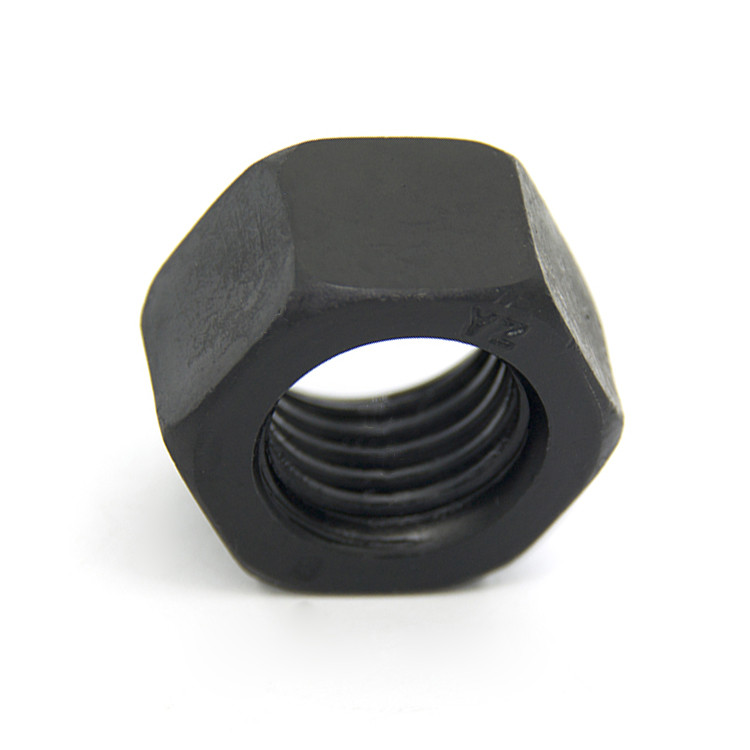
Long bolts and nuts are fundamental fastening elements employed across a vast spectrum of industrial applications, from heavy machinery and infrastructure to automotive assembly and aerospace engineering. Their extended length differentiates them from standard bolts, enabling securement through thicker materials or the provision of greater reach within assemblies. This guide provides a comprehensive technical analysis of long bolts and nuts, covering material science, manufacturing processes, performance characteristics, failure modes, and relevant industry standards. The core performance criteria centers on tensile strength, shear strength, preload capability, and resistance to loosening due to vibration or environmental factors. The selection of appropriate long bolts and nuts is critical for ensuring the structural integrity and operational reliability of engineered systems, directly impacting safety and longevity. A key industry pain point lies in accurately specifying bolt grade and material composition to prevent premature failure due to corrosion, fatigue, or overload.
Material Science & Manufacturing
Long bolts and nuts are predominantly manufactured from carbon steels, alloy steels, and stainless steels. Carbon steels, such as SAE Grade 2, 5, and 8, offer a balance of strength and cost-effectiveness, but are susceptible to corrosion. Alloy steels, incorporating elements like manganese, chromium, and molybdenum, exhibit enhanced strength, toughness, and hardenability. Stainless steels, particularly austenitic grades like 304 and 316, provide superior corrosion resistance, crucial in harsh environments. The manufacturing process typically begins with hot forging or cold heading to create the bolt and nut blank. Hot forging is employed for larger diameter bolts requiring high strength, while cold heading is suitable for smaller, high-volume production. Subsequent processes include threading (rolled or cut), heat treatment (quenching and tempering) to achieve desired mechanical properties, and surface treatment (plating, coating) for corrosion protection. Critical parameters include precise control of forging temperature, quenching medium, tempering temperature, and thread pitch. Hydrogen embrittlement is a significant concern during electroplating, requiring post-plating baking to diffuse hydrogen from the steel. Material properties such as yield strength, tensile strength, elongation, and hardness are rigorously tested according to ASTM standards. Nut manufacturing follows a similar process, often utilizing secondary operations like slotting for prevailing torque nuts.
Performance & Engineering
The performance of long bolts and nuts is governed by several engineering principles. Tensile strength, representing the maximum stress the bolt can withstand before fracture, is a primary consideration. Shear strength, important in applications involving transverse loads, dictates the bolt's resistance to shearing forces. Preload, the clamping force generated by tightening the bolt, is critical for preventing joint separation and fatigue failure. The preload is directly related to the bolt's yield strength and the applied torque. Environmental resistance, including corrosion resistance and temperature stability, is crucial in outdoor or aggressive environments. Finite element analysis (FEA) is frequently used to simulate stress distribution within the bolted joint under various loading conditions. Compliance requirements, such as those mandated by ISO 898-1 for metric bolts and ASTM A307 for carbon steel bolts, dictate material properties, dimensions, and mechanical performance criteria. Vibration resistance is often enhanced through the use of locking mechanisms, such as nylon inserts (Nylock nuts), serrated flanges, or chemical locking compounds. Failure analysis often focuses on identifying the root cause of fracture, stripping of threads, or corrosion-induced degradation.
Technical Specifications
| Bolt Grade | Tensile Strength (MPa) | Yield Strength (MPa) | Hardness (HRC) |
|---|---|---|---|
| SAE Grade 2 | 690 | 310 | 25-35 |
| SAE Grade 5 | 830 | 440 | 30-38 |
| SAE Grade 8 | 1040 | 690 | 33-39 |
| A2 Stainless Steel | 700 | 210 | 22-32 |
| A4 Stainless Steel | 1000 | 290 | 25-35 |
| Class 8.8 (Metric) | 800 | 640 | 32-38 |
Failure Mode & Maintenance
Long bolts and nuts are susceptible to several failure modes. Fatigue cracking, initiated by cyclic loading, is a common cause of failure, particularly in applications involving vibration. Thread stripping, resulting from excessive torque or improper thread engagement, can lead to joint loosening and failure. Corrosion, especially in marine or industrial environments, weakens the bolt material and promotes brittle fracture. Hydrogen embrittlement, as previously mentioned, can significantly reduce ductility and load-carrying capacity. Creep, the slow deformation under sustained load, is a concern at elevated temperatures. To mitigate these failures, regular inspection and maintenance are essential. Visual inspection should focus on signs of corrosion, thread damage, and deformation. Torque checks should be performed periodically to ensure adequate preload. Lubrication with appropriate anti-seize compounds reduces friction and prevents galling. For critical applications, non-destructive testing (NDT) methods, such as ultrasonic testing or magnetic particle inspection, can detect internal cracks or flaws. Replacement of corroded or damaged bolts and nuts is crucial for maintaining structural integrity. Proper storage in a dry environment prevents corrosion during periods of non-use.
Industry FAQ
Q: What is the impact of thread form on the performance of a long bolt and nut?
A: The thread form (e.g., Unified National Coarse (UNC), Unified National Fine (UNF), Metric) influences the engagement area and shear strength of the joint. Finer threads generally offer higher tensile strength due to a greater number of engaged threads, while coarser threads provide faster assembly and are less susceptible to cross-threading. The choice of thread form should be based on the specific application requirements and material properties.
Q: How does material selection impact the corrosion resistance of long bolts and nuts?
A: Material selection is paramount for corrosion resistance. Carbon steel bolts require protective coatings (e.g., zinc plating, galvanizing) to prevent rust. Stainless steel, particularly austenitic grades like 316, offers inherent corrosion resistance in many environments. However, even stainless steel can be susceptible to chloride-induced pitting corrosion in marine environments. Nickel alloys provide superior corrosion resistance in highly aggressive environments but are more expensive.
Q: What is the significance of bolt preload in preventing joint failure?
A: Bolt preload creates compressive stress in the clamped materials, increasing friction and preventing slippage. Proper preload also reduces the tensile stress experienced by the bolt under external loads, enhancing fatigue life. Insufficient preload can lead to joint separation and fatigue failure, while excessive preload can cause bolt yielding or fracture.
Q: What are the best practices for preventing hydrogen embrittlement during electroplating?
A: To minimize hydrogen embrittlement, several precautions are necessary. Use a qualified plating process with appropriate additives to reduce hydrogen absorption. Employ a low-hydrogen baking process immediately after plating to diffuse hydrogen from the steel. Carefully control the plating parameters, such as current density and electrolyte composition. Select a plating process compatible with the bolt material.
Q: How do prevailing torque nuts improve vibration resistance?
A: Prevailing torque nuts, such as Nylock nuts, utilize a nylon insert that deforms elastically when the nut is tightened, creating friction and resistance to loosening under vibration. The nylon insert provides a consistent clamping force and prevents self-loosening without significantly increasing the tightening torque.
Conclusion
Long bolts and nuts represent a critical joining technology, demanding a thorough understanding of material science, manufacturing processes, and engineering principles. Their selection and application must be carefully considered to ensure the structural integrity and operational reliability of engineered systems. The choice of bolt grade, material composition, and surface treatment directly impacts performance characteristics, including tensile strength, corrosion resistance, and fatigue life. Adhering to relevant industry standards and implementing regular inspection and maintenance programs are essential for preventing premature failure and maximizing the service life of bolted joints.
Future advancements in bolted joint technology may include the development of new materials with enhanced strength and corrosion resistance, the implementation of smart bolts with integrated sensors for real-time monitoring of preload, and the application of advanced simulation techniques to optimize joint design and performance. Continued research and development efforts are crucial for addressing the evolving challenges faced by engineers and ensuring the continued safety and reliability of critical infrastructure and industrial applications.