
Introduction
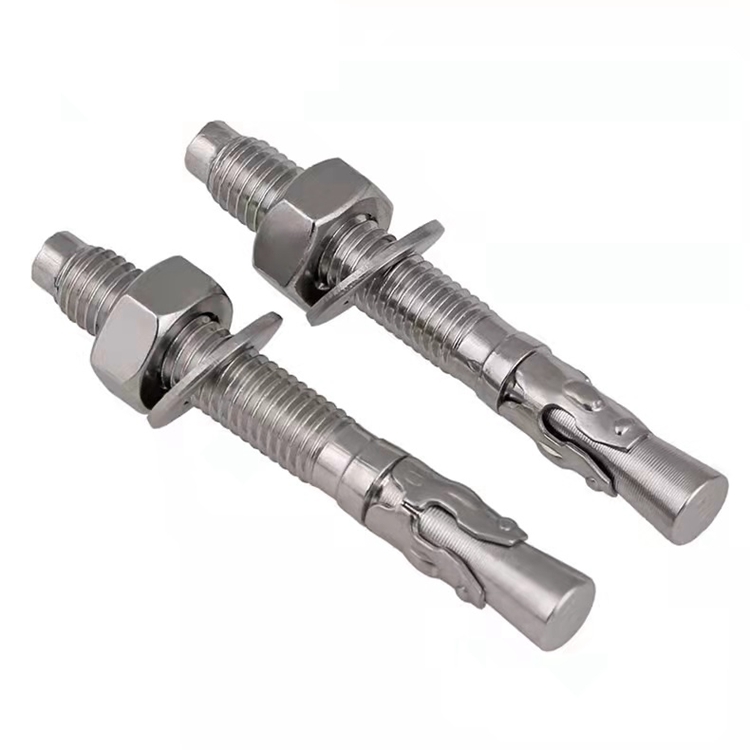
Light pole anchor bolts are critical structural components responsible for securely fastening light poles to foundations, ensuring stability against wind loads, vibrational stresses, and operational forces. These bolts represent a specialized subset of fastening hardware, differentiated by stringent performance requirements dictated by public safety and long-term durability. The industry chain extends from raw material suppliers (steel producers) through forging and machining facilities, quality control and testing laboratories, to final assembly and installation contractors. Core performance characteristics center around tensile strength, yield strength, corrosion resistance, and fatigue life, influencing the overall structural integrity of the lighting system. The selection process involves consideration of pole height, wind zone, soil conditions, and applicable regulatory standards. A failure in these anchor bolts can lead to catastrophic pole collapse, necessitating careful design, material selection, and installation practices.
Material Science & Manufacturing
Anchor bolts are predominantly manufactured from medium-carbon steel alloys, specifically AISI 1018, 1035, or equivalent, chosen for their balance of strength, ductility, and weldability. The steel undergoes a forging process to shape the bolt body, followed by machining operations to achieve precise dimensions and thread profiles (typically UNC or UNF coarse threads). Heat treatment – quenching and tempering – is crucial for attaining the required mechanical properties. The quenching process hardens the steel, while tempering increases ductility and toughness, mitigating brittleness. Surface treatments, such as hot-dip galvanization (ASTM A153), provide robust corrosion protection. Critical material properties include: tensile strength (typically 85,000 – 100,000 psi), yield strength (typically 60,000 – 75,000 psi), and elongation (typically 18-25%). Manufacturing parameter control focuses on maintaining consistent alloy composition, precise heat treatment cycles (temperature and duration), accurate machining tolerances, and uniform galvanization coating thickness. Welding, often employed for fabricating anchor bolt assemblies, requires adherence to AWS D1.1 standards to ensure weld integrity and prevent stress concentration points. Non-destructive testing, including magnetic particle inspection (MPI) and ultrasonic testing (UT), are applied to detect internal flaws and surface cracks.
Performance & Engineering
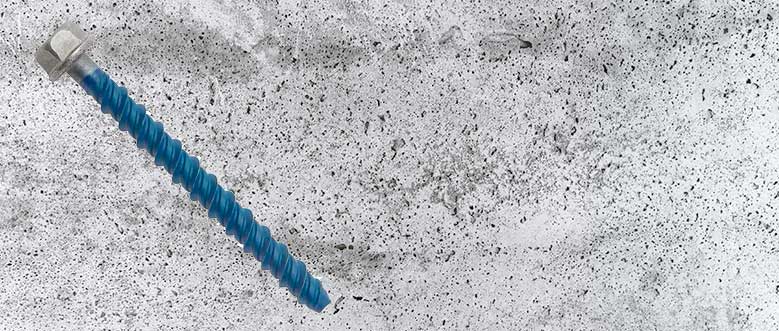
The performance of light pole anchor bolts is governed by complex force analysis involving static loads (pole weight), dynamic loads (wind pressure), and vibrational loads (traffic, environmental factors). Engineering calculations must account for worst-case wind scenarios based on regional wind maps and ASCE 7 standards. Finite element analysis (FEA) is frequently utilized to model stress distribution within the anchor bolt assembly and identify potential failure points. The anchor bolt’s embedment depth and spacing are critical parameters influencing pullout resistance and shear capacity. Corrosion is a significant long-term degradation mechanism, particularly in marine environments or areas utilizing de-icing salts. Galvanic corrosion, resulting from dissimilar metal contact, must be avoided through proper material selection and isolation techniques. Compliance requirements are dictated by local building codes and industry standards (e.g., AASHTO specifications for highway lighting). Functional implementation necessitates careful attention to installation procedures, including proper torque application and concrete curing times. The concrete foundation must possess sufficient compressive strength to withstand the applied loads, typically exceeding 4,000 psi. Regular inspection and maintenance are crucial for detecting signs of corrosion, loosening, or fatigue cracking.
Technical Specifications
| Diameter (in) | Length (in) | Material Grade | Minimum Tensile Strength (psi) |
|---|---|---|---|
| 0.75 | 12 | A36 Steel | 70,000 |
| 1.0 | 18 | A36 Steel | 70,000 |
| 1.25 | 24 | A36 Steel | 70,000 |
| 1.5 | 30 | A36 Steel | 70,000 |
| 0.75 | 12 | Grade 5 | 85,000 |
| 1.0 | 18 | Grade 5 | 85,000 |
Failure Mode & Maintenance
Light pole anchor bolts are susceptible to several failure modes. Fatigue cracking, initiated by cyclic loading from wind gusts and traffic vibrations, can propagate over time, eventually leading to bolt fracture. Corrosion, particularly pitting corrosion in the presence of chlorides, weakens the bolt material and reduces its load-carrying capacity. Hydrogen embrittlement, induced by electrochemical reactions during corrosion, can further exacerbate cracking. Pullout failure occurs when the bond between the bolt and the concrete foundation is exceeded. Shear failure results from excessive shear stresses exceeding the bolt’s shear strength. Thread stripping can occur due to improper torque application or material defects. Maintenance procedures include regular visual inspection for signs of corrosion (rust, pitting), cracking, and loosening. Torque checks should be performed periodically to ensure proper clamping force. Corroded bolts should be replaced immediately. Protective coatings, such as epoxy or polyurethane, can be applied to prevent corrosion. For critical applications, non-destructive testing (NDT) methods, such as ultrasonic testing, can be employed to detect internal flaws. Periodic concrete core sampling can assess the integrity of the foundation and identify potential cracking or deterioration.
Industry FAQ
Q: What is the impact of soil conditions on anchor bolt design?
A: Soil conditions directly affect the foundation design and, consequently, the required anchor bolt capacity. Poor soil conditions (e.g., expansive clay, loose sand) necessitate a larger foundation and/or deeper embedment depth to provide adequate pullout resistance. Soil testing is crucial for determining soil bearing capacity and selecting appropriate foundation design parameters.
Q: How does wind loading affect the selection of anchor bolt size and quantity?
A: Wind loading is the primary driver in anchor bolt design. The higher the wind speed and the taller the light pole, the greater the overturning moment. Anchor bolt size and quantity must be sufficient to resist this overturning moment, ensuring the pole remains stable. Calculations must adhere to ASCE 7 standards and consider regional wind maps.
Q: What are the advantages and disadvantages of different anchor bolt coating options (e.g., galvanization, epoxy coating)?
A: Hot-dip galvanization provides excellent corrosion protection at a relatively low cost. However, it can be susceptible to galvanic corrosion if in contact with dissimilar metals. Epoxy coating offers superior corrosion resistance, particularly in harsh environments, but is more expensive. The choice depends on the specific application and environmental conditions.
Q: What is the recommended torque specification for anchor bolt installation?
A: Recommended torque specifications vary depending on the bolt diameter, material grade, and lubrication. Over-torquing can strip the threads, while under-torquing can lead to loosening. Always consult the manufacturer’s specifications and use a calibrated torque wrench. A typical range is 150-300 ft-lbs for 3/4" diameter Grade 5 bolts.
Q: How often should anchor bolts be inspected and what should be looked for?
A: Anchor bolts should be inspected annually, or more frequently in harsh environments. Inspections should focus on signs of corrosion (rust, pitting), cracking, loosening, and concrete deterioration around the anchor bolt base. Any anomalies should be investigated and addressed promptly.
Conclusion
Light pole anchor bolts are integral components of public infrastructure, demanding meticulous attention to material science, manufacturing processes, and engineering design. The selection and installation of these bolts are not merely about fastener specification, but rather a comprehensive assessment of environmental factors, load conditions, and long-term durability. Ensuring their structural integrity is paramount for public safety and minimizing lifecycle costs associated with maintenance and repair.
Future developments may focus on the integration of smart monitoring systems embedded within the anchor bolt assembly to detect early signs of corrosion or fatigue, enabling proactive maintenance and preventing catastrophic failures. Further research into advanced coating technologies and novel materials with enhanced corrosion resistance will contribute to increased longevity and reduced maintenance requirements. Adherence to evolving industry standards and best practices remains crucial for guaranteeing the reliable performance of light pole anchor bolt systems.