
Introduction
Large lag bolts are heavy-duty fasteners utilized for securing wood to wood, or wood to other materials like concrete or metal through the use of a pilot hole and threaded engagement. Positioned within the fastening industry as a robust alternative to screws and nails, lag bolts offer superior shear and tensile strength, particularly in applications demanding high load-bearing capacity. Their technical significance stems from their ability to provide a secure, often permanent, connection, crucial in construction, timber framing, and industrial assembly. Core performance characteristics include holding power, shear strength, tensile strength, and resistance to environmental degradation. The selection of appropriate lag bolts directly impacts structural integrity and the longevity of assembled components, making a thorough understanding of their material properties and application guidelines essential.
Material Science & Manufacturing
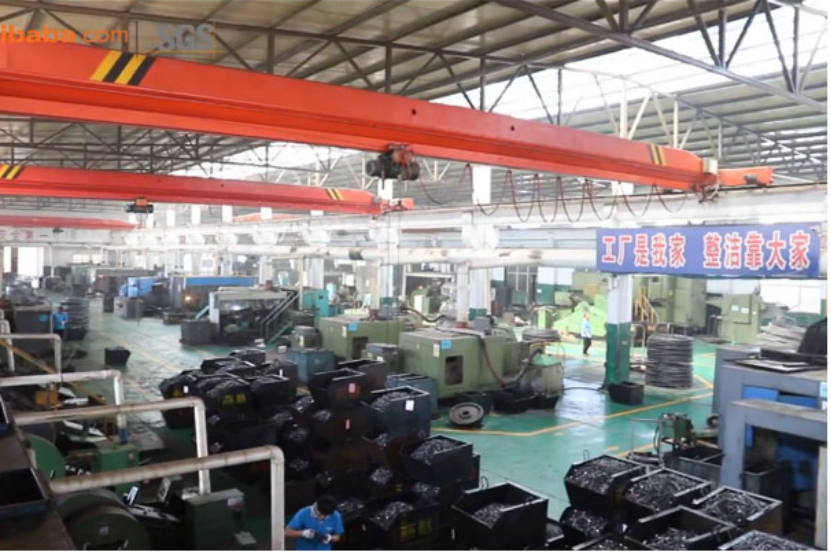
Large lag bolts are commonly manufactured from medium carbon steel (typically AISI 1045 or equivalent) offering a balance of strength and ductility. Higher grades may utilize alloy steels (AISI 4140, 4340) for increased tensile strength and toughness, particularly in corrosive environments. The steel undergoes a heat treatment process including hardening and tempering to achieve the desired mechanical properties. Manufacturing begins with hot forging of the bolt blank, followed by cold heading to form the hexagonal head. A crucial step is the thread rolling process, which imparts the coarse, aggressive threads characteristic of lag bolts. Thread form influences engagement, with Unified National Coarse (UNC) being standard. Surface treatments are critical for corrosion resistance. Options include zinc plating (economical, provides moderate protection), hot-dip galvanizing (superior protection, but can affect dimensional tolerances), and proprietary coatings like Xylan or PTFE (offering excellent corrosion resistance and low friction). Parameter control during heat treatment (temperature, quenching medium, tempering time) is paramount; improper heat treatment can lead to brittle failures or reduced holding power. Raw material composition must meet stringent specifications to ensure consistent mechanical properties. The quality of the forged blank is assessed through ultrasonic testing for internal defects. The precision of thread rolling is verified using go/no-go gauges.
Performance & Engineering
The performance of a lag bolt is dictated by several engineering principles. Shear strength, the bolt’s resistance to forces acting parallel to its axis, is directly related to the material’s shear modulus and the thread engagement area. Tensile strength, resistance to axial pulling forces, depends on the bolt’s cross-sectional area and material tensile strength. Withdrawal resistance, the force required to pull the bolt out of the wood, is a function of the wood density, bolt diameter, and thread depth. Load distribution within the wood is critical; pre-drilling a pilot hole reduces splitting and ensures even stress distribution. The diameter of the pilot hole is crucial – too small induces splitting, too large reduces holding power. Environmental resistance is a significant concern. Moisture ingress causes corrosion of steel bolts, reducing their cross-sectional area and strength. Temperature fluctuations cause expansion and contraction, potentially loosening the connection. Compliance requirements, such as those stipulated by building codes and industry standards (see footer), dictate minimum material specifications, loading limits, and acceptable corrosion protection methods. Finite element analysis (FEA) is often employed to model stress concentrations under various loading conditions and optimize bolt geometry for specific applications. Fatigue loading, caused by cyclic stress, can lead to crack initiation and propagation, necessitating careful consideration of dynamic loads.
Technical Specifications
| Diameter (in) | Length (in) | Head Width (in) | Minimum Tensile Strength (PSI) |
|---|---|---|---|
| 1/4 | 2 | 3/4 | 85,000 |
| 3/8 | 3 | 1 | 90,000 |
| 1/2 | 4 | 1-1/4 | 95,000 |
| 5/8 | 6 | 1-1/2 | 100,000 |
| 3/4 | 8 | 2 | 110,000 |
| 1 | 10 | 2-1/2 | 120,000 |
Failure Mode & Maintenance
Lag bolts are susceptible to several failure modes. Shear failure occurs when the force exceeds the shear strength of the bolt material. Tensile failure results from exceeding the bolt's tensile strength. Withdrawal failure, as previously discussed, happens when the bolt pulls out of the substrate. Fatigue cracking initiates from stress concentrations (e.g., thread roots, under the bolt head) under cyclic loading, leading to eventual fracture. Corrosion is a significant contributor to failure, weakening the bolt material and reducing its load-bearing capacity. Hydrogen embrittlement, particularly in high-strength alloy steels, can occur in corrosive environments. Delamination of protective coatings (zinc, galvanizing) exposes the underlying steel to corrosion. Maintenance involves periodic inspection for corrosion, thread damage, and loosening. Re-tightening may be necessary, but caution is advised to avoid over-tightening, which can strip the threads. If corrosion is extensive, replacement is recommended. Applying a corrosion inhibitor to the threads before installation can extend the bolt’s service life. Proper installation techniques, including using the correct pilot hole size and avoiding excessive torque, are crucial for preventing premature failure. Regular visual inspection of connections is paramount, particularly in critical applications.
Industry FAQ
Q: What is the impact of wood species on lag bolt holding power?
A: Wood species significantly impacts holding power. Denser hardwoods (oak, maple) provide substantially greater holding power than softwoods (pine, fir) due to their higher fiber density and resistance to compression. The type of wood also affects susceptibility to splitting; hardwoods are generally more prone to splitting and require more precise pilot hole drilling.
Q: What are the limitations of using galvanized lag bolts in saltwater environments?
A: While galvanizing offers good corrosion resistance, it is not sufficient for prolonged exposure to saltwater. Saltwater accelerates the corrosion process, eventually depleting the zinc coating. For saltwater applications, stainless steel (316 grade) or specialized marine-grade coatings are recommended.
Q: How does thread engagement length affect lag bolt strength?
A: Thread engagement length is directly proportional to shear strength. Greater thread engagement provides a larger shear area, increasing the bolt’s resistance to forces acting parallel to its axis. A minimum thread engagement length of at least one diameter is generally recommended, but longer engagement is preferred for high-load applications.
Q: Can lag bolts be reused after being removed?
A: Reuse is generally discouraged. Removing a lag bolt can damage the threads, reducing its holding power. Corrosion during use may also weaken the bolt. If reuse is unavoidable, the bolt must be thoroughly inspected for damage and re-plated or re-coated to restore corrosion resistance.
Q: What is the proper torque specification for installing a large lag bolt?
A: Proper torque is crucial to avoid stripping the threads or overstressing the wood. Torque specifications vary depending on bolt diameter, wood species, and application. Using a torque wrench is recommended. A general guideline is to apply sufficient torque to securely seat the bolt head without excessive force. Consult manufacturer’s recommendations or engineering guidelines for specific torque values.
Conclusion
Large lag bolts remain a vital fastening solution for demanding structural applications. Their performance is inextricably linked to material selection, manufacturing precision, proper installation, and environmental considerations. A comprehensive understanding of the factors influencing their strength, durability, and susceptibility to failure is essential for engineers, procurement managers, and construction professionals.
Future trends include the development of advanced coatings offering superior corrosion resistance, the optimization of thread forms for increased holding power, and the implementation of smart fastening systems incorporating sensors to monitor bolt load and detect potential failures. Continuous research into material science and manufacturing processes will undoubtedly lead to further improvements in the performance and reliability of large lag bolts.