
Introduction
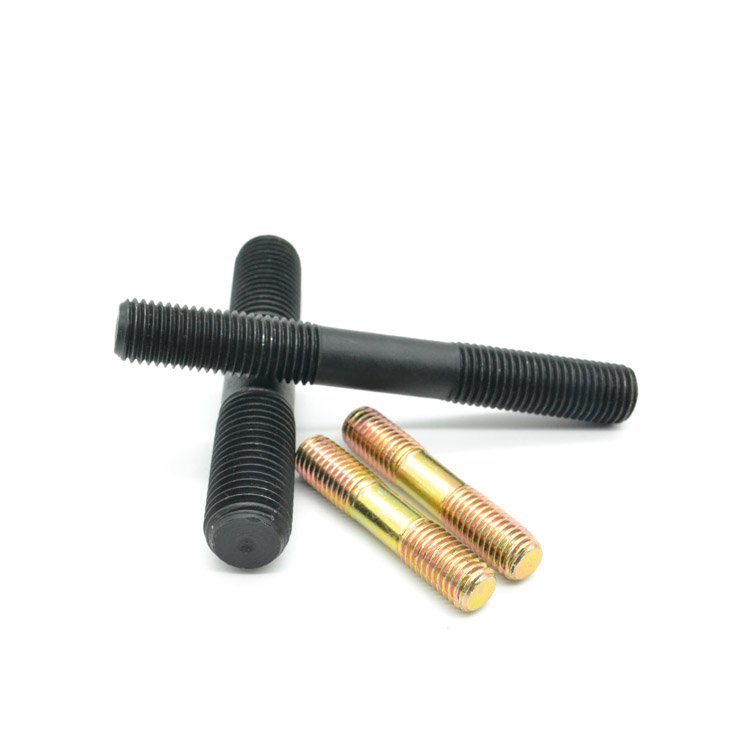
Grade 5 (Gr5) bolts, conforming to SAE J498 and ISO 898-1 standards, represent a critical fastening component within aerospace, automotive, motorsport, and high-performance industrial applications. These bolts are manufactured from a titanium alloy, typically Ti-6Al-4V, renowned for its high strength-to-weight ratio, excellent corrosion resistance, and biocompatibility. Their technical position within the supply chain begins with the sourcing of titanium sponge, followed by alloy production, forging or cold forming into bolt precursors, heat treatment, machining to final dimensions, and finally, quality control and surface treatment. Core performance characteristics encompass tensile strength (typically 898-1000 MPa), yield strength (typically 828-950 MPa), and shear strength, making them ideal for applications where minimizing weight without sacrificing structural integrity is paramount. A primary industry pain point lies in maintaining consistent material properties throughout the manufacturing process, particularly regarding alpha-beta phase distribution and interstitial content, which directly influence bolt performance and fatigue life.
Material Science & Manufacturing
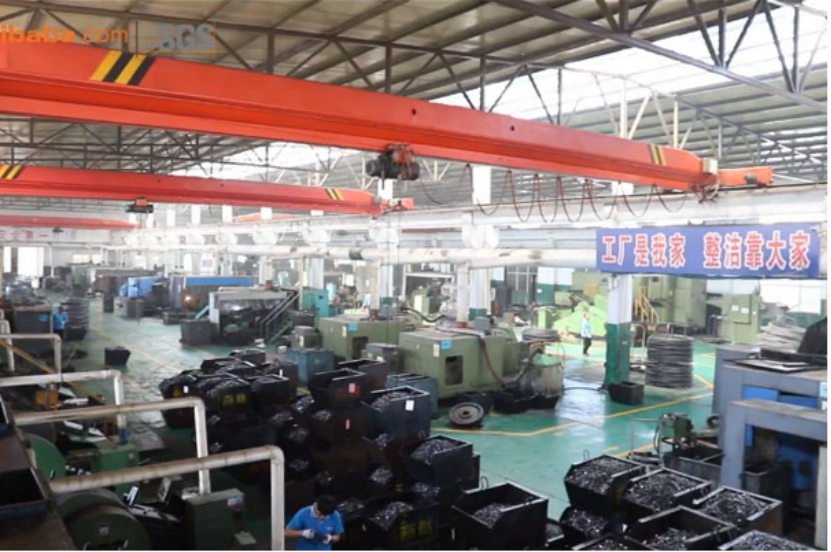
The foundational material for Gr5 bolts is Ti-6Al-4V titanium alloy. This alloy's composition (6% Aluminum, 4% Vanadium, balance Titanium) dictates its exceptional properties. Titanium sponge is initially refined from rutile or ilmenite ores. Subsequent alloying and vacuum arc remelting (VAR) refine the composition and eliminate impurities. The resulting ingot undergoes either hot forging or cold forming. Forging provides superior grain structure and strength for high-load applications, while cold forming increases dimensional accuracy and surface finish. Critical manufacturing parameters include controlled heating and cooling rates during forging to prevent grain boundary segregation. Thread rolling, rather than machining, is preferred for creating threads as it enhances fatigue strength by cold working the material. Post-forming, Gr5 bolts undergo solution treatment (typically 900-950°C) followed by rapid quenching, and then aging (typically 500-600°C) to optimize strength and ductility. Surface treatments such as passivating or applying specialized coatings (e.g., cadmium plating – although becoming less common due to environmental concerns – or PTFE) are applied to further enhance corrosion resistance and reduce galling. Chemical compatibility must be strictly controlled; contact with certain acids and chlorides can initiate localized corrosion.
Performance & Engineering
Gr5 bolts are subject to rigorous force analysis in application. Finite Element Analysis (FEA) is commonly employed to predict stress distribution under various loading scenarios (tensile, shear, bending, and combined loads). Bolt preload, achieved through controlled tightening torques, is critical for maintaining joint integrity and preventing loosening under dynamic conditions. Environmental resistance is a key consideration. While titanium inherently resists many corrosive environments, prolonged exposure to high chloride concentrations or specific oxidizing agents can lead to pitting corrosion. Compliance requirements vary by industry; aerospace applications adhere to stringent AMS (Aerospace Material Specification) standards, while automotive applications follow IATF 16949. Functional implementation often involves precise torque control during assembly, utilizing calibrated torque wrenches and documented procedures. Fatigue analysis is paramount, considering factors such as stress concentration at thread roots and potential for cyclic loading. Creep resistance is also important in high-temperature applications, although less critical than in some other materials. Failure analysis often reveals that improper preload or exposure to aggressive environments are the primary contributors to bolt failure.
Technical Specifications
| Specification | Metric (Typical) | Imperial (Typical) | Standard Reference |
|---|---|---|---|
| Tensile Strength | 898 – 1000 MPa | 130,000 – 145,000 psi | SAE J498, ISO 898-1 |
| Yield Strength | 828 – 950 MPa | 120,000 – 138,000 psi | SAE J498, ISO 898-1 |
| Shear Strength | 500 – 650 MPa | 72,500 – 94,000 psi | ASTM F899 |
| Elongation | 10 – 15% | N/A | SAE J498 |
| Hardness (Rockwell C) | 30 – 35 HRC | N/A | ASTM E18 |
| Density | 4.43 g/cm³ | 0.160 lb/in³ | ASTM B831 |
Failure Mode & Maintenance
Gr5 bolts, while robust, are susceptible to several failure modes. Fatigue cracking, initiated at stress concentrations (typically thread roots), is a common issue, especially under cyclic loading. Hydrogen embrittlement, caused by hydrogen diffusion into the titanium lattice, can significantly reduce ductility and promote brittle fracture. Fretting corrosion, resulting from small-amplitude oscillatory motion between mating surfaces, generates debris that accelerates wear and fatigue. Galvanic corrosion can occur if Gr5 bolts are coupled with dissimilar metals in a corrosive environment. Thread stripping, due to excessive tightening torque or material defects, is another potential failure mechanism. Maintenance strategies include periodic visual inspections for signs of corrosion or damage, torque checking to ensure proper preload, and lubrication of threads to minimize fretting. Preventative measures involve selecting appropriate surface treatments, avoiding contact with incompatible materials, and employing proper installation procedures. Non-destructive testing methods (e.g., dye penetrant inspection, ultrasonic testing) can detect subsurface cracks before catastrophic failure. Regular removal and re-application of thread locking compounds, where applicable, can also mitigate loosening.
Industry FAQ
Q: What is the effect of heat treatment on the mechanical properties of Gr5 bolts?
A: Heat treatment, specifically solution treatment and aging, is crucial. Solution treatment dissolves the beta phase, creating a homogeneous microstructure. Subsequent aging precipitates fine beta particles, significantly increasing strength and creep resistance. Improper heat treatment can result in insufficient strength or reduced ductility.
Q: How does the surface finish of a Gr5 bolt affect its fatigue life?
A: A smoother surface finish minimizes stress concentrations and reduces the likelihood of crack initiation. Thread rolling is preferred over machining to create threads because it work-hardens the surface, enhancing fatigue strength. Surface roughness should be controlled according to applicable standards.
Q: Can Gr5 bolts be used in marine environments, and if so, what precautions should be taken?
A: Gr5 bolts exhibit excellent corrosion resistance in seawater, but prolonged exposure to high chloride concentrations can still lead to pitting corrosion. Passivation or appropriate coatings (e.g., PTFE) are recommended. Regular inspections and cleaning are also essential.
Q: What are the key considerations when selecting a torque value for Gr5 bolts?
A: Torque values must be carefully calculated based on bolt diameter, material properties, thread lubrication, and joint design. Over-torquing can lead to thread stripping or bolt failure, while under-torquing can result in joint loosening. Torque-angle control methods are often preferred for achieving consistent preload.
Q: What is the impact of interstitial content (oxygen, nitrogen, carbon) on the performance of Gr5 bolts?
A: Excessive interstitial content can embrittle the titanium alloy, reducing ductility and toughness. Tight control of alloy composition and vacuum melting practices are essential to minimize interstitial contamination. This is a critical quality control parameter.
Conclusion
Gr5 bolts, leveraging the unique properties of the Ti-6Al-4V alloy, provide a compelling solution for applications demanding high strength-to-weight ratios and exceptional corrosion resistance. However, their successful implementation requires a comprehensive understanding of material science, manufacturing processes, and potential failure modes. Maintaining tight control over parameters such as heat treatment, surface finish, and thread preload is paramount for ensuring long-term reliability and structural integrity.
The selection and application of Gr5 bolts necessitate a holistic approach, encompassing rigorous quality control, adherence to industry standards, and proactive maintenance strategies. Future advancements in titanium alloy development and surface treatment technologies will further enhance the performance and lifespan of these critical fasteners, broadening their applicability across diverse industries.