
Introduction
Frame bolts are high-strength fasteners critical for structural integrity in a diverse range of industrial applications, including heavy machinery, automotive chassis, construction equipment, and aerospace assemblies. Positioned as a key element within the broader fastening systems supply chain, their function extends beyond simple joining; they are integral to load distribution, vibration dampening, and preventing catastrophic failure. Core performance metrics include tensile strength, yield strength, fatigue resistance, and corrosion protection, with selection dictated by application-specific stress levels, environmental factors, and material compatibility. The increasing demand for lightweighting, coupled with more stringent safety regulations, drives continual development in frame bolt materials and manufacturing techniques.
Material Science & Manufacturing
Frame bolts are predominantly manufactured from alloy steels, specifically carbon and alloy steel grades like SAE 4340, 8740, and 10B21, chosen for their superior strength and ductility. Stainless steels (304, 316) are employed in corrosive environments. Raw material selection is paramount; chemical composition is rigorously controlled to meet specified mechanical properties. Manufacturing typically begins with hot forging or cold heading to form the bolt blank. Hot forging refines grain structure, enhancing strength, while cold heading offers greater dimensional accuracy and surface finish. Following forming, bolts undergo heat treatment—hardening, tempering, and case hardening—to achieve desired hardness and toughness profiles. Thread rolling, rather than cutting, is preferred for increased thread strength. Critical parameters during heat treatment include temperature uniformity, quenching medium, and cooling rate. Surface treatments like zinc plating, phosphate coating, or specialized polymer coatings are applied to provide corrosion resistance. Quality control includes non-destructive testing (NDT) such as magnetic particle inspection (MPI) and ultrasonic testing (UT) to detect internal flaws. Bolt preload is crucial; torque control and angle tightening methods are employed to achieve consistent clamping force. Failure to control these parameters leads to premature failure and compromised structural integrity. Material selection must also consider the coefficient of thermal expansion to prevent loosening due to temperature fluctuations.
Performance & Engineering
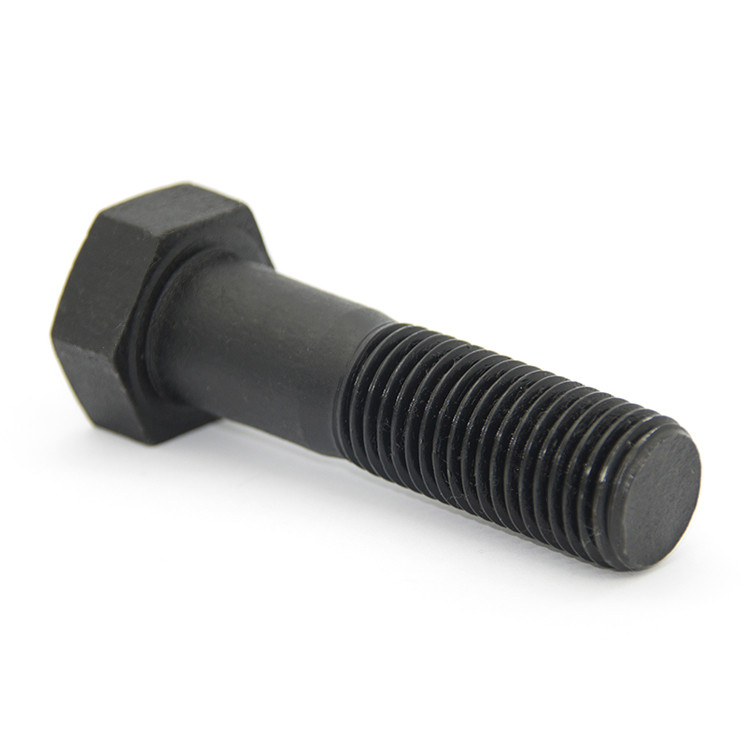
The performance of frame bolts is governed by several engineering principles. Force analysis, utilizing finite element analysis (FEA), is critical to determine stress concentration points and optimize bolt geometry. Preload significantly impacts fatigue life. Insufficient preload leads to joint separation and cyclic loading, accelerating fatigue crack initiation. Excessive preload can cause bolt yielding or stripping of threads. Environmental resistance is a major concern; exposure to corrosive agents (saltwater, chemicals, atmospheric pollutants) can lead to pitting corrosion, hydrogen embrittlement, and stress corrosion cracking. Selecting appropriate materials and coatings mitigates these risks. Compliance requirements vary by industry. Automotive applications adhere to IATF 16949 standards, while aerospace follows stringent AS9100 specifications. Dynamic loading scenarios, involving vibration and shock, necessitate consideration of bolt damping characteristics and fatigue strength. Bolt length, diameter, and thread pitch all influence performance. Longer bolts generally exhibit higher tensile strength but are more susceptible to bending moments. Thread pitch impacts stripping resistance; finer threads provide greater resistance but can increase the risk of galling. Proper fastener selection requires a comprehensive understanding of these factors and a thorough assessment of the application environment. Joint design also plays a critical role – appropriate washer selection and surface finish contribute to uniform load distribution and enhanced performance.
Technical Specifications
| Property | SAE 4340 (Grade 8) | Stainless Steel 304 | Stainless Steel 316 | A2-70 (Equivalent to 8.8) |
|---|---|---|---|---|
| Tensile Strength (MPa) | 830 | 790 | 720 | 800 |
| Yield Strength (MPa) | 745 | 210 | 190 | 700 |
| Elongation (%) | 18 | 30 | 25 | 16 |
| Hardness (HRC) | 30-35 | 85-100 | 85-100 | 30-35 |
| Corrosion Resistance | Moderate (Requires Coating) | Excellent | Superior | Good (Requires Coating) |
| Typical Applications | Heavy Machinery, Automotive | Food Processing, Chemical Processing | Marine, Pharmaceutical | General Purpose, Automotive |
Failure Mode & Maintenance
Frame bolt failure manifests in several modes. Fatigue cracking, initiated by cyclic loading, is a common cause, often starting at stress concentration points like thread roots or under bolt head. Corrosion, as previously noted, weakens the bolt material, accelerating crack propagation. Hydrogen embrittlement, particularly in high-strength steels, leads to brittle fracture. Shear failure occurs when the bolt is subjected to excessive shear stress, exceeding its shear strength. Thread stripping results from inadequate clamping force or mismatched thread engagement. Creep, under sustained high temperature and load, causes gradual plastic deformation and eventual failure. Maintenance involves regular visual inspection for signs of corrosion, cracking, or deformation. Torque checks should be performed periodically to ensure proper preload. Lubrication of threads prevents galling and facilitates accurate torque application. In corrosive environments, protective coatings should be inspected and reapplied as needed. If a bolt shows signs of damage, it must be replaced with a bolt of identical material, grade, and dimensions. Proper bolt removal techniques (avoiding impact wrenches) prevent damage to threads. Detailed records of bolt replacements and maintenance activities should be maintained.
Industry FAQ
Q: What is the impact of bolt preload on fatigue life?
A: Preload is arguably the most significant factor influencing fatigue life. Correct preload creates compressive stress in the joint, reducing tensile stress range during cyclic loading. Insufficient preload leads to joint separation and increased tensile stress, accelerating fatigue crack initiation. Excessive preload can yield the bolt, reducing its fatigue strength. Maintaining preload within the recommended range is crucial.
Q: How do I select the appropriate corrosion protection for frame bolts?
A: Corrosion protection depends on the service environment. Zinc plating is a cost-effective solution for mild corrosion. Phosphate coating provides a base for paint or other coatings. Stainless steel offers excellent corrosion resistance but is more expensive. For severe marine or chemical environments, specialized coatings like PTFE or ceramic coatings may be necessary. Consideration of galvanic corrosion is also vital when joining dissimilar metals.
Q: What are the key differences between hot forging and cold heading for bolt manufacturing?
A: Hot forging involves forming the bolt at elevated temperatures, resulting in improved grain structure and higher strength. However, it offers lower dimensional accuracy and surface finish. Cold heading is performed at room temperature, providing better dimensional control and surface finish but typically lower strength. The choice depends on the application’s strength and tolerance requirements.
Q: What is the significance of bolt material traceability?
A: Material traceability is critical for quality control and accountability. It ensures that the bolt material meets specified chemical composition and mechanical property requirements. Traceability involves maintaining records of material origin, heat treatment processes, and inspection results. This is particularly important in safety-critical applications like aerospace and automotive.
Q: How does temperature affect the performance of frame bolts?
A: Temperature affects bolt preload due to thermal expansion and contraction. High temperatures can reduce bolt strength and creep resistance. Low temperatures can increase the risk of brittle fracture. Material selection must account for the operating temperature range. Proper joint design and preload control can mitigate temperature-induced stresses.
Conclusion
Frame bolts represent a critical component in numerous industrial applications, and their reliable performance hinges on a comprehensive understanding of material science, manufacturing processes, and engineering principles. Selection demands meticulous consideration of mechanical properties, environmental factors, and application-specific requirements. Proper torque control, corrosion protection, and periodic maintenance are essential for maximizing bolt lifespan and preventing catastrophic failures.
Future advancements in frame bolt technology will likely focus on developing lighter-weight, higher-strength materials, and incorporating smart fastening systems with integrated sensors for real-time monitoring of preload and structural health. Continued refinement of manufacturing techniques, coupled with stricter adherence to international standards, will ensure the ongoing reliability and safety of bolted joints across all industries.